
Unbiased headlines. Facts, not spin.
Unbiased Headlines is an independently owned news organization. We bring you the facts, not opinions, written fresh from 110+ named sources. Sources linked so you can verify it yourself.
 finance
Notable (6/10)
Polymarket Investigates Trader Who Made $257,000 on Senate Bets Placed Before NYT/Siena Polls, Vanderbilt Researchers Say
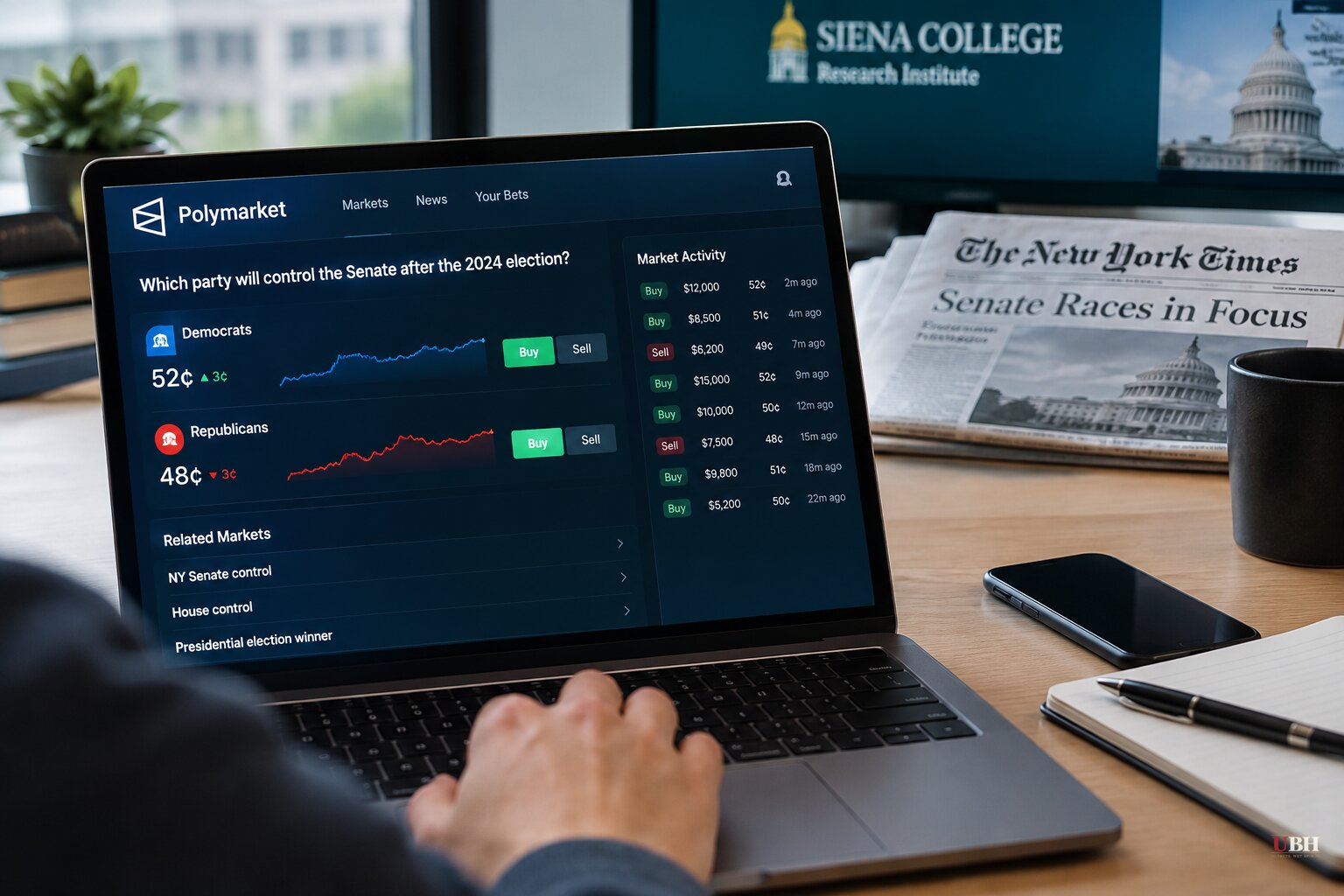
Polymarket has opened an internal investigation into trades placed shortly before two New York Times/Siena College polls were released, the company confirmed after researchers at Vanderbilt University flagged the activity. The New York Times reported the findings Friday, Nov. 6.
The focus is a single Polymarket user. Vanderbilt researchers say the account bet almost $200,000 on Oct. 31 that Nebraska Republican Sen. Pete Ricketts would win re-election. About an hour later, a Times/Siena poll came out showing Ricketts in the lead.
The user won more than $77,000 on that position.
The trades
According to the Vanderbilt research as detailed by Crypto Briefing, the Nebraska bet was about $191,277. Before the poll, the market gave Ricketts roughly a 67% chance of winning. After the poll showed him up six points, the odds rose to about 79%.
The same research describes the account's funding. On Oct. 30, around 5:30 p.m. ET, more than $2 million reportedly arrived in an anonymous crypto wallet. The account then began placing large bets on Polymarket.
The researchers also tied the trader to a second position. According to the Crypto Briefing account of the research, the trader put more than $622,000 behind the Democratic nominee in the Michigan Senate race, and a later Times/Siena poll produced profits above $180,000. Combined with Nebraska, that comes to more than $257,000 across two races. The Times report also said the user placed similar large bets on Kalshi, Polymarket's main competitor.
Kalshi declined to comment.
What is and is not known
Brett Goldstein of the Vanderbilt Institute of National Security stopped short of accusing anyone. He did say the pattern was hard to explain away.
"There's a series of circumstances here that it's hard to write it off as a random occurrence," Goldstein said. He said it "requires further investigation."
The Times report said it was not clear whether the user had access to nonpublic information. Timing alone does not prove a leak. Polling results are scheduled releases, and a small number of people, including pollsters, editors and production staff, see them before the public does. Polymarket has announced no findings and no penalties. No charges or government investigation involving this trader have been announced.
Polymarket's stated approach
The company has described a broader enforcement push around the midterms, which were held Nov. 3. Shana Bautista, Polymarket's head of global intelligence and investigations, told NPR the company has investigated "dozens" of election-related bets. A person familiar with the probes told NPR that at least two have been referred to the Commodity Futures Trading Commission. That person was not authorized to speak publicly. Nothing in the record ties those referrals to the Nebraska and Michigan trades.
Bautista said her team of 16 and a new election surveillance system were policing bets ahead of Nov. 3. She said the system pulls "gigabytes" of data per user and generates "hundreds of alerts a day."
"If you have information that you have a duty to protect, don't trade on it," Bautista said. "If you decide that you are smarter and can do it, we will find you."
She also said that anonymous crypto trading is rarely fully anonymous. "There's never been a case that we work where we haven't been able to identify, potentially, who these people are," she said. That claim covers Polymarket International, the larger offshore version where trading can be done anonymously with cryptocurrency. The U.S.-regulated version requires users to provide real identities.
A pattern of insider-information cases
This is not the first prediction-market case involving privileged information. The Justice Department has charged Army Master Sergeant Gannon Ken Van Dyke, alleging he used knowledge of the planning for the Jan. 3 raid that captured Venezuelan leader Nicolás Maduro to buy "yes" shares in related Polymarket contracts. Prosecutors say he made about $400,000. Van Dyke has pleaded not guilty and his case is continuing.
Defense Secretary Pete Hegseth responded with an Oct. 20 memo barring Pentagon personnel from financial transactions, including on Polymarket and Kalshi, that use nonpublic information. The memo warns of administrative, disciplinary and criminal liability.
The NPR reporting adds another thread. In April, Kalshi banned and fined a handful of political candidates for betting on themselves. A month later, NPR reported that campaign staffers said they had made "thousands" betting on their own candidates using insider polling information.
The industry also faces legal challenges from states. Some lawmakers argue that betting on election outcomes poses serious risks to the democratic process.
What comes next
It is unclear where the information came from, if it came from anywhere. Polymarket has not said whether it has identified the account holder, and it has not said whether this case is among those referred to the CFTC. Neither the Times nor the pollster's side of the embargo has been publicly tied to any leak.
Goldstein's call for further investigation is now with Polymarket's internal team and, if a referral follows, with federal regulators.
Sources used for this briefing
7 links from 7 independent newsrooms (syndicated copies of the same report count once)
These are the sources it draws on, linked so you can verify.


