
Unbiased headlines. Facts, not spin.
Unbiased Headlines is an independently owned news organization. We bring you the facts, not opinions, written fresh from 110+ named sources. Sources linked so you can verify it yourself.
 finance
Notable (6/10)
Berkshire Buys Back Record $9.6 Billion of Its Own Stock as Operating Profit Falls 6%
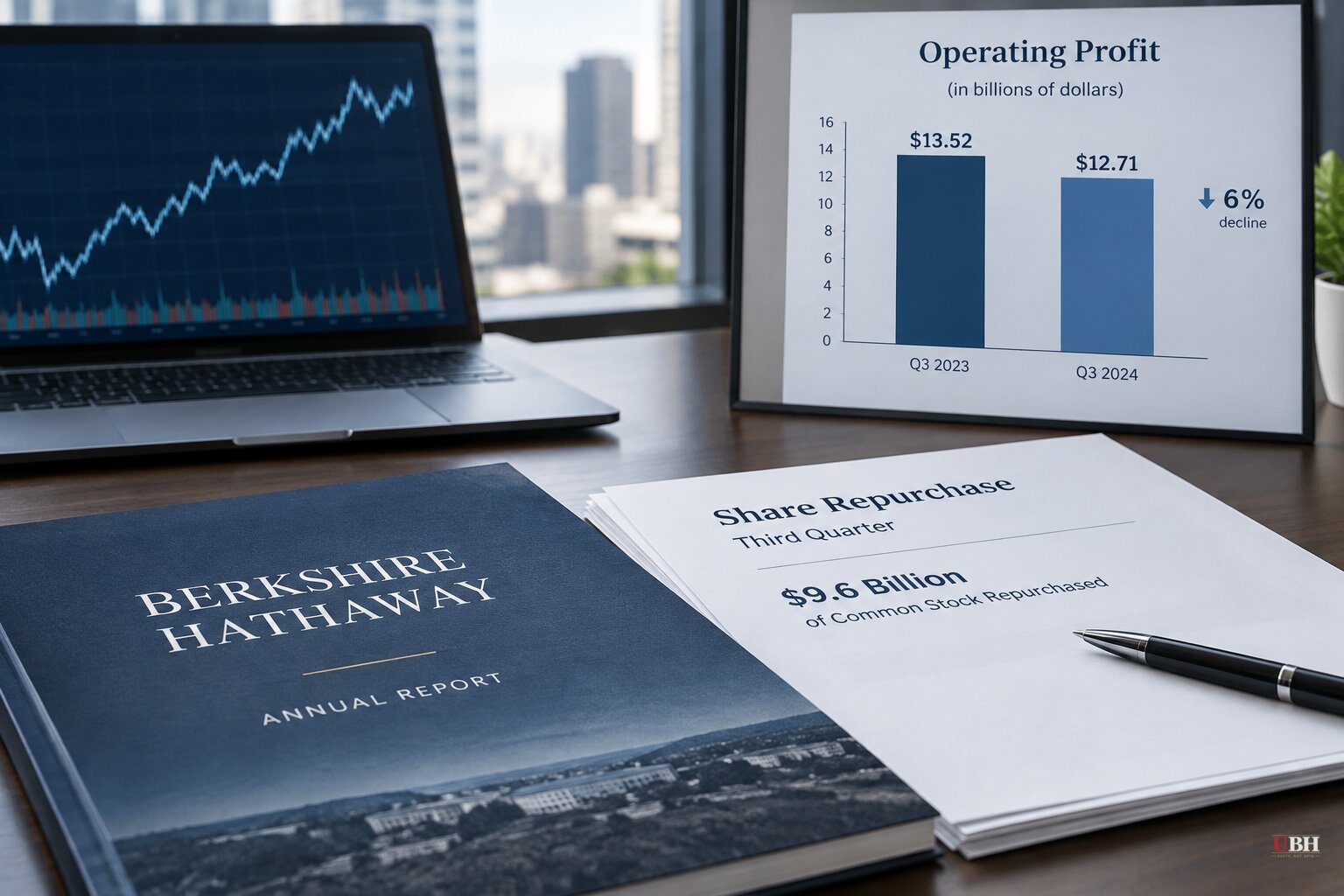
Berkshire Hathaway bought back about $9.6 billion of its own stock in the third quarter. That is the most the company has ever spent on repurchases in a single quarter, topping the roughly $9.3 billion it spent in the third quarter of 2020.
The company disclosed the figure in its quarterly report on Saturday, Nov. 7.
The buyback numbers
Berkshire bought about 12.4 million Class B shares at an average of $503.68, plus 4,536 Class A shares. The heaviest buying came in September.
The company had already spent $4.8 billion earlier in the year, which puts the nine-month total at $14.4 billion. Berkshire said it spent about $2 billion more in the first four weeks of October.
The all-time annual record is still safe. Berkshire repurchased $27 billion of stock in 2021.
Class B shares closed at $570.89 on Friday, 13.3% above the average price Berkshire paid in the quarter and 14.6% above the end-of-September level. The stock hit a record close of $579.09 on Wednesday. It is up 13.6% this year, against 7.8% for the S&P 500 fund SPY.
Berkshire's rules say the CEO approves repurchases after consulting the chairman, and only when he believes the shares trade below what the business is worth. In Berkshire's 2026 shareholder letter, Abel wrote: "We will buy back Berkshire shares when they trade below our estimate of intrinsic value, conservatively determined, ensuring that repurchases enhance per-share value for continuing owners."
Earnings: insurance drags
Operating profit, which strips out investment gains and losses, fell 6% from a year earlier to $12.71 billion, about $8,954 per Class A share. Over the first nine months it totaled $37.0 billion, up 8.0%.
Insurance was the main reason for the drop. Insurance profit fell 26%, and underwriting profit fell 43%. Geico's pretax profit dropped 45%, with higher accident losses and more advertising spending cited as causes. Lower interest income on Berkshire's Treasury bills also weighed on results.
BNSF railroad, Berkshire Hathaway Energy and the manufacturing, service and retailing businesses all reported higher profit, which offset part of the insurance decline.
Net income fell 28% to $22.11 billion. That figure includes about $9.4 billion of investment gains. Berkshire itself tells investors to ignore swings in the value of stocks it holds, because they say little about how the businesses are performing.
Where the cash is going
Berkshire ended September with $356.9 billion in cash and equivalents, down from $380.2 billion at the end of March. Figures vary depending on how Treasury bill purchases still waiting to settle are counted.
On stocks, Berkshire was a small net seller in the quarter, buying $2.4 billion and selling $2.8 billion. That is a sharp slowdown from the second quarter, when it was a net buyer of about $20 billion.
Buying has been bigger elsewhere this year. Berkshire paid about $9.4 billion for OxyChem in January and $6.8 billion in July for homebuilder Taylor Morrison. It also took a 4% stake in Italian software company Bending Spoons.
Berkshire's purchases this year have included billions of dollars of Alphabet shares. Alphabet stock currently trades below the prices Berkshire paid for those shares.
Abel and Buffett
Abel, 64, became CEO at the start of 2026. Buffett, 96, stepped down as chairman in September and holds the title of chairman emeritus. The board elected his son, Howard Buffett, as chairman.
The quarter was Abel's third as CEO. The sources describe his approach differently.
Reuters said Abel "has appeared more willing to spend Berkshire's cash than his predecessor Warren Buffett," who struggled to find things to buy late in his 60 years in charge. Business Insider, by contrast, said Abel has "hewed closely to Buffett's approach" and that accelerating buybacks was a change made in consultation with Buffett.
Bloomberg Intelligence analyst Matthew Palazola said Abel is putting the cash to work through buybacks, acquisitions and equity investments while keeping the measured approach associated with Buffett.
Berkshire's own numbers give a partial answer. Repurchases are running well ahead of last year's pace, while stock buying is subdued and the cash pile remains enormous.
What comes next
Berkshire is expected to file its third-quarter portfolio disclosure next week. That filing will show which public stocks the company bought and sold, including whether the $20 billion net buying in the second quarter was followed by trimming elsewhere.
U.S. markets are closed for the weekend, so the first market reaction to the report will come when trading resumes Monday, Nov. 9.
Sources used for this briefing
7 links from 6 independent newsrooms (syndicated copies of the same report count once)
These are the sources it draws on, linked so you can verify.


