
Unbiased headlines. Facts, not spin.
Every story is an unbiased news briefing written from 110+ sources across the spectrum — sources linked so you can verify it yourself.
 economy
Low Interest (4/10)
July 12, 2026 at 10:26 PM
economy
Low Interest (4/10)
July 12, 2026 at 10:26 PM
Poll Finds 69% of Americans Support Forcing AI Companies to Hand Over Half Their Stock to the Government
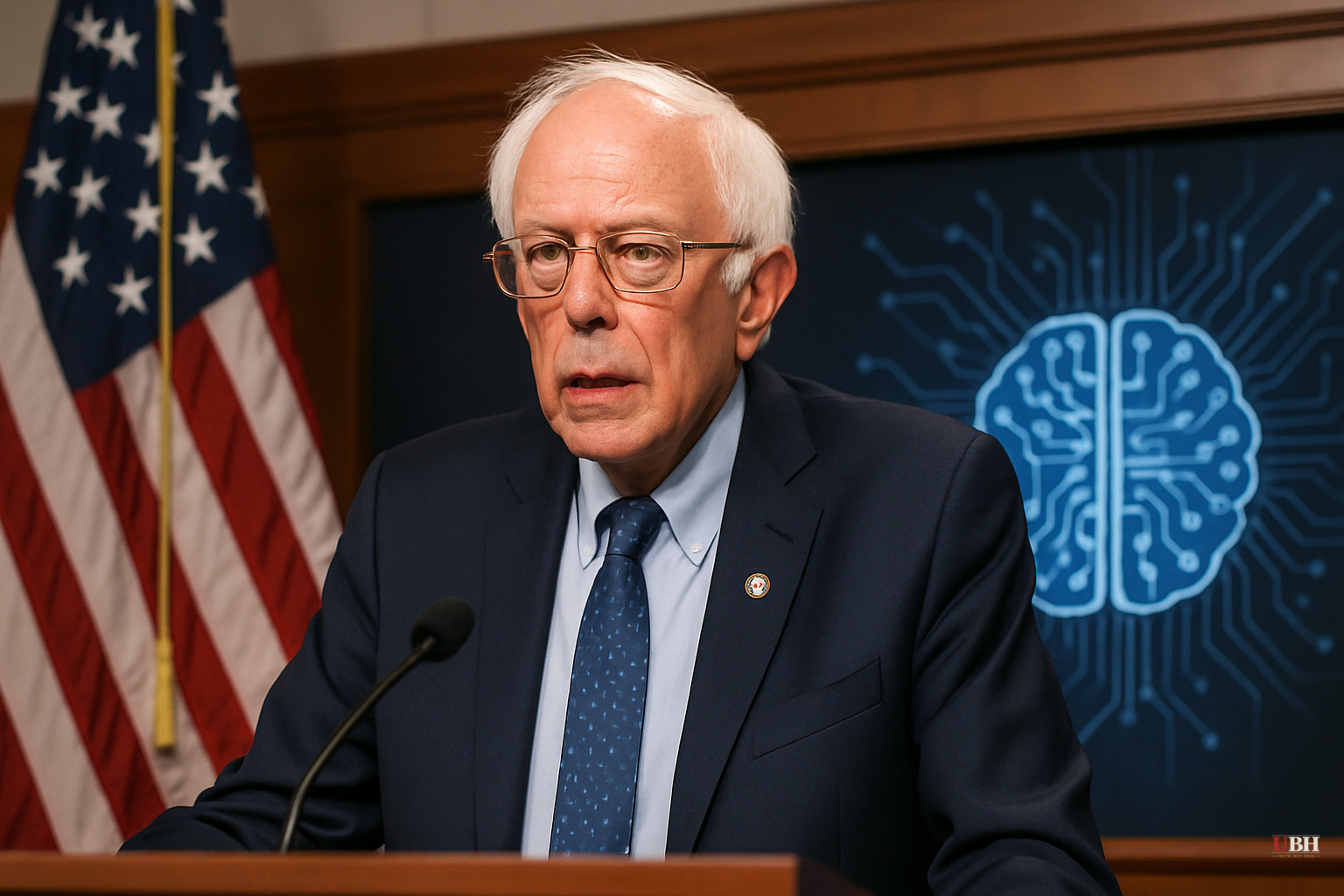
The Poll
A national survey of 1,690 adults conducted by research firm Verasight in June found that 69% of respondents support "forcing" AI companies to transfer 50% of their stock to a public sovereign wealth fund, according to CNBC. The survey was published earlier this month.
Benjamin Leff, CEO of Verasight, said the public increasingly sees AI sovereign funds as "a tool to distribute the gains from the AI industry back to broader society."
That frustration didn't come out of nowhere. Tech companies have posted record profits while simultaneously cutting jobs, and workers are noticing the disconnect.
The Sanders Bill
Senator Bernie Sanders introduced the American AI Sovereign Wealth Fund Act in June. The bill would give the public a 50% stake in the country's largest AI companies.
"It would guarantee that the economic benefits generated by AI are used to improve the lives of all of us, not simply to make the richest people in the world even richer," Sanders said in a statement.
Sanders also argued that "the future of AI and the fate of humanity must not be decided behind closed doors in Silicon Valley by billionaires seeking to maximize their power and profit."
The bill has not received a floor vote, has not been scored by the Congressional Budget Office in any published estimate cited here, and has no reported Republican cosponsors. It is, at this stage, a proposal, not law.
Why Workers Are Anxious
The anxiety driving support for this idea is not manufactured. Goldman Sachs Senior Global Economist Joseph Briggs estimated in a report published last month that more than 9% of the U.S. labor force, roughly 15 million workers, could lose their jobs during a 10-year AI transition period.
Briggs compared it to the automation shock of the late 1990s and early 2000s. He also said he expects the losses to prove temporary because AI will create new jobs over the long run even as it destroys existing ones, according to the Goldman Sachs report.
If AI displaces millions of workers while corporate profits climb, workers reasonably ask where the payoff for the rest of the country is. It's the same question raised every time automation reshapes an industry.
The Problem: This Isn't How Property Works in America
The government does not have the authority to seize 50% of a private company's stock without compensation. The Fifth Amendment's takings clause requires just compensation for government seizure of private property, and a forced 50% equity transfer from Nvidia, OpenAI, or Microsoft would almost certainly trigger a constitutional fight that could tie up courts for years.
There's also the question of who runs this fund. Sovereign wealth funds, according to research firm Windfall Trust, can serve multiple roles: funding AI infrastructure, taking equity stakes, and capturing gains for the public treasury. But Windfall Trust also flagged a real tension in how these funds operate: a fund's financial mandate to maximize returns for citizens can directly conflict with a strategic mandate to build domestic AI capacity, since "the best financial investment is a foreign AI company rather than a domestic one."
A government-run AI fund would face constant pressure to either invest for return, which might mean funding foreign competitors, or invest for national strategy, which might mean losing money on purpose. Politicians deciding which companies get government backing is exactly the kind of central planning that has a poor track record, from Solyndra to countless state pension funds that underperform the market while chasing political priorities.
What This Poll Actually Shows
A 69% approval number in a survey is not the same as a workable policy. Polls asking people if they want a piece of trillion-dollar tech profits will always poll well, in the same way polls asking if people want lower taxes and more government services poll well. The details are where these ideas fall apart.
Whether Congress will ever put this to a vote, and if it does, whether it survives a court challenge on takings clause grounds, remains unresolved. Sanders' bill remains without a scheduled hearing as of this writing. Until it gets one, this stays a talking point measuring public anger at Silicon Valley layoffs, not a functioning government fund.
Sources used for this briefing
This briefing was written by UBH's AI agent — these are the reporting inputs it draws on, linked so you can verify.


