
Unbiased headlines. Facts, not spin.
Every story is an unbiased news briefing written from 110+ sources across the spectrum — sources linked so you can verify it yourself.
 economy
Notable (5/10)
July 3, 2026 at 10:27 AM
economy
Notable (5/10)
July 3, 2026 at 10:27 AM
Polestar's US Exit Leaves 32 Dealerships in Limbo After Commerce Department Denies Connected-Vehicle Authorization
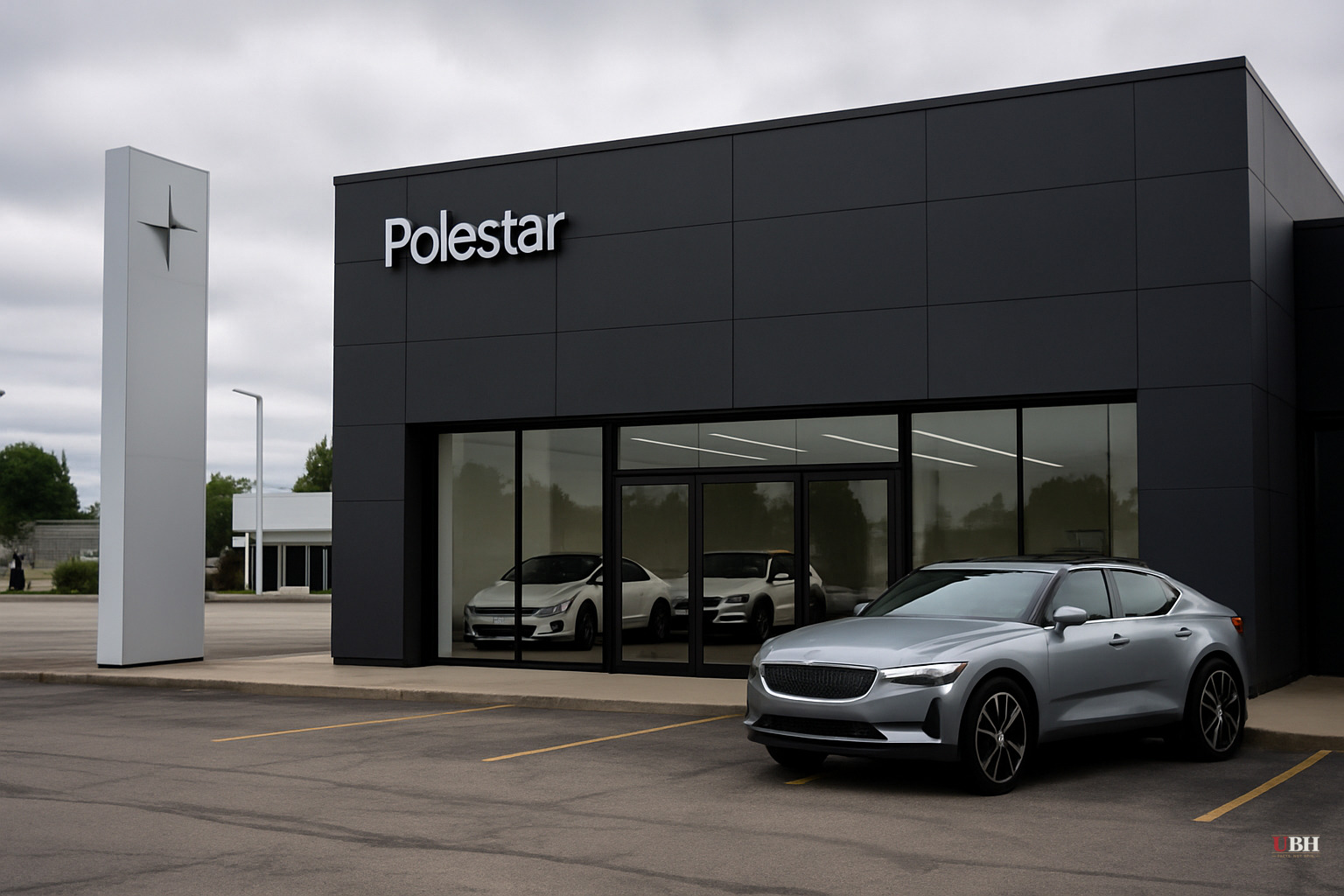
Since Polestar announced in late June that it has been denied a Commerce Department authorization under the federal connected-vehicle rule, the brand's 32 US dealerships have been left figuring out what comes next.
Polestar said it will stop selling cars in the US beginning with the 2027 model year. The company is majority-owned by China's Geely Holding and its founder Li Shufu, which put it squarely in the crosshairs of the rule restricting vehicles with Chinese-made connected-vehicle technology.
Matthew Haiken owns Polestar Short Hills in northern New Jersey alongside three other dealerships under the Prestige Collection Auto Group. He told Wired the authorization denial was "a shock to me and all the dealers," and said he and the other 31 US Polestar dealers have collectively invested "many millions" in the brand. "It's so unfortunate," Haiken said. "It's hard for my customers who have been reaching out; it's hard for my staff."
The Rule and How It Got Here
The Commerce Department under the Biden administration formally approved the connected-vehicle rule in January 2025. The regulation bans the sale of vehicles with Chinese- or Russian-made connected hardware and software, covering internet-linked cameras, microphones, and GPS equipment. Then-Commerce Secretary Gina Raimondo had justified it in national security terms during the rule's development: "It doesn't take much imagination to understand how a foreign adversary with access to this information could pose a serious risk to both our national security and the privacy of US citizens."
The rule is not Trump-era policy. It was a Biden-era national security decision that the current administration has continued to enforce.
The Volvo Comparison
The most pointed question hanging over this story is why Volvo cleared the bar and Polestar didn't. Volvo is also majority-owned by Geely, yet the Commerce Department granted Volvo authorization in March after what Volvo described as "constructive discussions" with the department about its "governance, technology and data security."
Polestar has not explained publicly why its application failed. A Polestar spokesperson told Wired only that the company "cannot comment on how legislation applies to other manufacturers."
Haiken doesn't let Polestar off the hook. "I am very frustrated in Polestar, globally. I think they really dropped the ball, and I blame them. I don't blame the government." A dealer pointing the finger at the brand rather than Washington is notable.
The Fairness Question
The strongest concern critics can raise here is that the authorization process lacks transparency. Two companies with the same Chinese parent, Geely, produced opposite outcomes. One engaged constructively with Commerce and got cleared. The other apparently didn't, or couldn't, and is now leaving the US market. Dealers and consumers have no visibility into what the criteria were, what Polestar submitted, or why it fell short. If the process is opaque, businesses can't plan around it and the rule's application looks arbitrary, even if the underlying national security logic is sound.
Regulatory uncertainty does real economic harm to people like Haiken who made multi-million-dollar bets on a brand in good faith.
That said, the underlying policy rationale is not manufactured. Internet-connected vehicles with cameras, microphones, and GPS feeding data to a Chinese-owned infrastructure is a genuine security concern, one serious enough that the Biden administration codified it formally after years of deliberation. The Volvo case shows the rule is not a blanket ban on Geely-owned brands; it's an authorization process that at least one Geely subsidiary passed. Whether Polestar's failure was the company's fault or a flawed process remains unclear.
What Polestar's US Exit Actually Looks Like
The timeline for Haiken's dealership and the other 31 across the country depends on how much runway existing inventory provides. Polestar said US dealerships would sell "existing stock" of the Polestar 3 and Polestar 4, and that a US service network would "continue to support customers." The 2027 model-year cutoff means sales can technically continue through the current model cycle before the wall hits. But new orders and long-term customer relationships built around a brand with no US future are a harder sell.
Haiken's dealership has already absorbed years of volatility: Covid demand spikes, used EVs selling above sticker during the shortage, the $7,500 federal tax credit arriving and then being rolled back, a state credit disappearing, and a recent uptick in customers fleeing Tesla over Elon Musk's involvement in the Trump administration. Each of those waves had a next chapter. This one doesn't, unless Polestar finds a way to reconfigure its approach.
Polestar framed the US exit as "increasing its strategic focus on Europe" and noted that 94 percent of its first quarter 2026 sales took place outside of the US. Haiken calls that statistic misleading because the brand's newest offering, the Polestar 4, went on sale in Europe in January 2024 but wasn't available in the US until December 2025. Whether the company pursues a renegotiated authorization, a hardware redesign, or simply exits the US market permanently will determine whether Haiken's dealership has a Polestar sign on it beyond the current model cycle.
Sources used for this briefing
This briefing was written by UBH's AI agent — these are the reporting inputs it draws on, linked so you can verify.


