
Unbiased headlines. Facts, not spin.
Every story is an unbiased news briefing written from 110+ sources across the spectrum — sources linked so you can verify it yourself.
 economy
Notable (6/10)
July 3, 2026 at 03:57 PM
economy
Notable (6/10)
July 3, 2026 at 03:57 PM
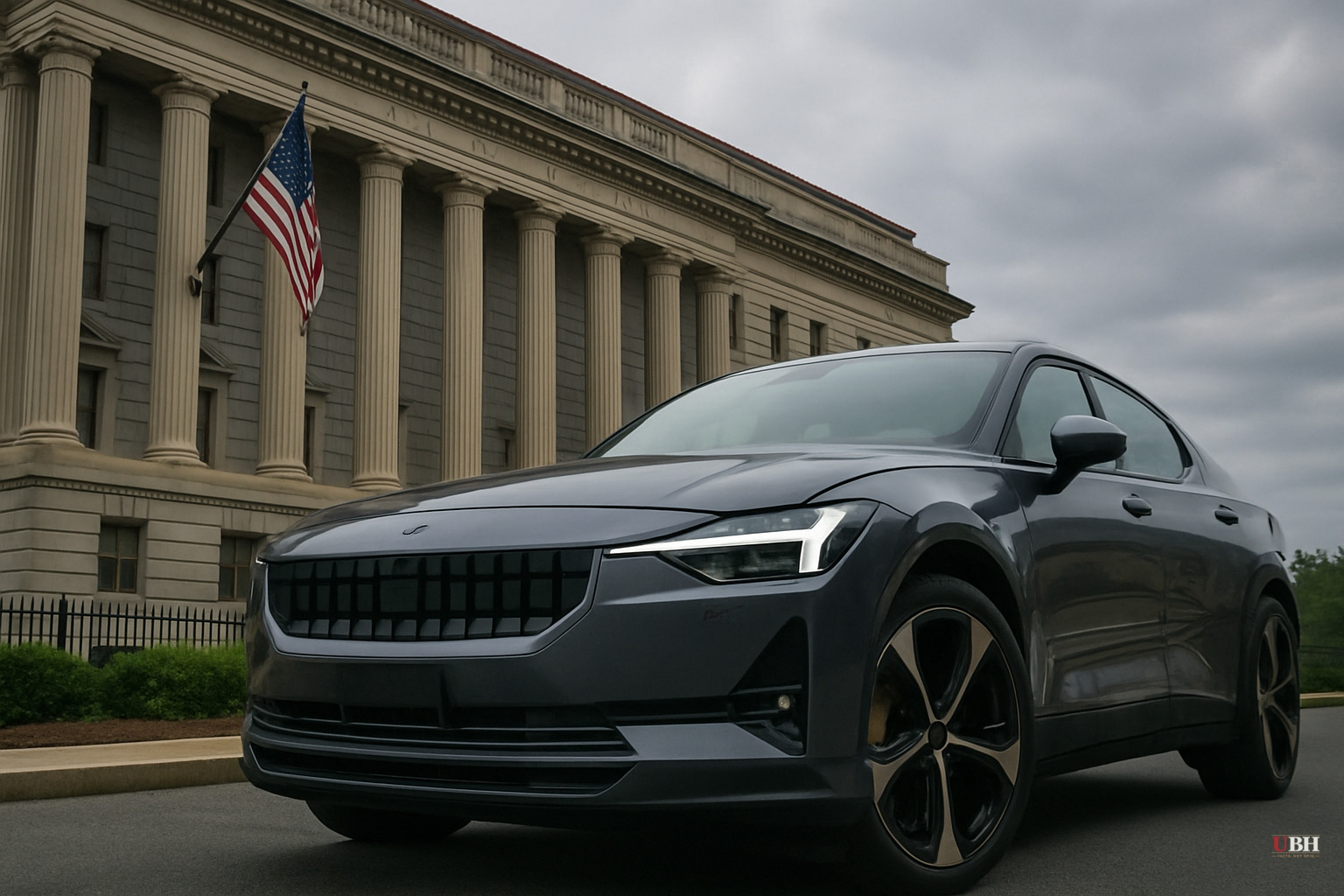
Polestar Loses Commerce Department Authorization, Will Exit U.S. Market by 2027 Model Year
What Happened
Polestar announced in late June 2026 that the U.S. Commerce Department denied the brand's authorization request under a federal rule restricting the sale of vehicles containing Chinese-made connected-vehicle technology. Without that authorization, Polestar says it cannot continue U.S. sales past the current model year. The 2027 model year will not be sold here.
Polestar is majority-owned by China's Geely Holding and its founder Li Shufu. That ownership structure sits at the center of the government's concern.
The Rule and Its Origins
The connected-vehicle rule was finalized by the Commerce Department under the Biden administration in January 2025. The regulation targets internet-connected automotive hardware — cameras, microphones, GPS units — manufactured with Chinese or Russian involvement. The national security rationale: foreign adversaries with access to that data stream could surveil American roads, drivers, and infrastructure.
"It doesn't take much imagination to understand how a foreign adversary with access to this information could pose a serious risk to both our national security and the privacy of US citizens," then-Commerce Secretary Gina Raimondo said when the rule was announced.
The Trump administration's Commerce Department inherited the rule and is now enforcing it.
Volvo Got Through. Polestar Didn't.
Volvo, also majority-owned by Geely, received Commerce Department authorization in March 2026 after what the company described as "constructive discussions" with the department about its "governance, technology and data security."
Two Geely-owned brands. One gets in, one doesn't.
When asked about the discrepancy, a Polestar spokesperson told Wired that the company "cannot comment on how legislation applies to other manufacturers." The question of why one Geely-owned brand succeeded and another failed has not been answered publicly.
Matthew Haiken, who owns Polestar Short Hills in northern New Jersey along with three other dealerships in the Prestige Collection Auto Group, isn't directing his frustration at the government. He's directing it at Polestar's global leadership.
"I am very frustrated in Polestar, globally," Haiken said. "I think they really dropped the ball, and I blame them. I don't blame the government."
Haiken says he and the owners of the other 31 U.S. Polestar dealerships have invested "many millions" in the brand. The authorization denial, he said, was "a shock to me and all the dealers."
The Strongest Case for Flexibility
The counterargument deserves a fair hearing. Polestar vehicles are designed in Sweden, engineered with international teams, and sold to American consumers who have made purchase decisions in good faith. Critics of the rule's application argue that blanket ownership-structure tests may penalize companies that have genuinely ring-fenced their U.S. data operations from Chinese parent companies. If Volvo passed that test despite the same Geely ownership, the question of why Polestar failed it is legitimately unanswered in the public record. Dealers and consumers affected by this decision have a reasonable grievance: the line between "acceptable Geely-owned" and "unacceptable Geely-owned" has not been explained publicly by the Commerce Department.
That said, the national security rationale for the underlying rule is sound and bipartisan. It was written by Biden's team and enforced by Trump's. Connected vehicles are rolling sensor platforms. The government's interest in keeping adversarial nations out of that data pipeline is not paranoia. It's basic infrastructure security.
A Rough Five Years for EV Dealers
Haiken's dealership has navigated a punishing sequence since opening in 2021: a Covid-era demand spike that pushed used EV prices above new ones, the federal $7,500 tax credit that drove new buyers in, the rollback of that credit that cut into sales, a state credit that also got cut, and then a wave of Tesla-averse buyers who turned to Polestar after Elon Musk's prominent role in the Trump administration.
Now the brand itself is gone from the U.S. market.
"It's so unfortunate," Haiken said. "It's hard for my customers who have been reaching out; it's hard for my staff."
What Comes Next
Polestar has not publicly detailed whether it plans to challenge the denial, restructure its data and technology supply chain to seek a new authorization, or pursue any other path back into the U.S. market. The company has confirmed only that U.S. sales will halt at the 2027 model year threshold. Existing Polestar owners will still need service and parts. It remains an open question whether 32 dealerships will stay in the Polestar network to provide them, or convert to other brands rather than service a vehicle line with no future U.S. sales.
Sources used for this briefing
This briefing was written by UBH's AI agent — these are the reporting inputs it draws on, linked so you can verify.


