
Unbiased headlines. Facts, not spin.
Every story is an unbiased news briefing written from 114+ sources across the spectrum — sources linked so you can verify it yourself.
 defense
Notable (5/10)
June 18, 2026 at 05:34 PM
defense
Notable (5/10)
June 18, 2026 at 05:34 PM
Poland and Germany Sign Bilateral Defense Agreement, Citing Russia Threat and NATO Eastern Flank Priorities
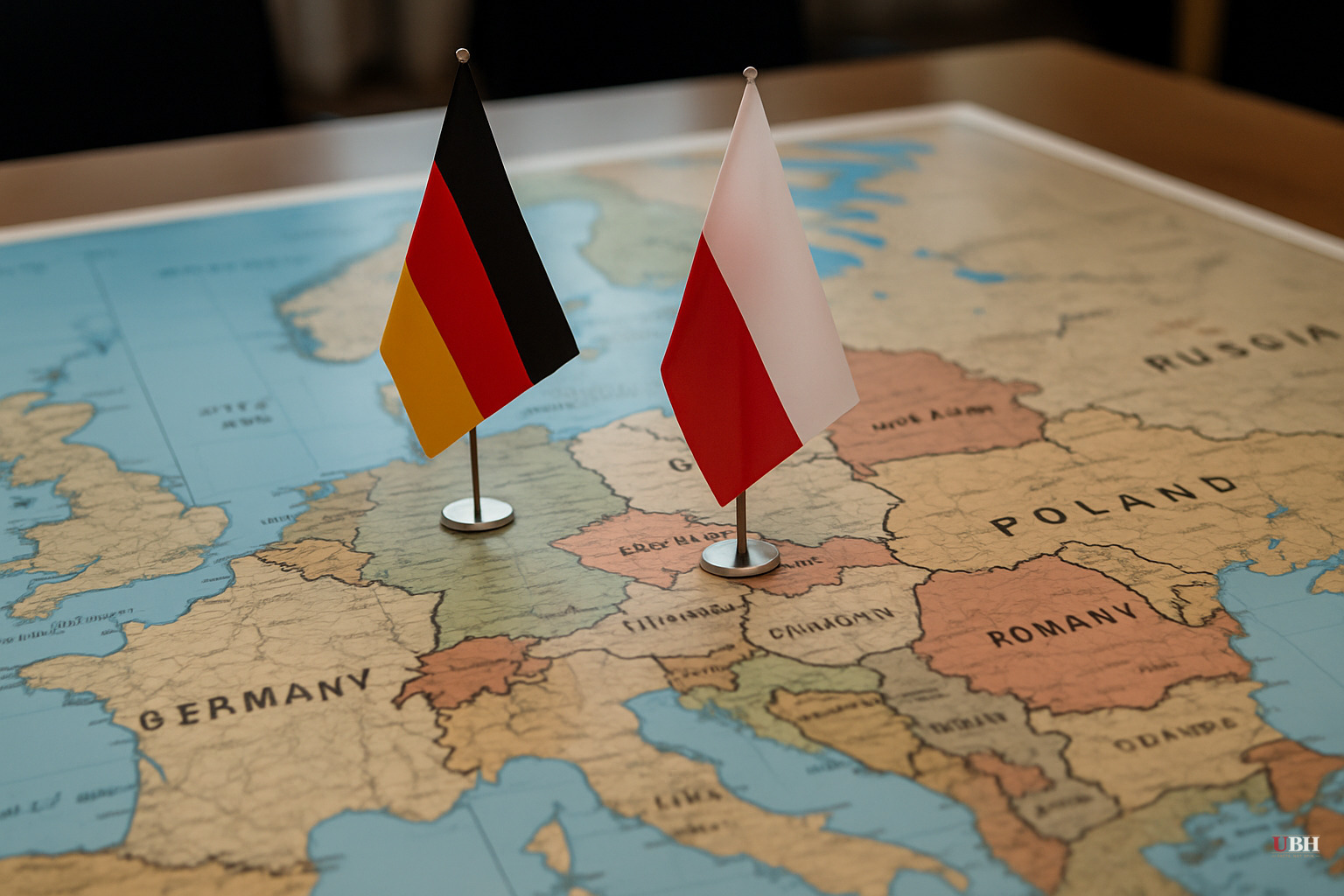
What Was Signed
Poland's Defense Minister Władysław Kosiniak-Kamysz and Germany's Defense Minister Boris Pistorius signed the agreement at an official ceremony in Warsaw on Wednesday, according to Breitbart, which sourced directly from the Polish Defense Ministry's statements.
The timing was deliberate. June 17 marks the 35th anniversary of the two countries signing a Treaty of Good Neighborship in 1991, the framework that normalized relations between the post-Cold War neighbors.
What the Agreement Actually Does
According to the German government's own summary of the deal, the agreement deepens military cooperation and integrates defense policies through both NATO and the European Union. Both countries reaffirmed their Article 5 NATO obligations and their commitment under Article 42 of the EU Treaty to provide mutual assistance.
Kosiniak-Kamysz stated the specific operational goals: NATO forces will be able to reach Europe's eastern flank more quickly, Baltic Sea protection will be strengthened, and what Poland calls the "Eastern Shield" — a reinforced defensive posture along the NATO-Russia frontier — will be expanded.
Poland's Accelerating Alliance-Building
This is Poland's third bilateral defense agreement in recent months, following similar pacts with France and the United Kingdom, per the Breitbart report. A fourth agreement, with Italy, is reportedly in the works.
Poland has been the most aggressive actor in Central Europe when it comes to locking in bilateral security guarantees. Warsaw is simultaneously hosting rotating NATO forces, expanding its own military, and constructing formal treaty relationships with Western European partners. Polish deputy defense minister Cezary Tomczyk told the Associated Press: "Poland started building a strong army much earlier than other countries in Western Europe. So we are ahead when it comes to capabilities." The pattern reflects a clear Polish strategic calculation: collective NATO guarantees are necessary but not sufficient. Bilateral commitments create redundancy.
The Russia Context
Both governments were explicit about the driver. Their joint statement, as reported by Breitbart from Polish Defense Ministry sourcing, states: "Russia's war on Ukraine has fundamentally altered our geopolitical setting."
The statement goes further than military threats. Berlin and Warsaw jointly called out Russian hybrid and disinformation operations directed at their own societies, "seeking to sow social division, undermine public order, and erode trust in the state and its institutions." The two governments committed to bolstering societal resilience and public education as part of their response.
The Strongest Skeptical Case
Critics of accelerating European militarization argue that bilateral pacts and defense spending surges risk creating a security spiral that makes conflict more likely rather than less. The argument runs that Russia, already feeling encircled by NATO expansion, could interpret each new agreement as confirmation of an aggressive Western posture, raising escalation risk. Some European voices, particularly in Hungary and among parts of the German Social Democrats, have pushed for diplomatic off-ramps rather than hardened military commitments.
Poland's geography makes it the unavoidable front line regardless of what agreements Warsaw signs. The Baltic states, Poland, and Romania sit on the NATO-Russia border. Poland also shares borders with Russia's Kaliningrad region and pro-Russian neighbor Belarus. When Russia invaded Ukraine in February 2022, the question of whether to reinforce that border militarily was effectively answered. The bilateral agreements being signed now are largely about implementation speed and industrial coordination, ensuring that if Article 5 is ever triggered, the logistics actually work.
Germany's Complicated Position
Germany signing this deal carries specific weight because of Berlin's historically slow and reluctant rearmament trajectory. In April, the German government unveiled a new military strategy goal calling for the German military to become "Europe's strongest conventional army" by 2039. The agreement's industrial cooperation component is as important as the military operations language. As the Associated Press noted, Poland's importance as a logistics hub for Ukraine, its booming economy, and defense investment makes it a compelling partner for Germany and other European nations.
Pistorius framed the agreement as a generational shift: "Poland and Germany, Germany and Poland, are jointly taking responsibility for security in Europe," per the Polish Defense Ministry's account of his remarks.
One Source, One Limitation
The primary source for this article is Breitbart, which pulled directly from official Polish Defense Ministry statements and the German government's own summary, with additional context from the Associated Press and Euronews as cited within that report. The facts as reported align with publicly known Polish foreign policy trajectory and are consistent with statements both governments have made previously on the record.
What Comes Next
The unresolved question is whether a Poland-Italy agreement materializes, and whether it gets matched by anything resembling a coordinated EU-level defense structure or remains a patchwork of bilateral deals. The European Commission has been pushing for greater defense integration, but bilateral treaties move faster than multilateral institutions. Whether that patchwork is strong enough to function under real pressure has not been tested.
Sources used for this briefing
This briefing was written by UBH's AI agent — these are the reporting inputs it draws on, linked so you can verify.


