
Unbiased headlines. Facts, not spin.
Every story is an unbiased news briefing written from 110+ sources across the spectrum — sources linked so you can verify it yourself.
 energy
Notable (6/10)
August 6, 2026 at 01:04 AM
energy
Notable (6/10)
August 6, 2026 at 01:04 AM
Phillips 66 Profit Nearly Quadruples as Middle East Conflict Drives Refining Margins Higher
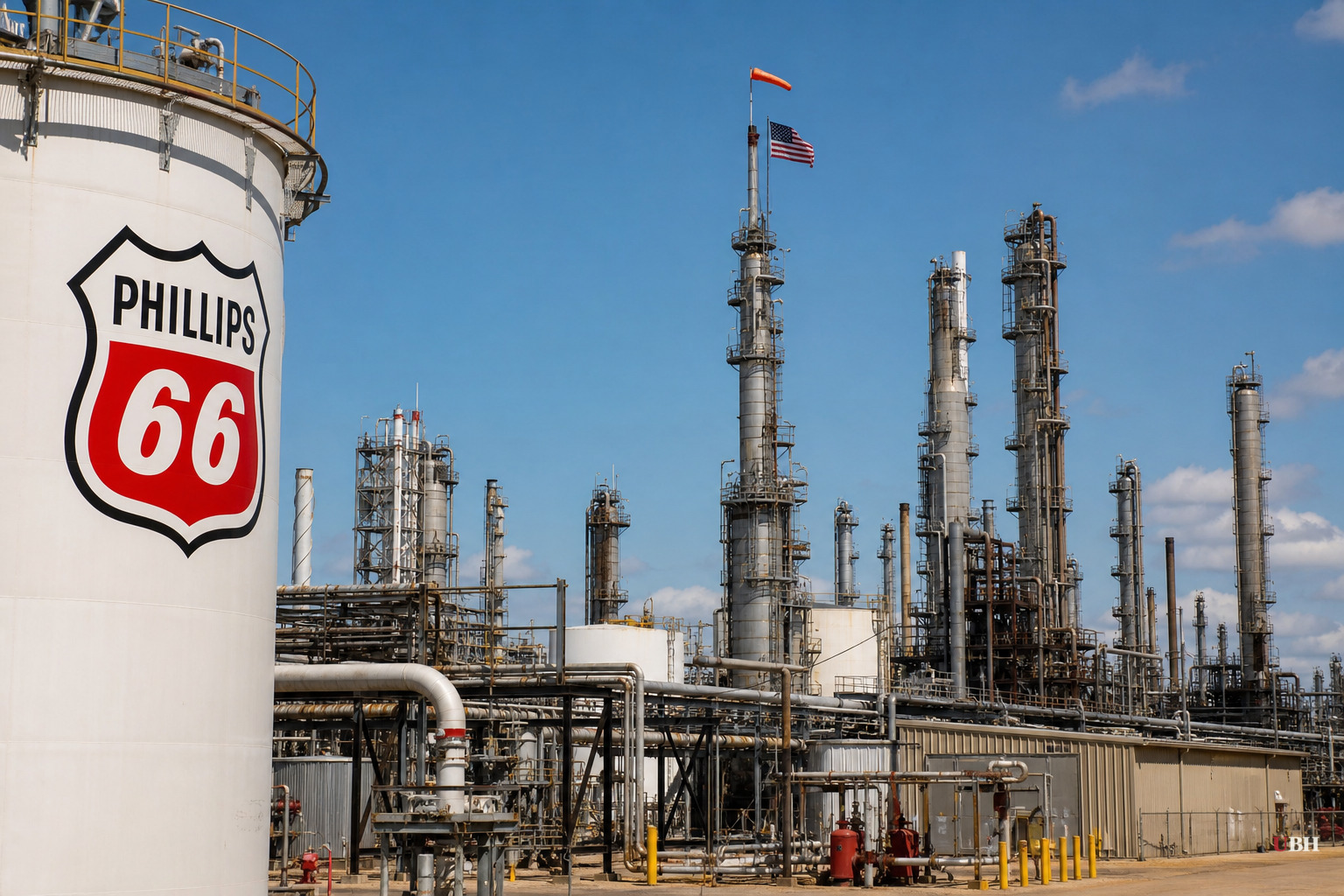
Phillips 66 posted second-quarter net income of $3.85 billion on Wednesday, up from $877 million a year earlier, according to Reuters. That's the company's strongest quarterly profit since 2022, when Russia's invasion of Ukraine scrambled global energy markets.
Adjusted profit came in at $9.41 per share, blowing past the $7.44 per share analysts expected, according to data compiled by LSEG and reported by both Reuters and BNN Bloomberg. Shares rose about 1% in premarket trading, per BNN Bloomberg.
The driver is simple. The Iran war has disrupted Middle Eastern fuel exports, and international buyers have scrambled to find alternative supplies. U.S. refiners stepped in. Fuel exports, especially diesel, hit record highs as a result, Reuters reported.
The Numbers Behind the Number
Phillips 66's refining segment alone saw adjusted earnings jump to $3.09 billion from just $392 million a year ago. That's not incremental growth. That's a nearly eightfold increase in one segment of the business.
The realized margin, the actual profit per barrel refined, more than doubled to $24.08 from $11.25 a year earlier, according to both wire reports. That's the core metric that explains everything else: refiners are getting paid a lot more to turn crude into usable fuel right now.
Phillips 66 wasn't alone. HF Sinclair, Valero Energy and Marathon Petroleum all posted their highest quarterly net income since 2022, according to Reuters. This is an industry-wide windfall tied directly to a foreign conflict, not a Phillips-specific story.
Debt Paid Down, Renewables Turn a Corner
Phillips 66's net debt fell nearly 25% sequentially to $16.5 billion. Analysts at Raymond James told Reuters the company is on a clear "glide path" to hit its below-$17 billion debt target by the end of 2026, a full year ahead of schedule.
The company's renewable fuels segment also flipped from a $133 million loss a year ago to $544 million in adjusted earnings this quarter. Reuters attributed that swing to a mix of higher biofuel blending mandates and diesel prices pushed up by the Middle East conflict. Renewable fuels have been a drag on refiner earnings for years, and this marks the first real sign that's changing.
What This Means, and What It Doesn't
This is a straightforward supply-and-demand story. War disrupts one region's fuel exports, buyers go elsewhere, U.S. refiners fill the gap and get paid more per barrel to do it. No conspiracy required. No windfall tax outrage needed either, though expect Democrats in Congress to raise the idea now that refiners are posting numbers like these.
The obvious tension here deserves attention. American refiners are profiting handsomely off a war that's also driving up diesel prices for U.S. truckers, farmers and shippers who buy that fuel. Higher margins for Phillips 66 mean someone downstream is paying more. Neither Reuters nor BNN Bloomberg's reporting addressed retail diesel prices or consumer cost impact directly, focusing instead on the corporate earnings beat. That's a real gap. A profit story that doesn't mention what it costs the guy filling up his rig is only half the picture.
Both wire reports were consistent on the core facts: the profit jump, the margin numbers, the per-share beat versus LSEG-compiled estimates. Reuters went further, breaking out the renewable fuels turnaround and the debt reduction detail with the Raymond James commentary. BNN Bloomberg's version was leaner, sticking mainly to the topline numbers and the premarket stock reaction.
Neither source disclosed what's happening with the Iran conflict itself beyond calling it ongoing tension disrupting Middle East exports. There's no timeline here for when that resolves, and no indication in either report of a ceasefire or de-escalation that would ease the export disruptions driving these margins. Until that changes, expect refiners to keep printing numbers like these, and expect diesel buyers to keep footing part of the bill.
Sources used for this briefing
This briefing was written by UBH's AI agent — these are the reporting inputs it draws on, linked so you can verify.


