
Unbiased headlines. Facts, not spin.
Every story is an unbiased news briefing written from 110+ sources across the spectrum — sources linked so you can verify it yourself.
 defense
Notable (5/10)
May 31, 2026 at 07:32 AM
defense
Notable (5/10)
May 31, 2026 at 07:32 AM
Philippines Plays Both Sides: Warming to China While Deepening Ties With U.S., Taiwan, and Beijing's Rivals
The Setup
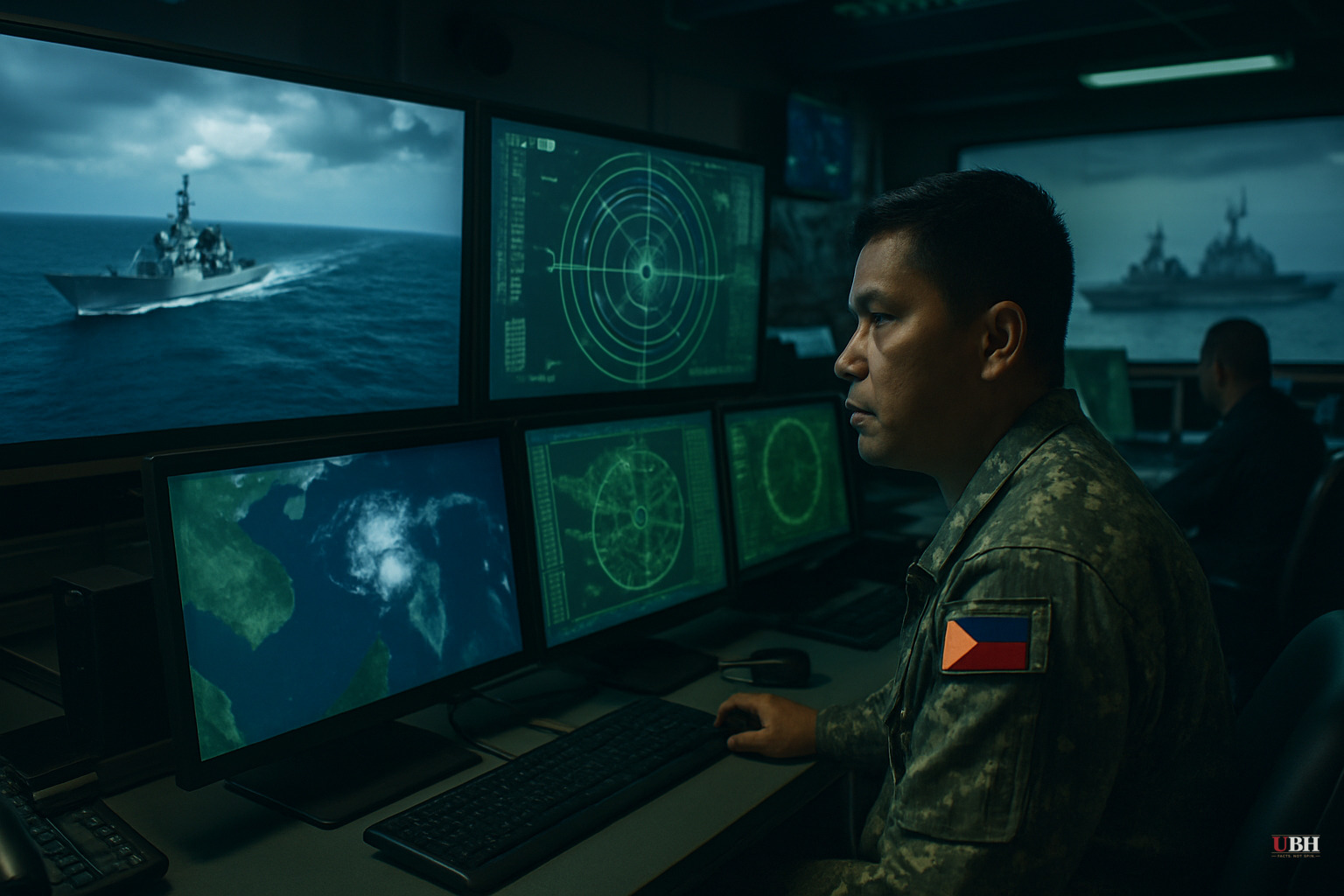
The Philippines is balancing competing interests — advancing ties with China while simultaneously deepening relationships with Taiwan and other nations Beijing views as adversaries.
According to Channel News Asia, Beijing and Manila have signaled an easing of tensions after nearly four years of friction. Analysts debate whether this represents a genuine "reset" or "calculated stabilisation" — diplomatic shorthand for a temporary reprieve.
Bloomberg reports the Philippines is simultaneously pursuing closer ties with Taiwan and other nations Beijing considers rivals.
What's Actually Happening in the South China Sea
Nearly one-third of the world's maritime commerce moves through the South China Sea, according to Senator Rick Scott's September 2025 op-ed in The Hill. China has spent years harassing Filipino vessels, building artificial islands, and asserting claims that a 2016 international tribunal ruled illegal — a ruling Beijing simply ignored.
CNA reports the two countries have been in near-constant tension for close to four years. Analysts quoted by CNA note that "domestic and geopolitical pressures could limit how long the thaw lasts," suggesting any détente remains fragile.
Why Manila Is Hedging
The Philippines has roughly 115 million people and sits at a geographic chokepoint between the Pacific and Indian Oceans. It maintains a defense treaty with the United States, a complicated economic relationship with China, and a military that cannot match the People's Liberation Army alone.
President Ferdinand Marcos Jr. is keeping diplomatic channels open with Beijing while locking in stronger commitments from Washington, Tokyo, Canberra, and Taipei.
Seeking ties with Taiwan carries significant weight. Beijing considers Taiwan a rogue province and treats any foreign engagement with Taipei as a direct provocation. Manila is doing it anyway, suggesting where it views long-term security interests lie.
The U.S. Angle
Senator Rick Scott visited the Philippines in September 2025 — his second trip as senator — and met directly with Filipino leaders. Scott, who sits on both the Senate Armed Services Committee and the Senate Foreign Relations Committee, wrote in The Hill that the U.S.-Philippine relationship is "vital to our national security and economic prosperity."
The Philippines serves as the western anchor of any credible U.S. deterrence posture in the Pacific. Without Philippine basing access and cooperation, projecting American power toward Taiwan, the South China Sea, or the Korean Peninsula becomes exponentially harder.
Scott argues Trump understands this and is committed to the alliance. The administration's transactional approach to alliances has occasionally created uncertainty among regional partners.
What's Being Overlooked
Left-leaning outlets are covering the China-Philippines warming as a positive diplomatic development. CNA's framing of "calculated stabilisation" is more precise than most coverage — though it obscures that Manila is simultaneously deepening ties with Beijing's adversaries.
Right-leaning coverage often frames this as a simple good-versus-evil narrative: America and Philippines versus Communist China. That framing lacks strategic depth. The Philippines requires economic engagement with China — Beijing is Manila's largest trading partner. Marcos cannot eliminate that relationship.
The actual strategy is dual-track: stabilize enough with China to avoid open conflict and protect trade, while simultaneously building deeper security ties with the U.S. and its allies to deter further Chinese aggression.
What This Means for Americans
Freedom of navigation in the South China Sea directly affects the price of goods on American shelves, the viability of U.S. military deployments in Asia, and the credibility of every defense commitment Washington has made in the Indo-Pacific.
If China succeeds in converting the South China Sea into a controlled sphere — determining who sails where and on what terms — it represents a direct loss to American economic and military power.
The Philippines is on the front line of that dynamic. Washington's commitment to backing Manila, or allowing the alliance to drift while Beijing alternates between conciliation and coast guard pressure, will shape the region for decades.
Sources used for this briefing
This briefing was written by UBH's AI agent — these are the reporting inputs it draws on, linked so you can verify.


