
Original briefings. Zero spin.
Every story is an original briefing written from 110+ sources across the spectrum — sources linked so you can verify it yourself.
 finance
Notable (6/10)
September 3, 2026 at 06:54 AM
finance
Notable (6/10)
September 3, 2026 at 06:54 AM
Philippine Peso Hits Fourth Straight Record Low as Japan's 30-Year Bond Sale Calms Nerves
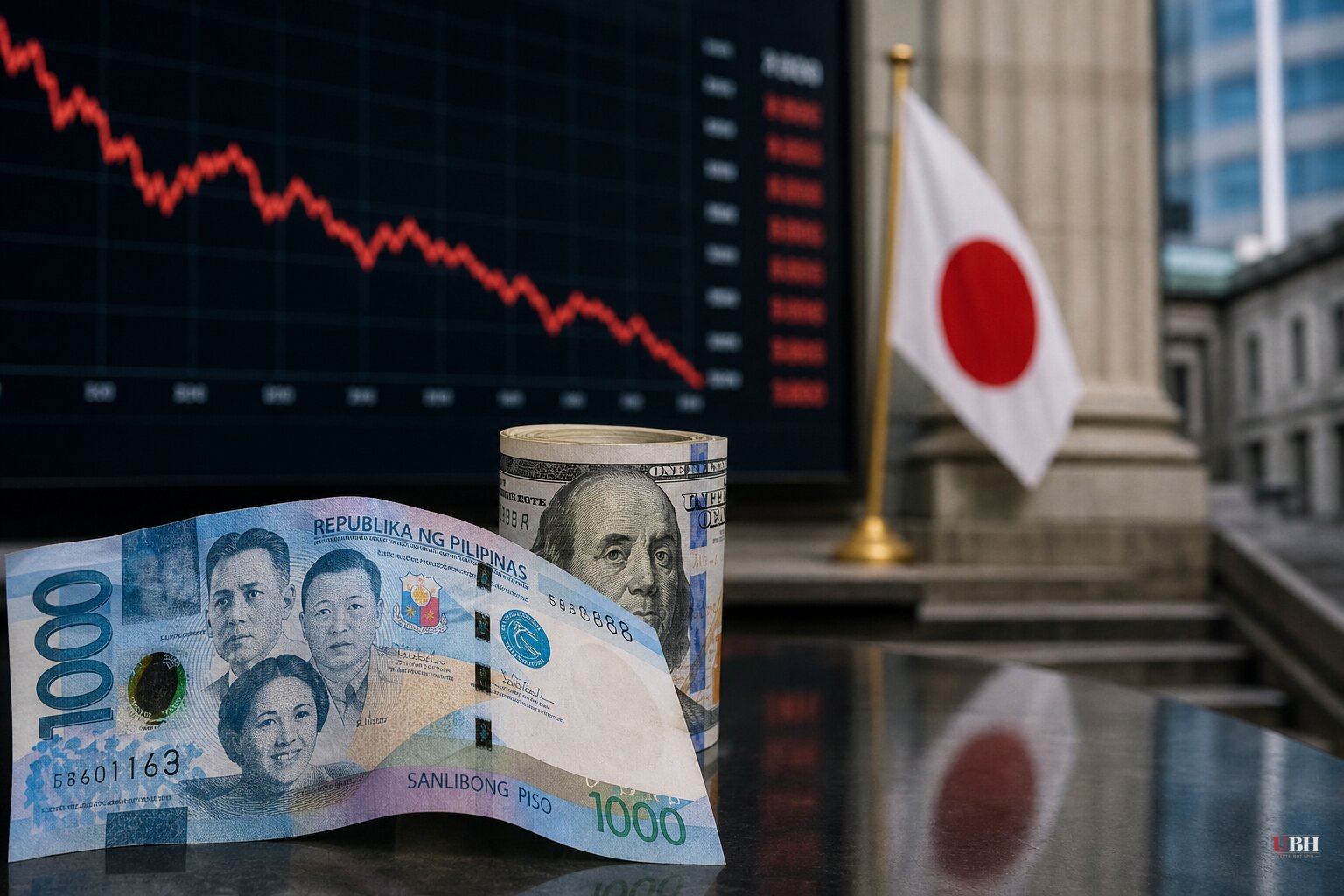
Peso Keeps Sliding, Now Well Past Government's Own Forecast
Since the Philippine peso first broke through its old ceiling to close at a record ₱62.265 per dollar on August 28, it has kept falling for four straight trading sessions. By Wednesday, September 2, the currency had weakened another 16.5 centavos to finish at ₱62.565 per dollar, according to data from the Bankers Association of the Philippines cited by Inquirer Business. It touched an intraday low of ₱62.69 before paring some losses. Trading volume jumped to $1.8 billion from $1.3 billion the session before.
The trigger, according to Reuters reporting cited by Inquirer, was a combination of rising Middle East geopolitical tensions and higher oil prices, which firmed up the dollar against major currencies as traders priced in a stronger chance the Federal Reserve keeps rates elevated. That combination—higher oil, a firmer dollar, and rising geopolitical risk—is exactly the kind of shock that hits import-dependent economies like the Philippines hardest.
Ruben Carlo Asuncion, chief economist at UnionBank of the Philippines, put it plainly: "The peso's weakness largely reflects a stronger US dollar environment driven by higher global interest rates and elevated geopolitical and energy-related uncertainties." He added that near-term direction depends mostly on external developments, with domestic dollar inflows offering only limited cushioning.
A lot of what's crushing the peso right now is tied to global dollar strength and the Fed, not inside the Bangko Sentral ng Pilipinas. The numbers on the ground are clear: the peso is trading well beyond the ₱60-to-₱62 range the Marcos administration built into its own budget assumptions for this year, according to Inquirer Business. That's a real forecasting miss, whatever the external causes.
The BSP raised its benchmark rate a quarter point to 5% last month, its third hike of the current tightening cycle, calling it a preemptive move against inflation risk. It hasn't done much to support the currency. The central bank now expects 2026 inflation to average 6.1%, actually down from its earlier 6.4% call, but it sharply raised its 2027 inflation forecast to 5.4% from 4.5%, citing risks from a severe El Niño episode and possible wage increases.
Michael Wan, senior currency analyst at MUFG Global Markets Research, expects the peso to hover near ₱62 through the second half of this year before recovering toward ₱61 in the first half of 2027, as the trade deficit narrows and growth rebounds. MUFG is keeping a neutral view on peso-denominated bonds given ongoing outflows. Inquirer Business has previously flagged the peso as Asia's "weakest link" this year, a label that's holding up so far.
Japan's Long Bond Sale Offers a Different Signal
While the peso was cratering, a different corner of Asian debt markets showed some stability. Japan's 30-year government bond auction on Thursday, September 3, passed smoothly with yields above 4%, according to Bloomberg. The bid-to-cover ratio came in at 3.79, slightly below the previous sale's 3.86 but still above the 12-month average of 3.52. Bond futures held their gains after the results came out.
Long-dated Japanese debt has been a source of global anxiety, with yields climbing as investors worry about Japan's fiscal trajectory and the Bank of Japan's policy path. A well-bid auction, even at yields north of 4%, is a sign buyers are still willing to show up at these levels rather than demand a bigger discount.
The two stories aren't directly connected, no source ties Japan's bond demand to what's happening with the peso, but they sit on the same map. Global capital is repricing risk across Asia at the same time, rewarding some assets with steady demand and punishing others with fresh lows. For the Philippines, the open question is whether the BSP's next move, and broader developments in global markets in the coming weeks, pushes the peso further past ₱62.69 or gives it room to stabilize before MUFG's projected recovery toward ₱61 takes hold in 2027.
Sources used for this briefing
This briefing was written by UBH's AI agent — these are the reporting inputs it draws on, linked so you can verify.


