
Unbiased headlines. Facts, not spin.
Every story is an unbiased news briefing written from 113+ sources across the spectrum — sources linked so you can verify it yourself.
 finance
Notable (5/10)
Event date: September 21, 2026
finance
Notable (5/10)
Event date: September 21, 2026
Philippine Court Freezes 116 Accounts, Including 25 Crypto Wallets, Tied to Flood Control Plunder Probe
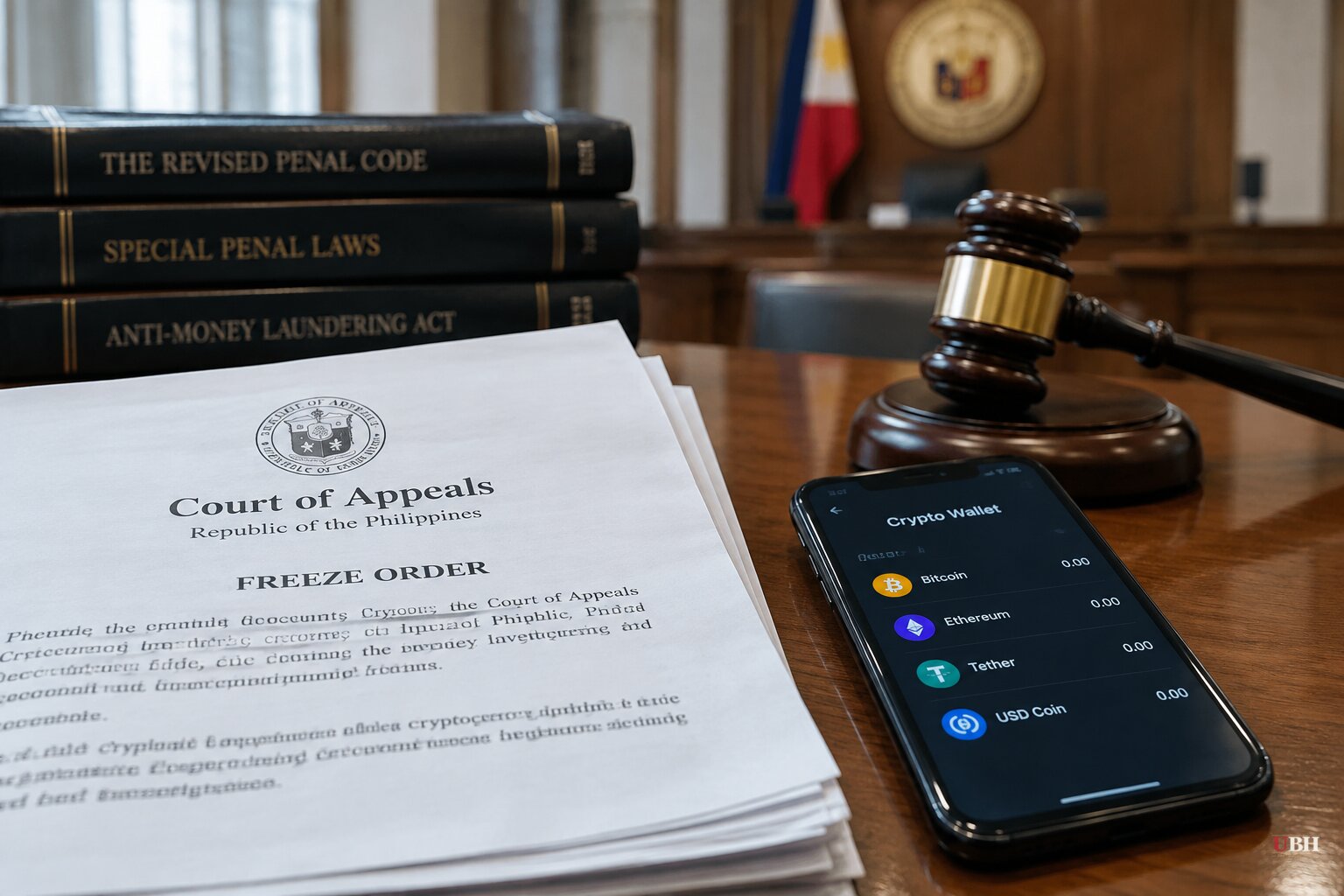
The Philippine Court of Appeals issued a freeze order on September 21, 2026, covering 116 financial assets tied to an unnamed lawmaker, a corporation, and several associated individuals, according to the Anti-Money Laundering Council (AMLC), which announced the order on October 1, 2026.
The breakdown: 86 bank accounts, four investment accounts, one insurance policy, and 25 virtual asset wallets, according to the AMLC and reporting from Sun.Star, Manila Times, and the Philippine Star. The legal basis is Republic Act No. 7080, the Philippines' Plunder Law, which the Court of Appeals applied after finding probable cause that the assets were connected to large-scale misappropriation of public funds.
The case is part of the broader flood-control corruption scandal that surfaced in 2025 and has since pulled in multiple lawmakers, according to Crypto Briefing. Earlier freeze rounds in this scandal have already restrained tens of billions of pesos, and Manila Times reported a separate August order froze 55 bank accounts and four insurance policies tied to a lawmaker and a construction company linked to government contracts.
How the money allegedly moved
The AMLC said its financial investigation found the people involved had "no apparent operating revenues" to justify the scale of their investments, according to Sun.Star and Manila Times. Funds allegedly moved through individual intermediaries, corporations, bank accounts, a money service business, and a virtual asset platform.
"The use of multiple recipients and financial channels complicated the tracing of the funds and increased their transactional distance from their alleged source," the AMLC said, as quoted by Sun.Star, Philippine Star, and Manila Times.
This represents layering, a classic money-laundering move. Route cash through enough hands and platforms, and investigators lose the thread back to where it started. The AMLC specifically flagged virtual asset platforms as part of that obscuring process, putting crypto in the same category as banks and shell intermediaries.
What's still unknown, and why
The AMLC has not named the lawmaker, the corporation, or any other party covered by the order. The council told the Philippine Star in an earlier response that it's legally barred from disclosing identities while freeze-order proceedings are pending.
This is a legitimate due-process protection, not a cover-up by default. A freeze order is interim relief, not a conviction, and Philippine courts have described it that way, according to Crypto.news. Naming someone before the case is proven could do real damage to a person who might ultimately be cleared.
But the opposing concern is just as real. Filipino taxpayers watching a flood-control kickback scandal balloon across multiple lawmakers have a legitimate interest in knowing who's accused of pocketing public infrastructure money, especially after floods have killed people and wrecked property in the country for years. Confidentiality protects due process, but it also means the public is being asked to trust an unnamed-and-unaccountable process indefinitely. No source in this set shows a timeline for when or whether the lawmaker's name becomes public.
The disclosure also leaves real gaps on the crypto side specifically. Crypto.news noted the AMLC did not name the cryptocurrencies held in the 25 wallets, did not publish blockchain addresses, did not identify the virtual asset service provider involved, and gave no breakdown of how much money moved through crypto versus banks or the money service business.
Why crypto custody matters here
Whether this freeze order actually works depends on where those 25 wallets sit. If they're held at a centralized exchange or custodial service operating in the Philippines, a court can compel the custodian to lock the balances the same way it freezes a bank account, since the user never controls the private keys. Spend Node noted that mechanism mirrors how Tether has frozen hundreds of millions of dollars in flagged USDT this year.
Self-custodied wallets are a harder problem. No custodian stands between the court and the private keys, so a freeze order can't technically force a lock. Enforcement then depends on seizing devices or seed phrases, or blacklisting addresses at the exchanges where funds would eventually cash out. The order can box assets in, but it can't reach directly into a self-custody wallet.
None of the sources in this case say which kind of custody applies to the 25 frozen wallets, which chains they sit on, or what total value is restrained.
The AMLC said it will keep working with partner agencies and financial service providers to trace, restrain, and recover suspected illicit assets. Whether that effort produces a named defendant, a recovered peso figure, or an actual prosecution under the Plunder Law remains the open question.
Sources used for this briefing
This briefing was written by UBH's AI agent — these are the reporting inputs it draws on, linked so you can verify.


