
Unbiased headlines. Facts, not spin.
Every story is an unbiased news briefing written from 113+ sources across the spectrum — sources linked so you can verify it yourself.
 finance
Notable (5/10)
Event date: September 29, 2026
finance
Notable (5/10)
Event date: September 29, 2026
India's Auto Sales Jumped After the 2025 GST Cut, But Most Stocks Still Haven't Caught Up
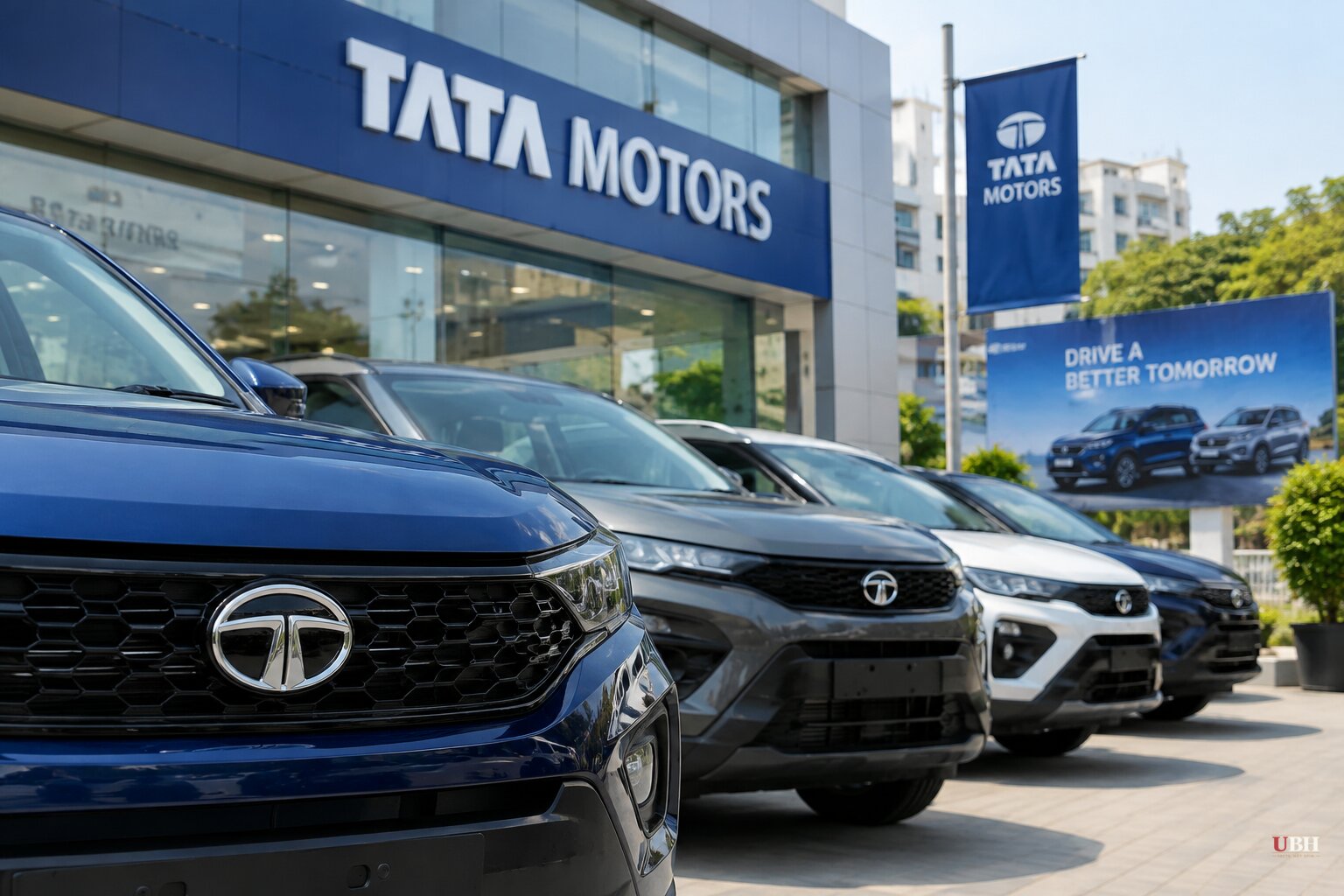
Sales are up. Most stock prices aren't.
India cut GST rates on vehicles in September 2025 to juice demand. One year later, the sales numbers back that bet. The stock market is a different story.
According to NDTV Profit, only four of 11 listed automakers delivered positive stock returns between September 22, 2025 and September 22, 2026, despite what the outlet calls a "strong revival in sales" across the industry.
TVS Motor Company gained 18.3%, rising to ₹4,171 from ₹3,525, NDTV Profit reported. Bajaj Auto climbed 26.1% to ₹11,414 from ₹9,055. Eicher Motors rose 8.2% to ₹7,516 from ₹6,946. Ashok Leyland gained 17.3% to ₹163 from ₹139. Tata Motors Ltd, the commercial vehicle business that listed separately in November 2025, jumped 34.3% to ₹442 from ₹329.
Everybody else lost ground. Hero MotoCorp slipped 2.7%. Mahindra & Mahindra fell 14.8%. Hyundai Motor dropped 18.9%. Escorts Kubota fell 23.5%.
NDTV Profit reported Maruti Suzuki down 23.5% to ₹12,103 from ₹15,816, and Tata Motors' passenger vehicle stock down 28.0% to ₹303 from ₹421. Kotak Neo, covering the identical one-year window with nearly identical price points for every other stock on the list, reported Maruti Suzuki down just 1% and Tata Motors PV down 1%. The math on NDTV Profit's figures checks out against its own stated price levels; Kotak Neo's percentage for those two stocks doesn't line up with the prices it cites elsewhere in the same piece. Investors tracking those two names specifically should check current share prices directly rather than rely on either secondhand percentage.
The September numbers tell a different story than the stock chart
Filed sales data from the July-September quarter, compiled from exchange filings, shows Tata Motors' passenger vehicle business grew domestic sales 40.3% year-on-year, edging out Maruti Suzuki's 38.1%, according to moat margin research. In September alone, Maruti outsold that pace, growing 36.9% to 1,81,838 units against Tata's 15.3% growth to 68,810 units.
Much of Tata's growth came from electric vehicles. The company sold 47,150 EVs in the quarter, up 90%, and says EV penetration in its lineup hit 23%, compared with roughly 8% industrywide. EVs and CNG vehicles combined now make up 51% of Tata's sales, the company said.
Market share shifted too. Among the four largest passenger vehicle makers, Maruti's share of combined domestic sales rose to 50.4% from 48.6%, and Tata's rose to 17.9% from 16.9%. Mahindra & Mahindra slipped to 16.7% from 17.6%, and Hyundai fell to roughly 15.1% from 16.9%.
Two-wheelers and commercial vehicles also grew. TVS Motor's domestic two-wheeler sales rose 24.1% to 13,53,263 units for the quarter, with electric two-wheeler sales more than doubling to 65,799 units in September alone, according to autoindiadaily.in. Hero MotoCorp remains the largest seller by volume, with 17,82,726 domestic units in the quarter, though its exports fell 31% in September. Royal Enfield posted its highest-ever monthly sales of 1,33,958 motorcycles in September, even as sales of its larger, higher-margin bikes above 350cc fell 26% that month.
Ashok Leyland's domestic sales grew 34.4% for the quarter, with medium and heavy truck demand up 48.3%. Tata attributed its own 40.3% jump in heavy-truck sales to "continued activity in core sectors, sustained infrastructure, construction and mining activity," the company said in its filing.
Tractors were the weak spot. Escorts Kubota's domestic tractor sales rose just 0.9% for the quarter, with a 16.2% drop in September that the company blamed on "the high base following the GST rate reduction in September 2025," a festival season that shifted into October, and "patchy monsoon conditions and relatively lower Kharif sowing."
Why the gap between sales and stocks
NDTV Profit notes a skeptical case: two-wheeler and truck makers have already raised prices, tractor sales face a tougher comparison in the second half, and rising raw material costs could squeeze margins regardless of how many units roll off the line.
Brokerage MOFSL offers the counterargument. It expects sector margins to "revive gradually from Q2 onwards" because most of the commodity cost pressure already hit first-quarter results, and the price hikes OEMs have already taken should cushion the rest. MOFSL's top picks remain Maruti Suzuki, TVS, Mahindra & Mahindra and Bajaj Auto. Separately, Nomura told clients it favors M&M, Hyundai Motor India, Ather Energy and TVS Motor, setting a target of ₹4,875 for M&M and ₹4,594 for TVS.
Both brokerages flagged the same wildcard: what MOFSL called "escalation of the West Asia crisis." That risk isn't hypothetical. Brent crude climbed back above $100 a barrel and global bond yields hit multi-year highs this year amid the Iran conflict, according to CNN, which also reported the bond market's volatility gauge jumped roughly 47% in a single month, its biggest one-month spike since February 2021. For automakers already managing tight margins on higher input costs, a sustained oil shock would hit fuel-dependent manufacturing and freight costs directly.
India's Q2 FY27 earnings season will show whether the price hikes MOFSL is counting on actually show up in margins, or whether rising commodity costs from the same global turmoil squeezing bond markets eat into the sales gains automakers have booked since the GST cut.
Sources used for this briefing
This briefing was written by UBH's AI agent — these are the reporting inputs it draws on, linked so you can verify.


