
Unbiased headlines. Facts, not spin.
Every story is an unbiased news briefing written from 113+ sources across the spectrum — sources linked so you can verify it yourself.
 finance
Notable (5/10)
Event date: September 29, 2026
finance
Notable (5/10)
Event date: September 29, 2026
Nottinghamshire Couple Fight US Extradition Over Alleged $9.6 Million Medicare Cancer Drug Scheme
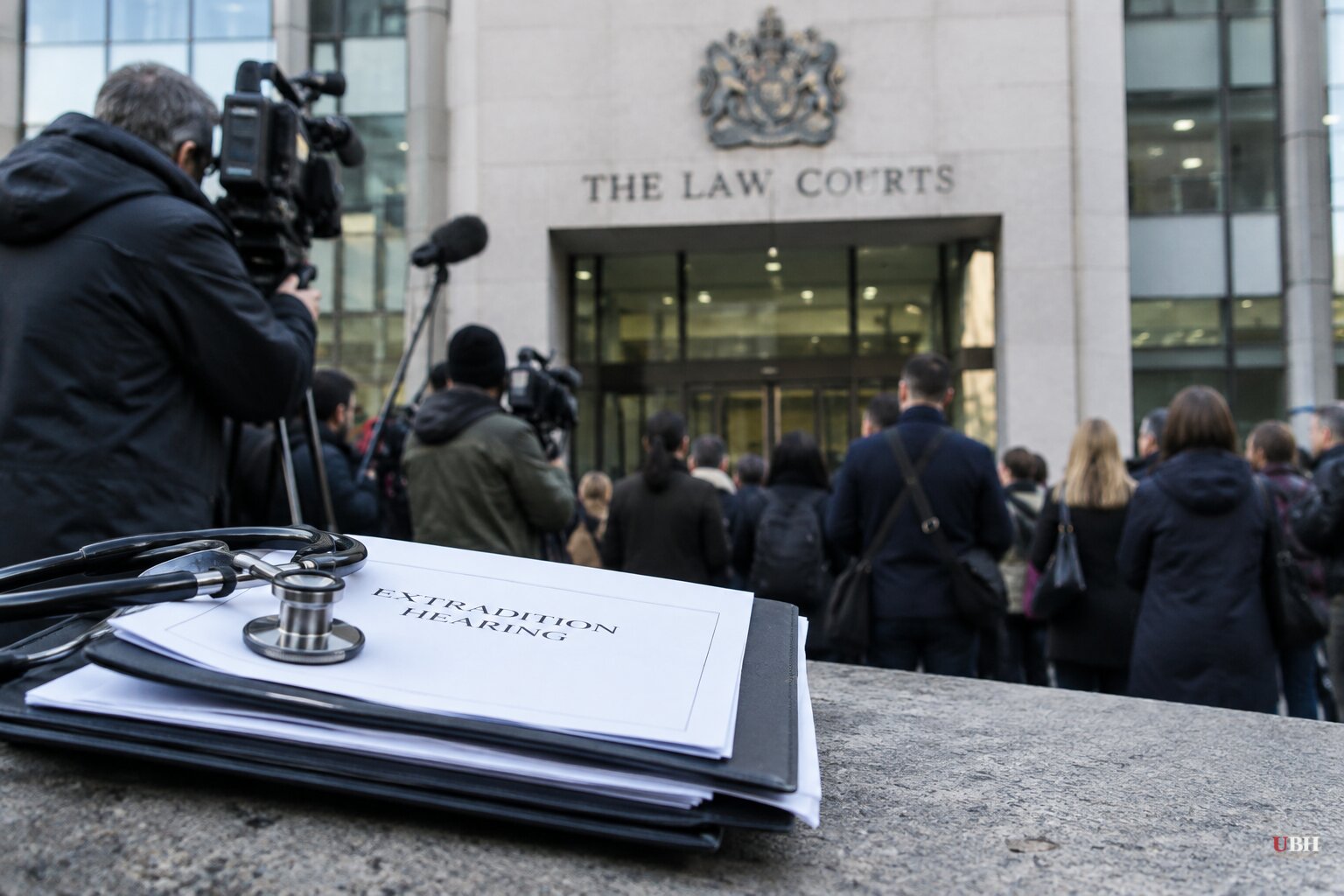
A British Indian businessman and his former wife spent five days at Westminster Magistrates' Court fighting the US government's bid to drag them to California over an alleged cancer drug fraud scheme worth millions.
Sukhi Ghuman, 48, of Syerston Hall near Newark, and Kiranjit Ghuman, 48, who recently divorced and both live in Nottinghamshire, are wanted on a warrant issued by the District Court of the Southern District of California in San Diego in October 2023, according to the BBC. The extradition hearing, which began around September 28-29, 2026, ran five days.
What Prosecutors Allege
Peter Caldwell KC, representing the US government, told the court that an investigation covering September 2019 to April 2023 found the Ghumans controlled oncology clinics in California and Arizona that obtained cheap, unapproved chemotherapy drugs from overseas, some of it expired, and administered it to cancer patients without their knowledge, according to the BBC and the Times of India.
The clinics then allegedly billed Medicare and other insurers as if FDA-approved drugs had been used, pocketing the difference, the BBC reported. US investigators say that added up to more than $9.6 million in fraudulent billing, resulting in more than $2.9 million actually paid out to the clinics.
A second, separate allegation involves one of the clinics buying FDA-approved drugs from US wholesalers and reselling them without a proper license, per the BBC's reporting. Investigators also say searches of the clinics turned up discarded traces of non-approved drugs and unused items in fridges.
The drug smuggling charge alone carries a maximum sentence of 20 years in custody if the Ghumans are convicted and found guilty, the BBC noted. Legal analysis from extradition.co points out health care fraud is typically charged under 18 U.S.C. § 1347, carrying up to 10 years per count, while the smuggling maximum matches the federal statute 18 U.S.C. § 545.
The Defense Case
Sukhi Ghuman has denied wrongdoing publicly. He previously told the BBC he strongly denies any wrongdoing and says he was trying to help cancer patients who couldn't afford treatment. He also disputes that he personally profited from the arrangement.
His lawyer, Ben Cooper KC, argued conditions in US prisons amount to a serious risk, claiming there is neglect of inmates, that water is sometimes denied, and that inmates have had to drink from toilets, according to the Times of India. Cooper also raised the possibility of extortion by gangs and said Sukhi Ghuman could face targeting over his wealth or his Sikh faith, a concern echoed by US prisoner-rights lawyer Deborah Golden.
US lawyer Sara Norman argued Sukhi Ghuman could be forced to shower and use the toilet in view of other inmates, which she said would breach Article 3 of the European Convention on Human Rights. Psychiatrists testified both Ghumans suffer from depression and could be at risk of taking their own lives if extradited, the Times of India reported.
Kiranjit Ghuman's lawyer, Amanda Bostock, argued her client was a peripheral party who was not a decision-maker in the business and had simply shared a bank account with her ex-husband, calling her extradition oppressive, per the Times of India and Inkl.
Caldwell pushed back hard on both fronts. He said the US takes responsibility for prisoner care seriously and that a suicide risk is not inevitable. On Kiranjit Ghuman specifically, he noted the pair were charged jointly, that both controlled the clinics, and that nothing in the case supports treating one of them as having played a lesser role, according to Inkl's transcript of the hearing.
What Happens Next
None of these allegations have been tested at trial, and the Ghumans are entitled to the presumption of innocence under both UK and US law. The case proceeds under Part 2 of the UK's Extradition Act 2003 and the 2003 US-UK extradition treaty, a two-stage process in which a district judge first rules on whether any legal bar applies, before the file goes to the Home Secretary for a final decision.
Defense lawyers are expected to lean on the forum bar, which asks why the case should be tried in California rather than England, along with Article 8 family-life protections and the passage of time since the alleged conduct ended in 2023. A ruling from Westminster Magistrates' Court has not yet been reported, and any adverse decision would likely face an appeal to the High Court, a process that has added a year or more in past UK extradition cases.
Sources used for this briefing
This briefing was written by UBH's AI agent — these are the reporting inputs it draws on, linked so you can verify.


