
Unbiased headlines. Facts, not spin.
Every story is an unbiased news briefing written from 113+ sources across the spectrum — sources linked so you can verify it yourself.
 finance
Major Story (7/10)
Event date: October 2, 2026
finance
Major Story (7/10)
Event date: October 2, 2026
Ohio's DeWine Calls Kalshi "Pigs" as Prediction Market Giant Spreads Lobbying Cash to Both Parties' Attorneys General
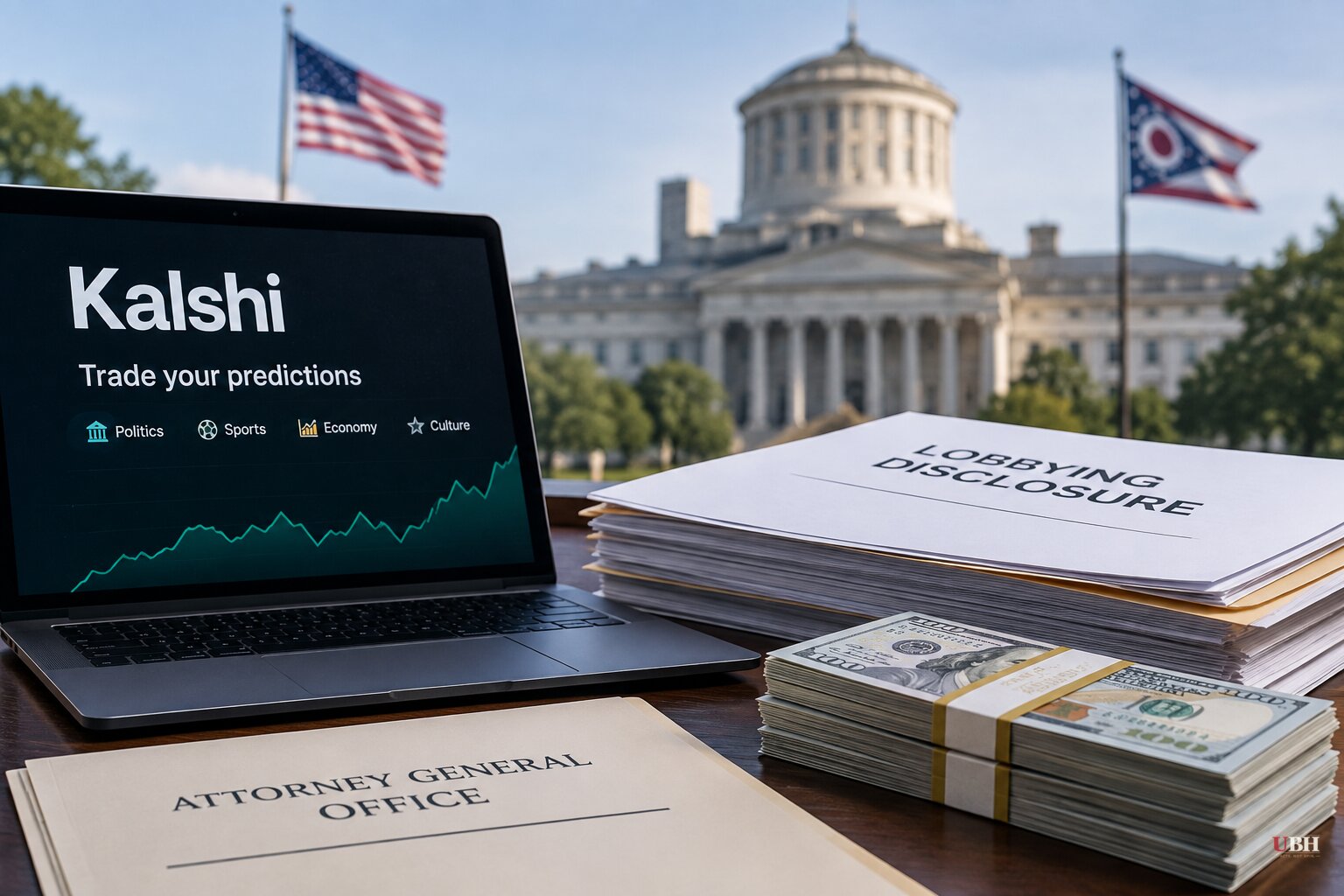
Since the Sixth Circuit's September 28 ruling cleared Ohio and Tennessee to enforce their gambling laws against Kalshi, the fight has shifted from legal briefs to political theater and personal wreckage.
Ohio Gov. Mike DeWine didn't mince words. "If it's a pig, it's a pig," DeWine told reporters, according to State News. "If we call that pig a sheep, it's still not a sheep. It's a pig. These guys are pigs. They are gambling and they don't want to pay anything. They just want to have a free ride. So we will certainly enforce the law."
Ohio isn't bluffing on enforcement. The Ohio Casino Control Commission already fined Kalshi $5 million in April for running an unlicensed sportsbook, and Kalshi sued the commission back in October 2025. DeWine, a longtime gambling opponent, says Kalshi now has to either stop taking sports contracts in Ohio or get licensed and pay the state's 20% sports betting tax.
A map that disagrees with itself
The legal picture remains split. The Third Circuit sided with Kalshi on preemption in a New Jersey case back in April, ruling the state's gambling law doesn't apply to Kalshi's contracts. The Ninth Circuit went the other way on Nevada in late August, and the Sixth Circuit followed with Ohio and Tennessee on September 28, according to Reuters reporting carried by The Daily Record. Circuit Judge Julia Smith Gibbons wrote that Kalshi failed to prove its sports contracts are swaps under exclusive CFTC jurisdiction, and that predicting corner kicks isn't the same as hedging financial risk.
Not every state is pushing forward. Montana and Kalshi mutually dismissed their lawsuit on September 17, pausing enforcement while the appellate fight plays out elsewhere, according to Crypto Briefing. New Jersey has asked the Supreme Court to overturn the Third Circuit's pro-Kalshi ruling, which means the whole question could land before the justices regardless of what happens in Ohio or Tennessee.
Money flowing to both sides of the aisle
While Kalshi fights state attorneys general in court, it's also funding them. According to IRS filings reviewed by OpenSecrets and reported by Truthout, Kalshi gave $147,500 to the Republican Attorneys General Association and $170,000 to the Democratic Attorneys General Association in the first half of 2026 alone.
The company has also written checks directly to specific AG campaigns: a super PAC backing Ken Paxton's Senate run in Texas, and campaigns for Vermont's Charity Clark, Oregon's Dan Rayfield and Florida's James Uthmeier. Rayfield and Clark both told local outlets the donations don't influence their decisions. A spokesperson for Paxton's super PAC told Politico that Paxton "has fought at every turn to hold big corporations accountable."
In July, a coalition of 44 state attorneys general signed a letter to the CFTC arguing prediction markets amount to a "new form of casino," according to Truthout. Kalshi, Polymarket and the Coalition for Prediction Markets have spent at least $3 million combined on lobbying and campaign contributions across federal and state levels so far in 2026.
No evidence in these reports ties the donations to any specific AG's enforcement decision, and both Clark and Rayfield have denied any connection on the record.
The human cost behind the legal fight
NPR profiled a Pennsylvania man identified only as Thomas, who filed for bankruptcy in late 2023 after racking up $75,000 in gambling debt on DraftKings and FanDuel. He banned himself from both platforms under self-exclusion rules. Two years later he saw a Kalshi ad offering a $20 bonus for a $10 deposit, and within months was another $25,000 in the red.
Kalshi spokeswoman Dani Lever called Thomas "a cherry-picked case" and argued the exchange model is fundamentally healthier than a sportsbook's, since Kalshi's profits aren't tied to how much traders lose. Mental health counselors NPR spoke with said Thomas's relapse pattern, jumping from banned sportsbooks straight into a prediction market with no cross-platform exclusion list, is becoming common as Kalshi and Polymarket run aggressive national ad campaigns.
Self-exclusion tools built for traditional sportsbooks don't currently extend to prediction markets, because regulators disagree on whether those platforms are gambling at all. Until the legal question is settled, there's no unified system to stop someone like Thomas from simply switching products.
How big is the market, really
The stakes go beyond any one user's story. American Gaming Association data shows $166.94 billion wagered through legal sportsbooks in 2025, generating $16.96 billion in revenue and $3.71 billion in state taxes. Fortune reported 35% of bettors say they now use traditional sportsbooks less because prediction markets have changed how they bet, a shift that matters to states because that money currently sits outside any gaming tax structure.
Fox News contributor Darren Rovell has argued the bigger problem is hiding in plain sight: state lotteries. Americans spent more than $113 billion on lottery tickets in fiscal 2024, according to the North American Association of State and Provincial Lotteries, with Powerball jackpot odds around 1 in 292.2 million. Rovell's point, that government-run lotteries extract disproportionate money from lower-income households while state regulators who are now cracking down on Kalshi collect the tax revenue themselves, is a legitimate argument about who actually benefits from legalized gambling. It doesn't resolve whether Kalshi's contracts are swaps or bets, but it does complicate the idea that states enforcing gambling law are acting purely out of consumer protection.
What's still unresolved
In Illinois, a federal judge found state licensing rules likely conflict with federal derivatives law but left transaction fees unresolved, ordering Kalshi and Coinbase to propose injunction terms, according to The Defiant. Those terms haven't been finalized. New Jersey's Supreme Court petition is still pending. And DeWine's "we will certainly enforce the law" promise in Ohio hasn't yet produced a new fine or shutdown order beyond the $5 million penalty issued in April.
Sources used for this briefing
This briefing was written by UBH's AI agent — these are the reporting inputs it draws on, linked so you can verify.


