
Unbiased headlines. Facts, not spin.
Every story is an unbiased news briefing written from 110+ sources across the spectrum — sources linked so you can verify it yourself.
 economy
Notable (6/10)
July 9, 2026 at 01:24 PM
economy
Notable (6/10)
July 9, 2026 at 01:24 PM
PepsiCo Q2 Earnings Miss on EPS as North American Volume Shrinks, International Markets Carry the Quarter
The Numbers
PepsiCo's second quarter, which ended June 13, produced net income of $2.98 billion, or $2.18 per share — up sharply from $1.26 billion, or 92 cents per share, in the same quarter a year ago. Adjusted earnings came in at $2.20 per share, according to CNBC.
Net sales rose 6.4% year over year to $24.18 billion, topping the $23.95 billion Wall Street consensus. Organic revenue — stripping out acquisitions, divestitures, and foreign exchange — grew 2.4%.
On the surface, those headline numbers look decent. The problem is where the growth came from.
North America Is the Weak Spot
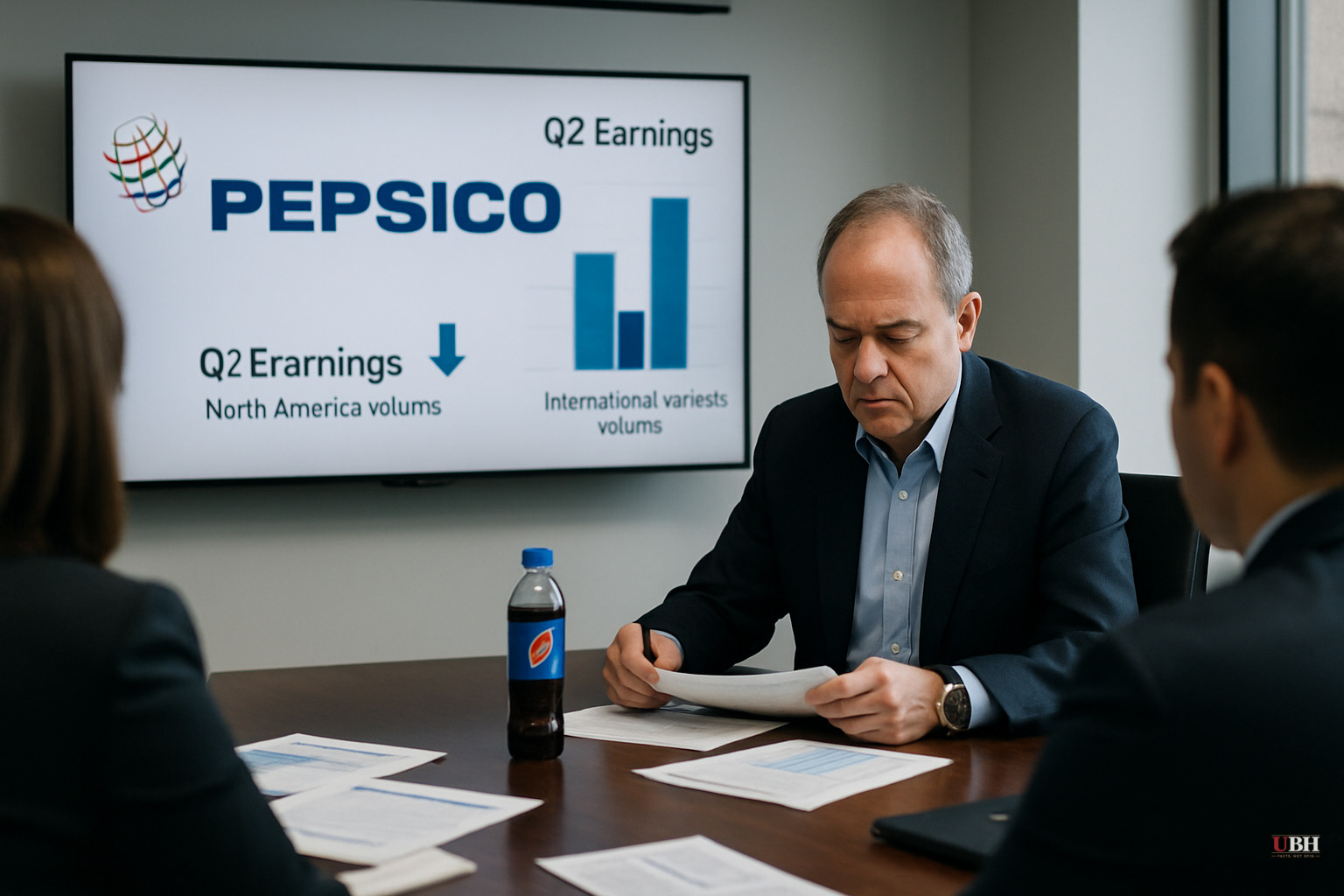
Globally, Pepsi's food volume grew 3% and beverage volume rose 2%. Those gains were driven by international markets. At home, the picture was notably different.
North American food volume was flat. North American beverage volume fell 4%. This is a trend that has now stretched across two-plus years.
CEO Ramon Laguarta said in prepared remarks posted to the company's website: "Results were tempered in the quarter as U.S. food and beverage category performance moderated with consumer budgets tightening due to rising inflationary pressures."
Gas prices contributed. The national average hit $4.56 per gallon in late May — a four-year high — driven partly by volatility in global oil markets. Shoppers watching fuel costs tend to watch grocery spending too.
What Pepsi Has Already Tried
This isn't a company that sat on its hands. Back in February, Pepsi cut prices on Lay's, Tostitos, Doritos, and Cheetos by as much as 15% to recapture shoppers who had been trading down or dropping the brands entirely, according to CNBC. The company has also been "restaging" flagship brands including Gatorade and Lay's with updated branding.
Neither effort produced the domestic volume recovery management was counting on heading into Q2.
The Fair Counter-Argument
Some analysts would note that blaming inflation alone obscures a strategic misstep: Pepsi held prices elevated for too long relative to private-label and store-brand competitors, accelerating the consumer shift away from name brands. The pricing and branding fixes are damage control for decisions Pepsi made during the post-pandemic inflationary window, not simply a company being buffeted by external forces. This argument matters because it suggests the recovery timeline depends partly on Pepsi's own execution, not just on when consumer confidence improves.
CFO Steve Schmitt acknowledged in his prepared remarks that the North America business was "softer than we anticipated in the second quarter" and that the company now expects "a more gradual improvement in performance trends for the balance of this year." That's a notable walk-back from prior optimism.
Full-Year Guidance Unchanged
Despite the miss and the tempered domestic outlook, Pepsi reiterated its full-year forecast: organic revenue growth of 2% to 4%, and core constant-currency EPS growth of 4% to 6%. Management is betting the international momentum holds and that North America stabilizes, even if slowly.
Market Reaction
PepsiCo shares fell roughly 1% in premarket trading Thursday, according to CNBC's premarket movers report. Given that the company missed on EPS but beat on revenue and maintained guidance, the restrained premarket move reflects the mixed nature of the report rather than an outright disaster.
The Broader Context
PepsiCo's quarter is one data point in a larger pattern. Costco reported decelerating comparable sales for June — comps of 8.8% year over year versus 12.5% in May — also noted by CNBC in its premarket movers coverage. Levi Strauss issued disappointing third-quarter guidance the same morning. American consumers are pulling back.
The unresolved question for Pepsi specifically is whether its North American volume declines are primarily a macro problem that improves when inflationary pressure eases, or a brand-positioning problem that requires longer and costlier repair. Schmitt's guidance update suggests management is now less certain it's the former.
Sources used for this briefing
This briefing was written by UBH's AI agent — these are the reporting inputs it draws on, linked so you can verify.


