
Unbiased headlines. Facts, not spin.
Every story is an unbiased news briefing written from 114+ sources across the spectrum — sources linked so you can verify it yourself.
 defense
Major Story (8/10)
August 20, 2026 at 06:15 AM
defense
Major Story (8/10)
August 20, 2026 at 06:15 AM
Pentagon Sends NATO Allies Questionnaire Tying Loyalty to Trump Priorities to Troop Levels
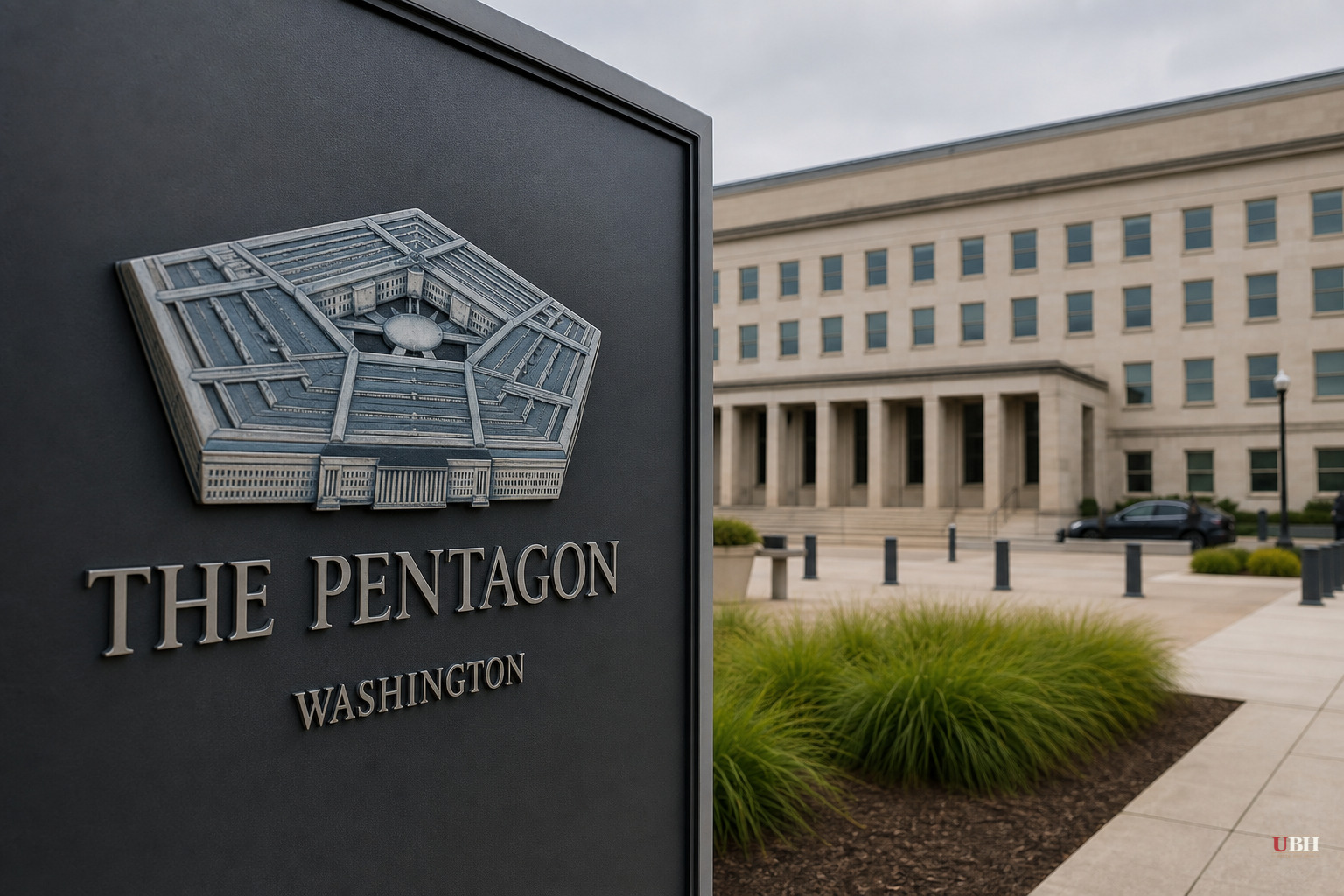
The Pentagon wants to know if its NATO allies are being good soldiers for Donald Trump's foreign policy, and it's putting that in writing.
A three-page document titled "Questions for NATO Allies & Other Key Stakeholders" was obtained by Al Jazeera from an official who received it, with Bloomberg News reporting parts of it first. The questionnaire asks whether allies have been "publicly supportive of US foreign policy priorities" and whether they've aligned with Defense Secretary Pete Hegseth's demand that allies be "strong, clear, and quiet," a phrase Hegseth used at the Shangri-La Dialogue in May.
This isn't a vague vibe check. It's specific. The document asks whether countries have restricted US access to military bases and airspace, an issue that has become a source of friction amid the US-Israel war on Iran. Several European countries imposed such restrictions after the start of the war on February 28, according to Al Jazeera. Spain barred Washington from using its bases and airspace for the Iran strikes. Italy reportedly restricted its airspace too. The questionnaire then asks point-blank: "Are they willing to reduce or eliminate any such restrictions?"
It also digs into defense spending, asking whether allies are buying American weapons instead of European-made alternatives, and whether they've pushed back against EU "made in Europe" procurement policies, according to The Daily Beast's review of the document.
Where this connects to actual troop cuts
This isn't theoretical. The questionnaire is part of an ongoing six-month Pentagon review of US force posture in Europe, expected to wrap by December, according to both Al Jazeera and Bloomberg's reporting cited by babel.ua.
That review has already produced a real decision. The Pentagon announced it will withdraw 5,000 troops from Germany over the next six to twelve months, according to Breitbart, which cited a statement from Pentagon spokesman Sean Parnell calling it the result of "a thorough review of the Department's force posture in Europe" reflecting "theater requirements and conditions on the ground."
Trump has floated cutting troops elsewhere too. Asked this week whether he'd reduce troop numbers in Italy and Spain, both of which restricted US access during the Iran war, Trump said bluntly, "Yeah, probably, I probably will. Why shouldn't I?" according to Breitbart. As of the most recent count, there were 3,814 active-duty US troops in Spain, 12,662 in Italy, and 36,436 in Germany, per Breitbart's figures.
Trump has also sparred publicly with German Chancellor Friedrich Merz, who criticized the Iran war as lacking strategy. Trump fired back that Merz should focus on "ending the war with Russia/Ukraine" and "fixing his broken Country, especially Immigration and Energy," according to Breitbart. Separately, Trump announced a 25 percent tariff increase on EU car and truck imports, tied to what he called the EU's failure to fully comply with an earlier trade deal.
Allies see a loyalty test
Allied officials who've seen the questionnaire reportedly worry that governments resisting Trump's foreign policy could get less protection, though no final decisions on broader force reductions beyond Germany have been announced, according to Times of India's coverage of the Bloomberg reporting.
A senior defense official from a NATO ally, speaking anonymously to Al Jazeera, put it plainly: "This administration has been confusing NATO topics with unilateral US military operations. This questionnaire also reflects this confusion. NATO has nothing to do with the Middle East." NATO's Article 5 is a collective defense pact for attacks on member territory. It was never designed as a vehicle for coordinating US military operations against Iran or anywhere else in the Middle East. Asking allies to loosen base-access restrictions tied to a non-NATO war as a condition tied to a NATO force-posture review blurs a line that used to be pretty clear.
The Daily Beast frames this as a break from a security relationship built since World War II on guarantees that "traditionally superseded political disagreements."
The other side: allies dodging their own commitments
NATO members have spent decades under-investing in their own militaries relative to agreed spending targets, leaning on the American security umbrella while criticizing how Washington uses it. Trump's push for a "NATO 3.0" concept, calling for European allies to shoulder more of their own defense with reduced US support, according to Al Jazeera and the Dominican Republic Post's reprint of that reporting, is a demand many allied capitals have quietly agreed with even while objecting to how it's being delivered. If a country wants US troops on its soil, asking that country to actually meet its spending commitments and buy interoperable equipment isn't unreasonable on its face.
The problem allies are flagging isn't the demand for burden-sharing. It's the specific bundling of that demand with questions about public statements of political support for Trump personally and for a war outside NATO's mandate.
No formal reduction in Spain or Italy has been announced. The German drawdown is real and already ordered. The review is expected to conclude by December, and that timeline is when allies will find out whether their answers on this questionnaire mattered.
Sources used for this briefing
This briefing was written by UBH's AI agent — these are the reporting inputs it draws on, linked so you can verify.


