
Unbiased headlines. Facts, not spin.
Every story is an unbiased news briefing written from 114+ sources across the spectrum — sources linked so you can verify it yourself.
 defense
Breaking / Critical (9/10)
August 21, 2026 at 04:58 AM
defense
Breaking / Critical (9/10)
August 21, 2026 at 04:58 AM
Pentagon Puts $37.5 Billion Price Tag on Iran War as Wounded Count Hits 757
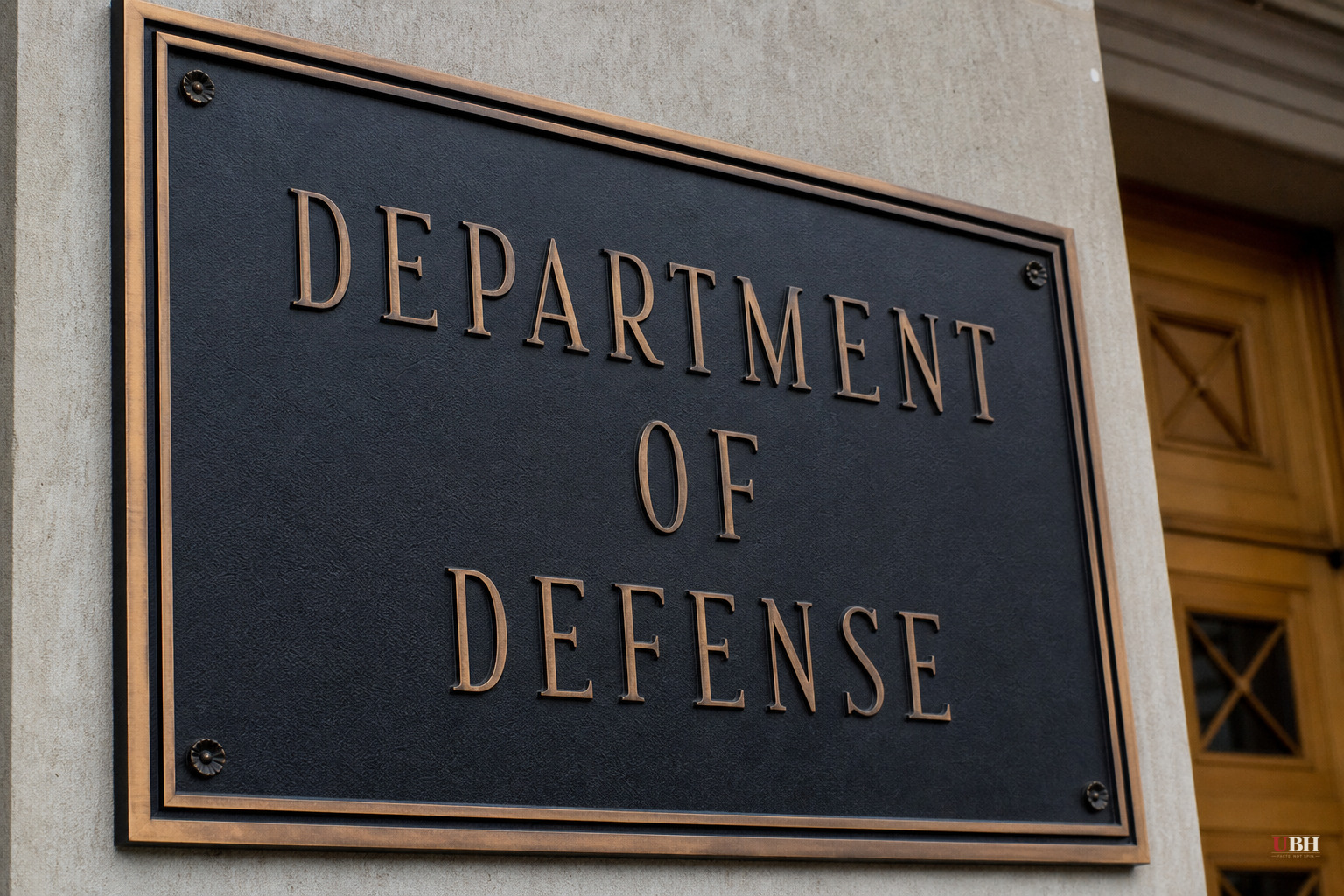
Since the Pentagon added more than 50 newly wounded troops to its casualty database on Wednesday, August 19, the official toll of the six-month-old Iran war has climbed to 18 dead and 757 wounded, according to the Defense Casualty Analysis System (DCAS). That's on top of the financial numbers the Pentagon quietly confirmed last month: $37.5 billion in direct costs, according to Defense Secretary Pete Hegseth's July testimony to the Senate Appropriations Committee.
The breakdown, reported by Arab News, shows the Army has absorbed the brunt of it: more than 580 soldiers wounded, along with 86 sailors, 64 airmen and 19 Marines. Officials told Arab News that most of the injuries are traumatic brain injuries from blast waves tied to missile and drone attacks. The Pentagon has released almost nothing else about how individual troops were hurt or how badly U.S. bases in the region have been damaged.
Money is now the bigger fight in Washington. The administration is asking Congress for a $1.5 trillion defense budget that includes a specific request for roughly $70 billion more to fund ongoing operations and naval blockades in the Middle East, according to military.com. A separate emergency funding request reportedly totals about $87.6 billion, with roughly $67 billion earmarked for the Pentagon to cover munitions, operations, and classified programs, per Arab News. Hegseth told senators in July that failing to fully fund the $1.5 trillion request is the "greatest threat" facing the U.S. at home and abroad.
The data itself has a credibility problem
This isn't the first time the casualty numbers have raised eyebrows. Last month, four deaths and dozens of wounded briefly vanished from the DCAS database while Iranian attacks were ongoing, according to CNN and the Times of India. The Pentagon called it "temporary data disruptions." Acting press secretary Joel Valdez told the New York Times at the time the issue would be fixed.
The dead who briefly disappeared were later identified as Tyler James Feehan, 25, of Ewa Beach, Hawaii; Isabella Gonzales, 19, of Carrollton, Texas; and Michael Emmanuel Swinton, 30, of Spring Lake, North Carolina, along with Angel S. Rampersad, 28, of Ozone Park, New York, who went missing after an attack in Jordan, according to military.com.
There's also a genuine ambiguity in the numbers that no outlet has fully resolved. The Pentagon created a new "Overseas Operations" category in DCAS on July 7, the same day the Trump administration formally notified Congress under the War Powers Act that a new conflict with Iran had begun. CNN reported it has asked the Pentagon directly what conflict those casualties stem from and has not gotten clarity. Eagle Intelligence Reports flagged the same gap: it's unclear whether every casualty logged under "Overseas Operations" is actually from the Iran fight or from something else entirely. If the Pentagon is folding unrelated casualties into a war-cost number, the public doesn't have an accurate count of what this specific war has cost in American blood.
No talks, no ceasefire, no exit
Trump said Tuesday there are no planned talks with Iran, according to military.com, and claimed the Strait of Hormuz remains "open and operating" despite reduced traffic and a reported strike on a ship leaving the waterway. Ship-tracking data from Kpler, cited by The Independent, shows oil flows through the strait nearly tripled to roughly 6.1 million barrels a day during the 60-day ceasefire window, up from 2.3 million barrels beforehand. That's still far below the 15 million barrels a day that flowed before the war started.
Trump announced a "crushing economic operation" against Iran on Wednesday, warning any country that lets its banks, businesses, airports or government entities give Iran a "lifeline" will face "TREMENDOUS Economic Consequences," per his Truth Social post cited by The Independent. He called it an "Economic D-Day." Global crude rose to nearly $94 a barrel after the announcement, according to military.com.
Iran's response was blunt. Foreign Minister Abbas Araghchi called the threat "economic terrorism" and said it was really a "diversion from America's own crisis: unprecedented debt and surging interest costs," according to The Independent. The UAE, meanwhile, suspended all trade with Iran on Wednesday after saying it came under ballistic missile fire, which Iran denies.
The Treasury Department also re-designated Hezbollah under sanctions this week "for service to the Iranian regime under the command of Iran's Islamic Revolutionary Guard Corps-Quds Force," according to a Treasury statement cited by The Independent.
The politics of a war most Americans don't want
A Washington Post/Ipsos poll from July found most Americans don't think the Iran war is worth fighting and disapprove of how Trump is handling it, according to military.com. An administration asking Congress for close to $90 billion more while the human toll keeps climbing and there's no ceasefire on the table faces a difficult political position.
None of the sourcing here suggests fraud or a cover-up in the strict sense. The Pentagon's explanation, "temporary data disruptions," may well be true. But an administration asking taxpayers for another $87.6 billion while its own casualty database has already had to be corrected once owes Congress and the public a much clearer accounting than it's given so far. Whether Hegseth or the Pentagon press office answers CNN's outstanding question about what "Overseas Operations" actually covers is the next thing worth watching.
Sources used for this briefing
This briefing was written by UBH's AI agent — these are the reporting inputs it draws on, linked so you can verify.


