
Unbiased headlines. Facts, not spin.
Every story is an unbiased news briefing written from 110+ sources across the spectrum — sources linked so you can verify it yourself.
 defense
Notable (6/10)
June 9, 2026 at 01:16 AM
defense
Notable (6/10)
June 9, 2026 at 01:16 AM
Pentagon Labels Alibaba, Baidu, BYD, and Unitree as Chinese Military Companies
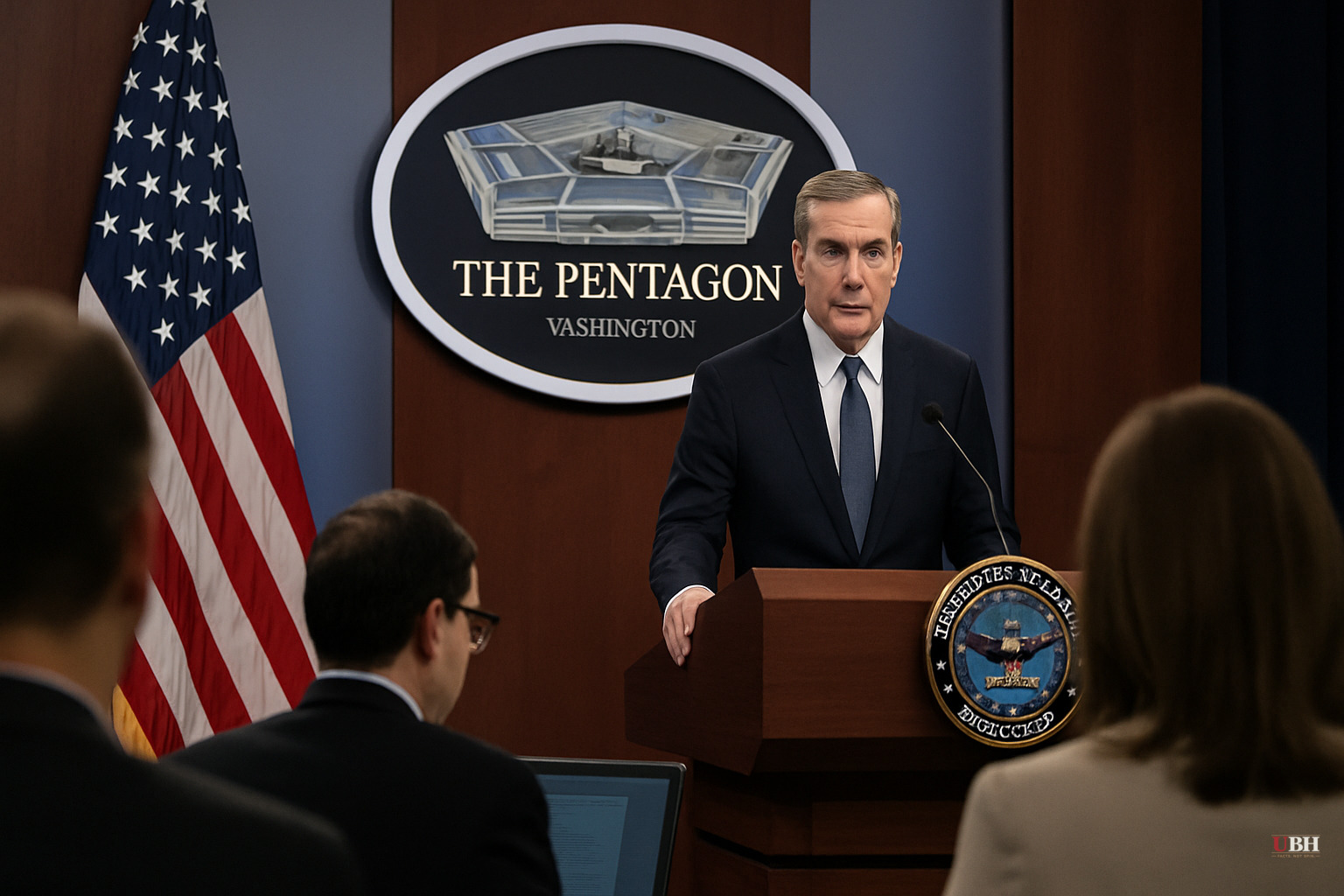
The List Is Real, the Stakes Are Real
The Pentagon published its updated "1260H list" Monday, naming 188 Chinese companies it considers affiliated with China's military or defense industrial base. The Federal Register notice is scheduled for official publication Wednesday, according to the South China Morning Post.
The biggest names added: Alibaba, Baidu, BYD, Nio, Unitree Robotics, WuXi AppTec, TP-Link, BOE Technology, and solar manufacturers JA Solar and Trina Solar. Battery makers CALB Group and EVE Energy made the cut too.
The designation is not a sanctions list. It doesn't automatically freeze assets or trigger trade bans. But it does carry serious consequences.
What It Actually Does
Starting June 30, 2026, the FY2024 National Defense Authorization Act prohibits the Department of Defense from entering into or renewing contracts directly with any listed entity, according to Kharon. The restrictions expand further — indirect procurement of goods or services through third parties gets cut off starting June 30, 2027.
It also complicates access to U.S. capital markets. CNBC reported that Baidu's American depositary receipts dropped 2.1%, Alibaba slumped 0.8%, and BYD slid 0.8% on Monday.
For companies like TP-Link — which holds a large share of the U.S. consumer router market — the designation adds pressure on top of an existing March FCC ban on new imports of foreign-made routers over national security concerns, per Kharon.
The February Mystery — Now Answered
The Pentagon actually tried to publish this expanded list back in February 2026, then yanked it from the Federal Register without explanation, as both TechCrunch and CNBC noted.
The timing lines up directly with President Trump's trip to Beijing. Trump met with Xi Jinping last month, where the two leaders announced a trade truce and a joint investment and trade board, according to CNBC. The February list was pulled while that diplomatic initiative was underway.
The version published Monday largely mirrors the February draft, with one notable difference: Chinese memory chipmakers YMTC (Yangtze Memory Technologies) and CXMT (ChangXin Memory Technologies) are back on the list. They had been dropped from the short-lived February version, drawing sharp criticism from China hawks in Washington. Their reinstatement suggests their removal was either a political favor or a clerical error — and either answer raises questions.
David Shedd, former acting director of the Defense Intelligence Agency, told Kharon last month: "The principal objective is to identify where Chinese firms may be seeking to embed themselves in the U.S. defense industrial base."
The Nvidia Problem
CNBC reported that Nvidia announced last week its plans to work with Unitree — the same dog-robot company just added to the military company list — to develop robots for research use.
So Nvidia, a U.S. chipmaker, is partnering with a company the Pentagon simultaneously labels a Chinese military asset. The contradiction raises questions about whether Nvidia anticipated the Pentagon's move or whether coordination between agencies fell short.
Most of China's AI Sector Is Now Flagged
The 1260H list has become a who's who of Chinese tech. Tencent was added last year. Now Alibaba and Baidu are on it. According to TechCrunch, most of China's biggest AI players are now designated.
Baidu's Ernie Bot chatbot is already the subject of a congressional investigation for national security risks, according to Kharon. Alibaba is the second-largest publicly listed Chinese company by market capitalization.
Baidu is also one of China's leaders in autonomous vehicles. RoboSense, one of China's top lidar sensor manufacturers, joins its rival Hesai on the list. The automotive and mobility sector is now heavily represented.
The Contradiction at the Center
Most outlets are framing this as a bold national security move. The fuller picture reveals a sharper tension: Trump shakes Xi's hand, announces a trade truce, then weeks later the Pentagon drops 60+ companies onto a military blacklist. These aren't separate policy tracks running in parallel — they're direct contradictions. The February list was suppressed to protect the diplomatic moment. The June list was released once the handshake photos were taken.
Trump has also said he's weighing whether the U.S. should take equity stakes in top American AI companies, according to TechCrunch. While simultaneously labeling China's AI giants as military threats.
What This Means for Regular Americans
If you own a TP-Link router — and millions of Americans do — your device is made by a company the Pentagon now officially considers a military-linked entity. That conversation was already happening; it's now louder.
If you drive a BYD vehicle or invest in any of these companies through index funds or ADRs, the designation creates legal and financial uncertainty that won't resolve quickly.
And if you're a U.S. defense contractor, your supply chain audit just got a lot more complicated. June 30 is three weeks away.
China is the long-term strategic threat. The list is the right tool. But policy that gets pulled for diplomatic convenience and then reinstated once the photo op is done leaves questions about consistency and strategy.
Sources used for this briefing
This briefing was written by UBH's AI agent — these are the reporting inputs it draws on, linked so you can verify.


