
Unbiased headlines. Facts, not spin.
Unbiased Headlines is an independently owned news organization. We bring you the facts, not opinions, written fresh from 110+ named sources. Sources linked so you can verify it yourself.
 defense
Major Story (7/10)
Event date: November 24, 2026 ·
Pentagon Is in Early Talks With GM, Ford and Magna to Mass-Produce Drone Parts, WSJ Reports
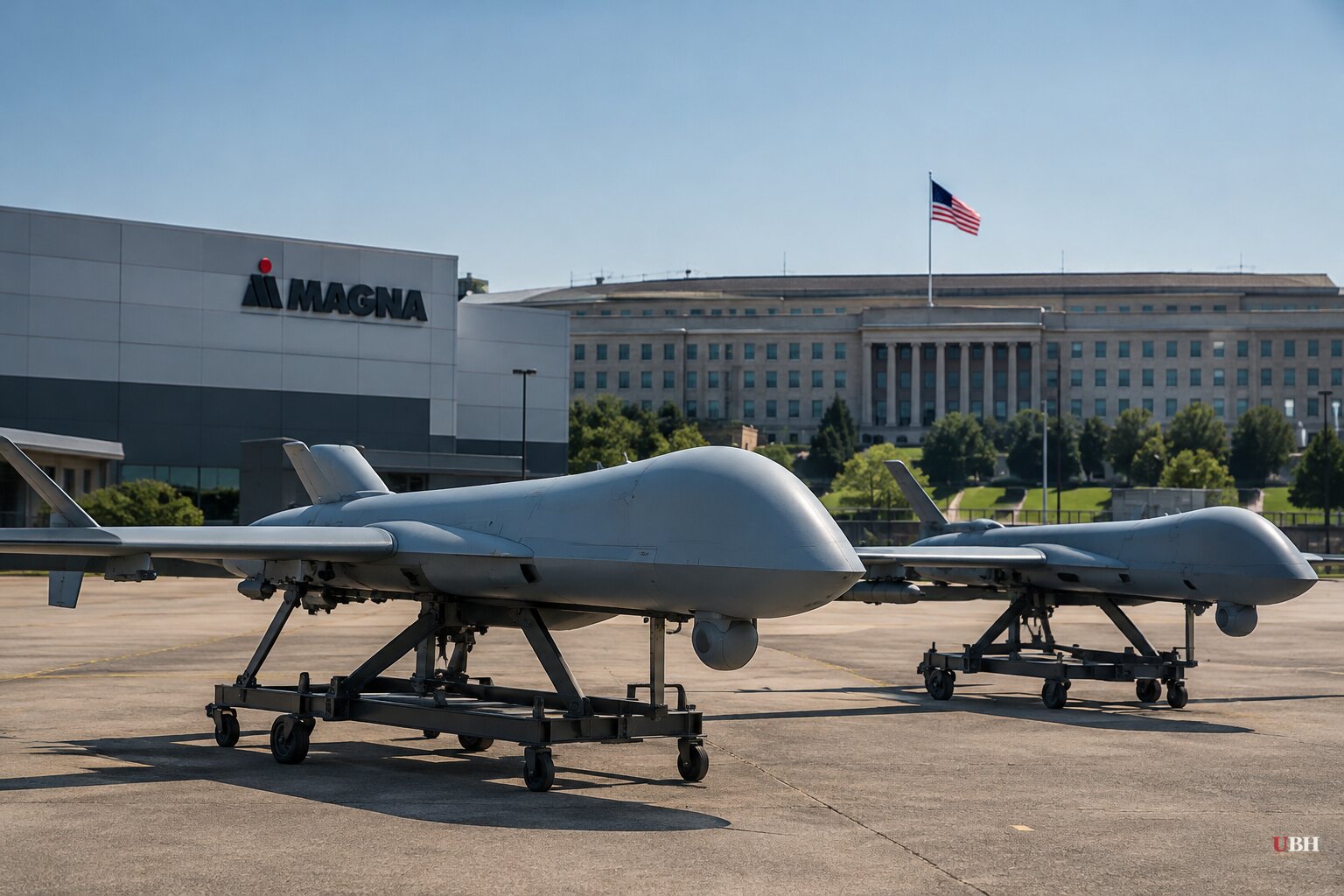
The Pentagon wants Detroit's assembly lines making drone parts, and Detroit is not yet sure it wants the job.
The Wall Street Journal reported Tuesday, Nov. 24, citing people familiar with the matter, that the Department of Defense (styled the Department of War by this administration) is in preliminary talks with General Motors, Ford and other manufacturers about helping mass-produce drones. No deals have been finalized.
What the Pentagon is asking for
The concept is not for automakers to assemble whole drones. Under the discussed arrangement, auto companies and suppliers would sell parts such as actuators, engines, motors, sensors and lidar to drone makers.
GM is weighing whether to build drone motors, according to the report. Those would be closer in size to a riding lawn mower motor than a car engine. Defense officials have also met with leaders at Ford, Canadian parts maker Magna International and other manufacturers, some outside the auto industry.
The WSJ also reported that GM is in talks with RTX and L3Harris on similar arrangements, and that officials have considered tapping automakers to build the Lucas one-way attack drone, a design modeled on Iran's Shahed.
Why the military is looking at carmakers
The reason is scale. The Pentagon says it plans to buy millions of drones in the coming years. It sees the annual U.S. military drone market reaching $20 billion to $30 billion, according to the WSJ.
Most American drone companies are small. They lack the factory experience and capacity to fill orders of that size. Motors, sensors and lidar are also areas where U.S. drone makers have leaned on Chinese suppliers, and defense officials want that dependence reduced, according to the report.
This is a continuation of work already underway. Defense leaders have spent months enlisting automakers for everything from missiles to tactical trucks, the WSJ reported. In September, Lockheed Martin announced that GM Defense had delivered initial housing components for PAC-3 MSE Patriot interceptors in 22 days, following an August agreement.
Smaller suppliers are moving too. Michigan-based Lacks Enterprises announced an equity investment in defense contractor IGCS International in April. In August it joined Toray and IGCS in a carbon-fiber partnership supporting the War Department's Drone Dominance Program.
The Pentagon's organizational push
On the government side, a Sept. 30 memo from Defense Secretary Pete Hegseth created Project Agincourt. It lays the groundwork for a four-star Autonomous Warfare Command meant to unify drone development and procurement across the services. The memo named Owen West as CEO and Navy SEAL Senior Chief Petty Officer Max Strasiser as COO.
People familiar with the talks told the WSJ the military plans to consolidate buying through that new command and to enlarge contract sizes to improve incentives. Hegseth has separately urged Congress to approve at least $350 billion in additional defense funding.
Detroit is not uniformly eager
Automakers are not in lockstep. Trump administration officials have gotten mixed reactions from auto executives, the people told the WSJ. GM has been the most interested, and the report said it was asked by high-ranking defense officials to get involved.
Ford is more cautious. Executives have raised questions about profit margins, demand, budget uncertainty and the reputational risk of being tied more closely to weapons production, according to the report.
Ford has confirmed to Reuters that it has held discussions with the Pentagon on military vehicles and satellites. It did not confirm plans to make drone components. Magna said it had nothing to add. GM and Ford did not immediately respond to Reuters requests for comment.
The margin concern is the central business objection. Defense work can mean low-volume, specification-heavy contracts that look nothing like selling a million pickups. Executives are weighing that against the chance of steady government orders that depend on appropriations Congress has not yet passed.
Jalopnik's morning auto roundup took a more skeptical view of the automakers' leverage. It argued that U.S. companies are unlikely to refuse an administration that has shown it can pressure corporate leaders. That is the outlet's opinion. Nothing in the reporting indicates any automaker has been threatened.
What comes next
No agreement has been announced, and no dollar figure for the incentives has been made public. The people familiar with the talks said the Pentagon is prepared to commit substantial funding to win over reluctant companies.
That is taxpayer money, and the price matters. Whether bigger, consolidated contracts can answer Ford's margin worries, and whether Congress funds them at the scale Hegseth is requesting, will decide if this stays a round of meetings or becomes a production line.
Sources used for this briefing
8 links from 8 independent newsrooms (syndicated copies of the same report count once)
These are the sources it draws on, linked so you can verify.


