
Unbiased headlines. Facts, not spin.
Unbiased Headlines is an independently owned news organization. We bring you the facts, not opinions, written fresh from 110+ named sources. Sources linked so you can verify it yourself.
 defense
Major Story (7/10)
Merz tells Bundestag Russia 'wants more than Ukraine' as Germany debates 2027 budget
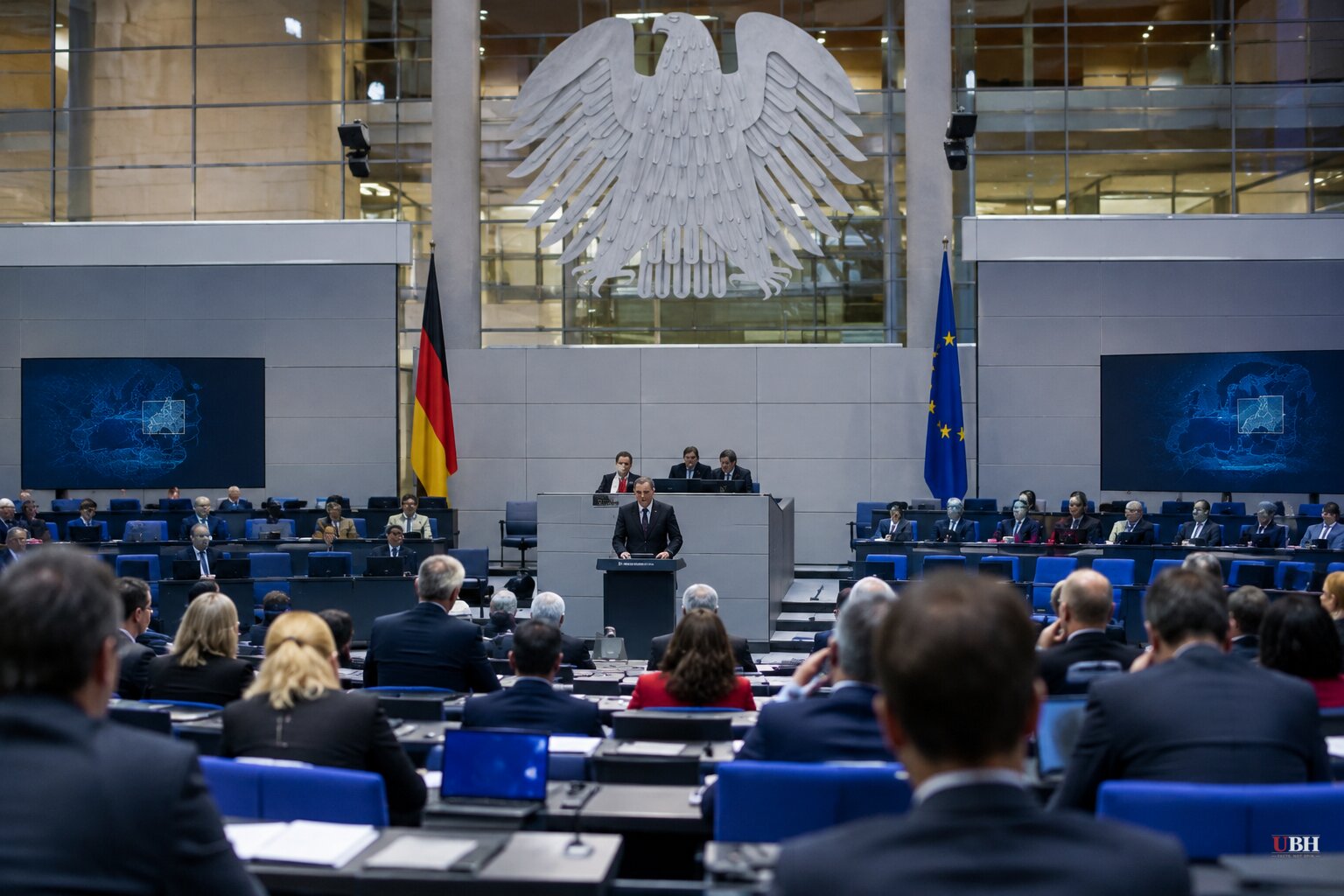
German Chancellor Friedrich Merz told the Bundestag today, Nov. 25, that Russia's ambitions reach past Ukraine. He was speaking as lawmakers debated the 2027 federal budget.
"Russia knows exactly what it wants, and Russia wants more than Ukraine," Merz said. "Anyone who fails to grasp this either does not understand the world as it is, or is pursuing an entirely different agenda, one that stands in opposition to the freedom, openness, and liberal values of our own country."
He named specific theaters. Russia, he said, is escalating tensions in the Baltic region, in Poland, in the Black Sea and in outer space. It is also escalating "on a massive scale, including here within our own borders, even at the cost of human lives." Merz did not detail the incidents inside Germany in the passages quoted.
"That is why we, as Europeans, must and will set clear boundaries for Russia," he said.
A budget speech, not just a foreign policy speech
Merz tied the Russia warning to spending. He said Germany has been "neglecting fundamental issues for far too long" on defense, infrastructure, demographic change and the economy, and that all of it needs urgent attention.
That is a notable admission from a chancellor whose party has been a fixture of German government for most of the postwar era. Merz did not break down which past decisions he meant.
The numbers behind the argument are large. Germany has provided or committed almost €58 billion in military funding since Russia's full-scale invasion, and the 2027 budget sets aside almost €12 billion more for Ukraine. Finance Minister Lars Klingbeil also remains committed to backing Kyiv.
The Polish incident
Merz's mention of Poland has a recent anchor. Russian forces launched one of their most powerful attacks on Ukraine overnight into Nov. 20, using missiles, including ballistic missiles, and drones. Polish Defense Minister Władysław Kosiniak-Kamysz later said two Russian missiles and one drone had fallen on Polish territory.
On Nov. 23, Merz said NATO's refusal to admit Ukraine at the 2008 Bucharest summit was a mistake. "If Ukraine had become a NATO member, this war might have been prevented," he said.
Germans are split on the money
The domestic politics are harder than the speech suggested. Only 46 percent of Germans surveyed in September favored military aid to Ukraine, while 53 percent opposed it.
The far-right Alternative for Germany, the largest opposition party and the leader in national polls, wants German military aid halted and favors warmer ties with Moscow. The left-wing Linke also opposes weapons deliveries. Merz's line about those who "pursue an entirely different agenda" lands directly on that divide.
The skeptics' case is also on the ballot. Two parties with substantial voter bases oppose shipping weapons to Kyiv, and Merz is asking taxpayers to keep paying.
Washington's role is smaller and less predictable
Europe is carrying a larger share of Ukraine's financing as the war approaches its fifth year, with U.S. support sharply reduced under President Donald Trump. EU leaders are weighing a European Commission proposal to mobilize as much as €45 billion in additional support for 2027.
Merz cited last week's Berlin meeting of the so-called coalition of the willing as evidence of European unity. That gathering came hours after Trump met Russian President Vladimir Putin and Chinese President Xi Jinping in China, where Trump called Putin "my friend."
Earlier, ahead of planned talks in Abu Dhabi on Nov. 10-11, Trump said a deal with Moscow "is going to involve more than Ukraine... I could even say it might involve all of Europe." Retired Gen. Philip Breedlove, a former Supreme Allied Commander Europe, told Fox News Digital that Putin has long pushed a vision of three spheres of influence, with China controlling the Far East, Russia controlling Europe and America controlling the Western Hemisphere. "I do not expect there's going to be a lot of cooperation from the countries of Europe," Breedlove said. Ukrainian President Volodymyr Zelenskyy appeared to reject what he called a potential "Yalta 2.0."
So Merz and Trump are both saying a settlement would reach beyond Ukraine, but they appear to mean different things by it. Trump describes a big deal. Merz describes a bigger threat.
Refinery strikes continue
The fighting is not waiting for the diplomacy. Russia's Syzran oil refinery, operated by Rosneft in the Volga region, was reportedly hit by a Ukrainian drone attack overnight. NASA's Fire Information for Resource Management System showed multiple heat anomalies at the site.
Local Russian authorities confirmed drones struck industrial sites in Syzran on Wednesday without saying which facilities. Ukraine has not commented. Putin had warned hours earlier that Moscow would respond to such attacks, with the domestic fuel market still strained.
Ukraine has stepped up strikes on Russian refineries since late October, citing Moscow's own attacks on ports, power stations and residential buildings.
The Bundestag's 2027 budget debate is the immediate test of whether Merz's rhetoric becomes money. The open question is whether the roughly €12 billion for Ukraine holds as more than half of surveyed Germans say they oppose military aid. EU leaders have yet to decide on the Commission's proposed €45 billion for 2027.
Sources used for this briefing
7 links from 7 independent newsrooms (syndicated copies of the same report count once)
These are the sources it draws on, linked so you can verify.


