
Unbiased headlines. Facts, not spin.
Unbiased Headlines is an independently owned news organization. We bring you the facts, not opinions, written fresh from 110+ named sources. Sources linked so you can verify it yourself.
 defense
Major Story (7/10)
Hegseth Memo Requires His Sign-Off for Congressional Gulf Travel; Sens. Murphy and Ernst Turned Away
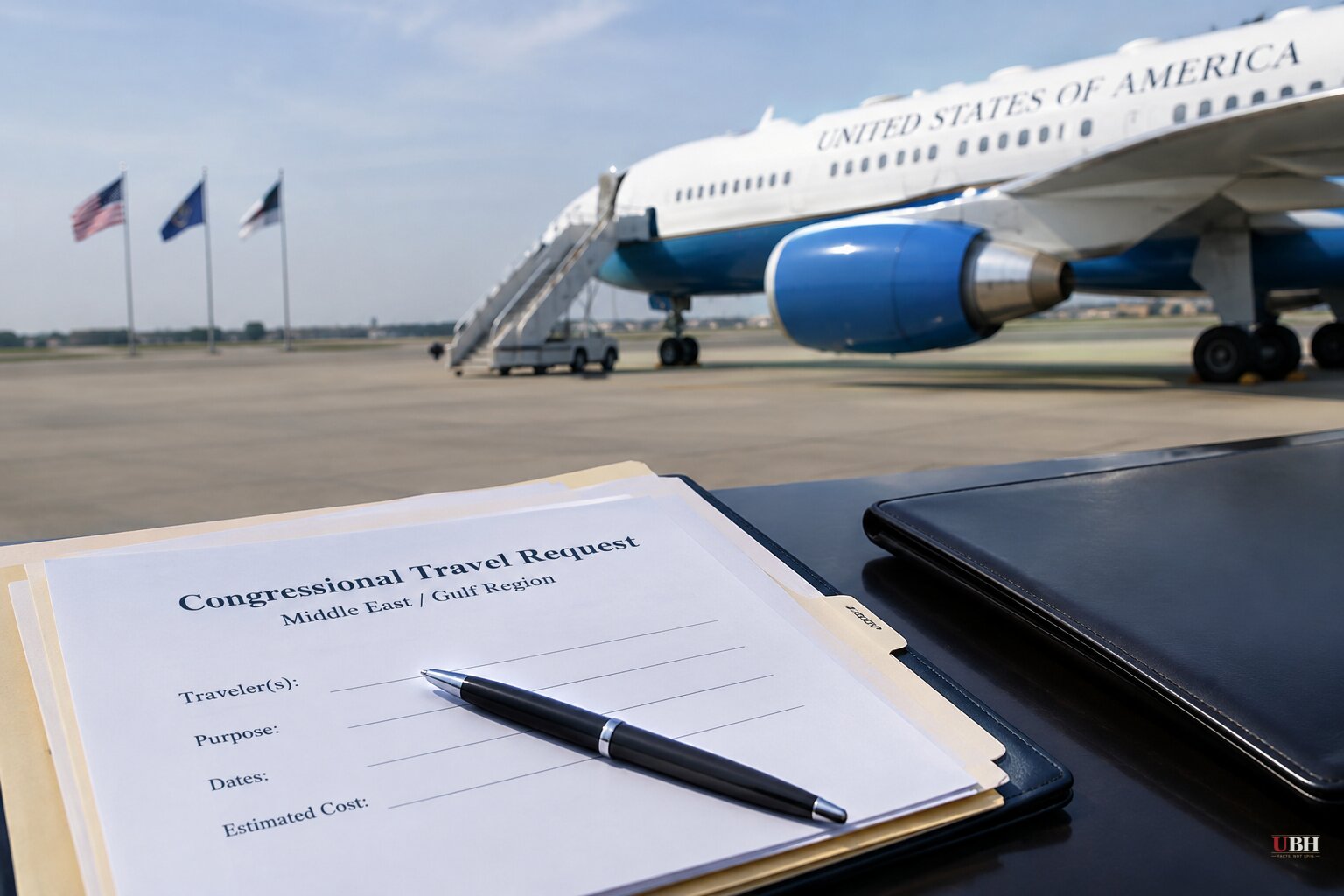
Since Secretary of Defense Pete Hegseth issued a memo in March, after the U.S.-Israeli attacks on Iran, congressional travel to the Gulf has run through his desk. Two senators, one from each party, have now been turned away from base visits.
The memo seeks to "further discourage visits to the [U.S. Central Command Area of Responsibility] requiring DoW support by members of Congress and their staffs." It adds that "no DoW support shall be made available for congressional travel to the USCENTCOM AOR without my approval."
The text is not an outright ban. Because it controls the aircraft, escorts and access, it works like one.
Two senators, two denials
Sen. Chris Murphy, a Connecticut Democrat, said in October that the Pentagon barred him from visiting Al Udeid Air Base in Qatar and meeting with military leadership. He posted a video on Facebook.
"I have been to the Middle East probably a dozen times at least," Murphy said. "While I have been a member of Congress, I have never, ever been denied access to military facilities. This is part of a coordinated, deliberate campaign by the Department of Defense to try to hide the consequences and the true cost of this war."
Iowa Republican Sen. Joni Ernst was turned away from a base visit around the same time, The Atlantic reported this week. Ernst did not respond to a request for comment from Fortune.
That matters. A Republican who sits on the same side of the aisle as the administration got the same answer as one of its loudest Democratic critics.
Former officials say the limits should have eased
Evelyn Farkas, executive director of the McCain Institute at Arizona State University and a former deputy assistant secretary of defense, did not soften her assessment. "It smells like a lack of transparency in order to thwart Congressional oversight, in order to either hide that the Iran war is costing more, or to use the Iran war as an excuse to get more money," she told Fortune.
The timeline is part of her argument. Operation Epic Fury ended in May. The last known U.S. attack on Iran before this month came in September. Former officials say restrictions like these are usually relaxed once the most intense phase of a conflict is over.
The security picture has not gone quiet, though. The Washington Institute for Near East Policy counted 37 ships struck in the Strait of Hormuz in October, the highest monthly total since the war began. On Nov. 10, a senior administration official told Fox News Digital that Treasury Secretary Scott Bessent had moved onto a military base with his family because of Iranian threats that reached "more than an advanced stage." A Treasury spokesperson confirmed the move.
The operational case
Elizabeth Dent, a senior fellow at the Washington Institute and a former director for the Gulf and Arabian Peninsula in the Office of the Secretary of Defense, said there can be legitimate reasons to restrict visits.
A congressional delegation needs military aircraft, personnel and force protection. In an active theater, those may not be available. Threats against military facilities can put both troops and visiting lawmakers at risk.
She also noted that restrictions are not unique to this administration. U.S. Central Command has limited visits under both Republican and Democratic presidents. In 2016, under Barack Obama, the military asked Congress to restrict visits to Afghanistan during a period of fighting, though it did not impose an express ban.
Pattern of limited access
The visit restrictions sit alongside other limits on outside scrutiny. Hegseth has sharply cut routine press briefings and restricted press access to those that remain. He also declined to give the Congressional Budget Office information ahead of its September update on the cost of the Iran war.
Meanwhile the Pentagon is seeking $1.5 trillion, the largest defense budget in U.S. history, to modernize infrastructure and restock munitions depleted in the Gulf. Congress holds the purse strings on that request.
House members introduced articles of impeachment against Hegseth this month, citing in part that he began the Iran conflict without congressional authorization. They did not pass. The House referred them to the Judiciary Committee, and chief Pentagon spokesman Sean Parnell called the referral "TOTAL VICTORY" for Hegseth, describing the effort as "a political exercise devoid of merit, evidence, or seriousness."
Outside the Pentagon, the strategic debate continues. Michael Schmitt, a professor emeritus of the Naval War College, wrote in Just Security on Nov. 20 that the United States has "prevailed in nearly every military engagement, yet it is losing the war," while stressing that the conflict is not over and his assessment is provisional.
What is unresolved
Visits to military sites have been part of congressional oversight since at least 1943, when five senators toured global bases for 65 days during World War II. Now two sitting senators have been told no under a policy that routes every request through one man.
The open question is whether the memo gets relaxed now that Epic Fury has ended, or whether it stays in force while Congress weighs a $1.5 trillion request.
Sources used for this briefing
7 links from 6 independent newsrooms (syndicated copies of the same report count once)
These are the sources it draws on, linked so you can verify.


