
Unbiased headlines. Facts, not spin.
Unbiased Headlines is an independently owned news organization. We bring you the facts, not opinions, written fresh from 110+ named sources. Sources linked so you can verify it yourself.
 defense
Major Story (7/10)
Army Sets Iowa Lead Azide Detonation for About 9 a.m. Central Today, With Evacuation Recommended Within 5 Miles
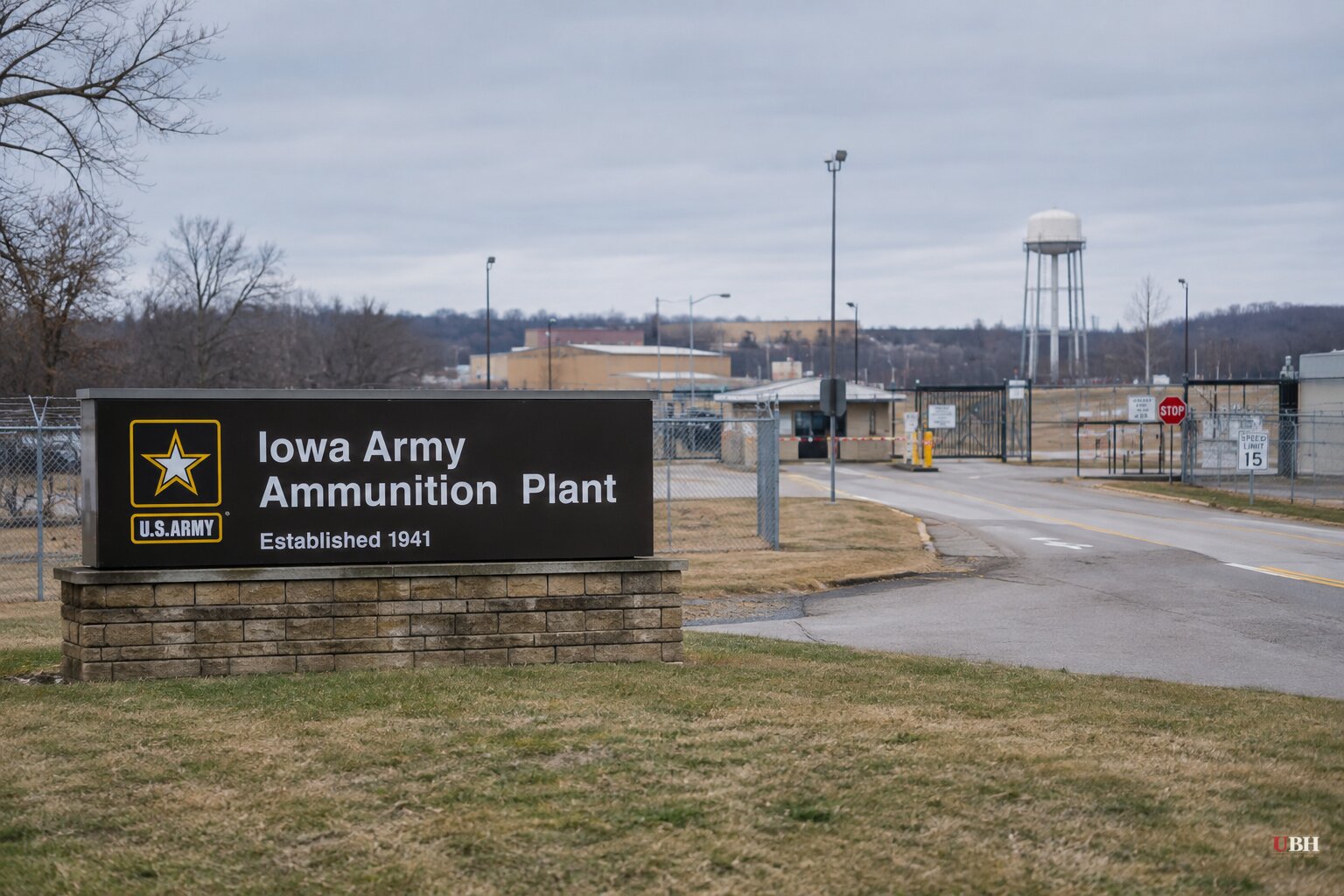
Since the 8th U.S. Circuit Court of Appeals lifted its pause on Monday, Nov. 23, the Army has moved from legal fight to final preparation. The controlled detonation of 68 barrels of lead azide at the Iowa Army Ammunition Plant in Middletown is scheduled for about 9 a.m. Central today, Nov. 25. That is 10 a.m. Eastern.
The Army has said the exact time could shift. A more precise time will come after officials evaluate weather and wait for the safest possible conditions.
What officials said Tuesday
Acting Army Secretary Adam Telle and Maj. Gen. Eric Shirley, commander of the U.S. Army Sustainment Command, briefed reporters Tuesday, Nov. 24. Shirley put it plainly: "Inaction is no longer an option."
Telle said falling temperatures make the material more volatile and raise the odds of a spontaneous explosion. He called an uncontrolled blast the "worst-case scenario" and said Wednesday's forecast is "ideal to protect public health and safety across the region."
Col. Aaron Teller, commander of the 71st Explosive Ordnance Disposal Group, said the barrels have deteriorated rapidly over the past eight months. Crystallized lead azide has built up on the outside of the barrels, he said. That buildup blocks the Army from moving them or applying a chemical neutralizer instead.
The Army says it found no "viable alternative." The stockpile is nearly five tons, about 9,700 pounds.
Barriers, evacuation and alerts
The Army is using earth-filled barriers, water walls, gel blocks and specialized foams to cut the amount of lead entering the air. Court filings say it will also douse the material with thousands of gallons of water during the blast.
The Army's public safety advisory recommends relocation for all Middletown residents and the immediately surrounding area. The zone is a 5-mile cone southwest of the plant, based on dispersion modeling from the Defense Threat Reduction Agency. It extends one mile past the predicted dispersion path.
FEMA is supporting the relocation with transportation, hotel lodging and meals. Lodging is covered through Friday, Nov. 27. Evacuees will get a phone call when the all-clear is given. FEMA's number for questions is 1-800-621-3362.
A FEMA-listed "imminent threat alert" sent to cellphones Tuesday told people up to 20 miles away to stay indoors with windows closed to avoid lead dust, noise and vibration.
A Justice Department filing says winds Wednesday should blow east to west or southwest, away from high-population areas and large bodies of water, at 5 to 10 mph.
How far the plume could go
Army maps released Tuesday show the dust cloud could travel as far as 100 miles. The most potent effects are expected within 30 square miles of the plant. The plume is projected over parts of southeastern Iowa and northeastern Missouri.
Agriculture Undersecretary Richard Fordyce said roughly 350 farms could be affected based on the expected plume direction. He said federal agencies have protocols to sample air and soil for heavy metals so they can protect the food supply.
Tom Croci, the EPA's associate administrator for national security and operations coordination, said the agency will monitor lead levels "for as long as it takes that we have the comfort that the levels are back to safe levels." EPA workers are testing air, water and soil before, during and after the blast.
The legal fight and the politics
The Iowa Environmental Council and the Sierra Club sued over the EPA's emergency permit. They argued residents got inadequate notice and that the agency had not shown detonation was the best option for health and safety. Residents have also complained about a lack of information.
A three-judge 8th Circuit panel denied their emergency request Monday. The court acknowledged "the very real risks presented by the Army's planned detonation." It still ruled that the choice is "between a controlled detonation and an unplanned explosion, not between the risk of a controlled detonation and no explosion at all." The panel found the EPA built adequate safeguards into the permit.
President Trump complicated the timeline Monday. He posted on Truth Social that he had ordered the military to hold off unless both the appeals court and Democratic Gov.-elect Rob Sand signed off. He said he would hold Sand "responsible for any and all death or destruction" if the operation were blocked.
Sand, who takes office in January, declined to approve or reject the blast. He posted on X that the administration should make the call based on the experts it brought in months ago. He also urged federal officials to release their briefing details publicly.
Telle then posted that the decision was a "consensus," saying every expert agency agrees and that both Iowa's current and incoming governors say the call belongs to the experts.
The detonation was first planned for last Friday. The Army moved it to give crews time to add blast barriers and apply the gels and foams, and to catch more favorable winds.
The Army has not yet announced the exact detonation time, which depends on weather. Evacuated residents will wait for the all-clear call before returning home, with hotel lodging funded through Nov. 27. The EPA says its lead monitoring will continue until readings are back to safe levels.
Sources used for this briefing
8 links from 7 independent newsrooms (syndicated copies of the same report count once)
These are the sources it draws on, linked so you can verify.


