
Unbiased headlines. Facts, not spin.
Unbiased Headlines is an independently owned news organization. We bring you the facts, not opinions, written fresh from 110+ named sources. Sources linked so you can verify it yourself.
 defense
Major Story (7/10)
Army Sgt. Jian Zhao Pleads Guilty to Conspiring to Pass Defense Information to China-Linked Buyers
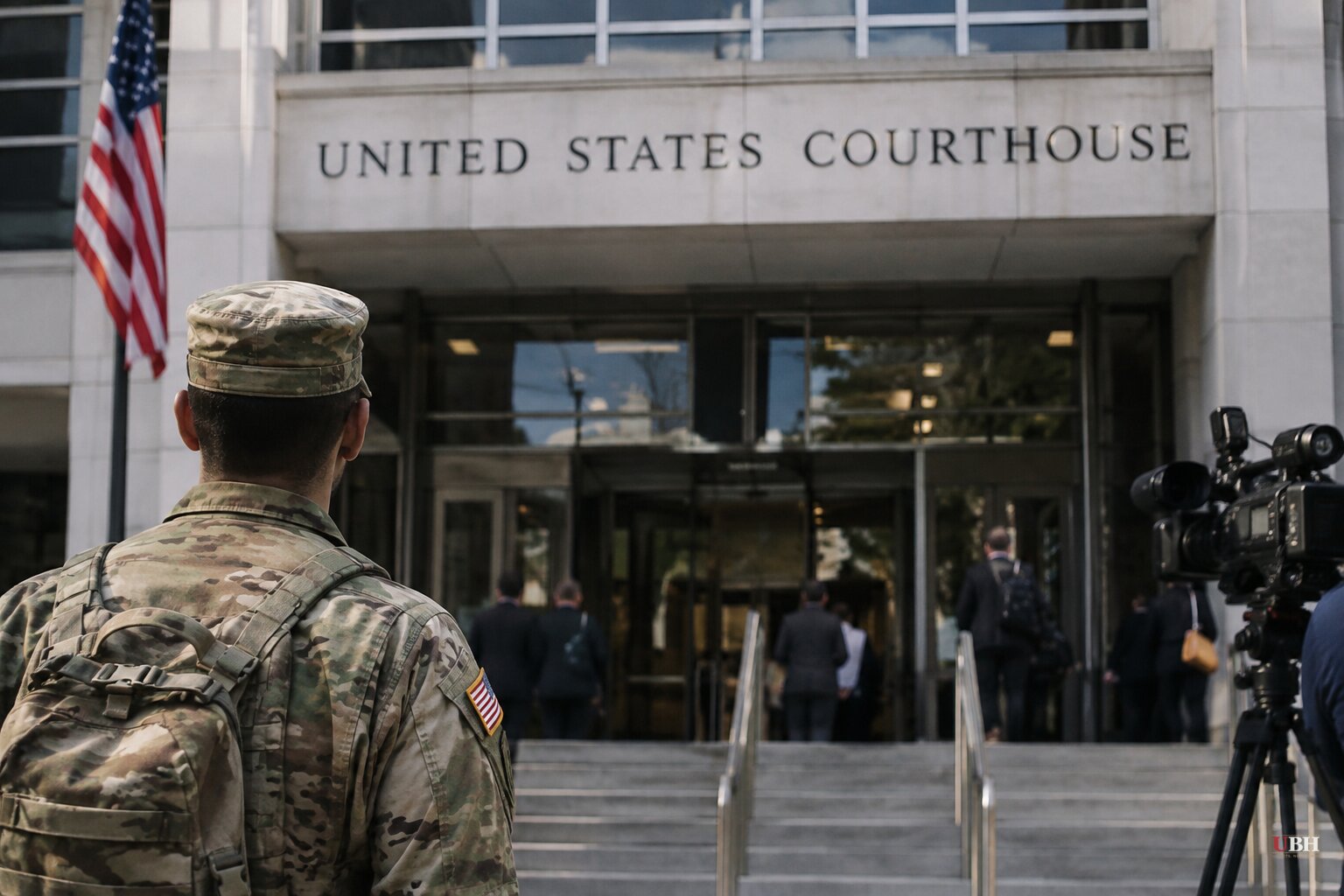
A serving Army sergeant has admitted he sold military information and government equipment to buyers in China for more than three years.
Sgt. Jian Zhao, 37, pleaded guilty Monday, Nov. 23, in federal court in Portland, Oregon, to conspiring to gather, transmit and transfer national defense information to individuals connected to China. U.S. Attorney Scott Bradford's office announced the plea Tuesday.
What Zhao admitted
Zhao enlisted in 2017 and served as a battery supply sergeant at Joint Base Lewis-McChord in Washington state. The job came with a security clearance and access to sensitive military information and equipment.
Prosecutors say the conspiracy ran from about November 2021 through March 2025. According to the Justice Department and Army, Zhao:
- Provided excerpts from technical manuals for the High Mobility Artillery Rocket System, or HIMARS.
- Offered military computers and government hard drives for sale.
- Photographed restricted presentations and documents on Army operations, communications networks, rocket and missile systems, and military exercises.
He used his personal cell phone to photograph controlled documents, prosecutors say, and removed government storage devices without authorization. They also say he sold materials he described as "sensitive, secret, or top secret," and took in thousands of dollars from overseas buyers. That phrase is Zhao's own description of what he sold. Prosecutors have not detailed the official classification of each item.
HIMARS is the rocket system the U.S. has supplied to Ukraine.
The money
Federal agents arrested Zhao on March 6, 2025, at his home in Lacey, Washington. Court documents say they recovered about $30,000 in cash, electronic devices and multiple Army hard drives.
Under the plea agreement, Zhao will forfeit $17,500 as proceeds of the offense and give up his claim to the roughly $30,000 seized.
The recruiter
Zhao did not work alone. Prosecutors say he conspired with Ruoyu Duan, a former Army soldier living in Hillsboro, Oregon, and others. Duan has already pleaded guilty to conspiracy to transmit national defense information.
According to prosecutors, Duan recruited active-duty personnel, Zhao among them, and arranged communications and money exchanges with buyers in China.
By the government's account, it was an organized pipeline run through a middleman, with paying customers on the other end. Prosecutors have not named the other active-duty troops Duan allegedly recruited.
What officials said
"Members of our armed forces are entrusted with protecting our nation's security," Bradford said in a video statement. "And when they betray that trust for personal gain, I will find them and hold them accountable."
Brig. Gen. Sean Stinchon, commanding general of Army Counterintelligence Command, called the plea "a deliberate betrayal of the oath every Soldier takes to defend our nation and safeguard our fellow service members." He said that by trading access to sensitive information and equipment for profit, Zhao "undermined our Army's operational security and put soldiers at risk." He urged soldiers to report suspicious outreach to Army Counterintelligence.
Roman Rozhavsky, assistant director of the FBI's Counterintelligence and Espionage Division, said Zhao "betrayed the country he swore an oath to defend by providing the Chinese government with sensitive US military information."
The charging documents describe the buyers as individuals connected to or linked to China. Rozhavsky's statement went further and named the Chinese government as the recipient. The Justice Department has not said which Chinese entities were behind the purchases.
Not the first case
Zhao follows other service members charged or sentenced in China-linked cases. Former Army intelligence analyst Korbein Schultz, who held a top-secret clearance at Fort Campbell, Kentucky, was sentenced in April 2025 to seven years in prison. He admitted selling information to a person he believed had ties to the Chinese government for about $42,000.
In 2025, Army tank crewman Taylor Adam Lee, 22, was arrested on allegations of trying to transmit classified military information.
The scale of the Zhao case is notable. Over 40 months, a supply sergeant allegedly moved weapons-system manuals, hard drives and photographed briefings out of a major Army installation. The cash at the end was modest: $17,500 in forfeited proceeds plus about $30,000 seized.
What comes next
Zhao's maximum exposure is 10 years in federal prison, a $250,000 fine, up to three years of supervised release and a $100 special assessment. The statutory maximum is a ceiling. The sentencing judge will set the actual term.
Sentencing is scheduled for March 1, 2027. It is not yet known who else Duan recruited. Prosecutors have said only that the group included other active-duty personnel, and no other defendants have been identified.
Sources used for this briefing
7 links from 7 independent newsrooms (syndicated copies of the same report count once)
These are the sources it draws on, linked so you can verify.


