
Unbiased headlines. Facts, not spin.
Unbiased Headlines is an independently owned news organization. We bring you the facts, not opinions, written fresh from 110+ named sources. Sources linked so you can verify it yourself.
 defense
Major Story (7/10)
Iran's UN Envoy Accuses U.S. of Using AI to Hit 2,000 Targets in 96 Hours
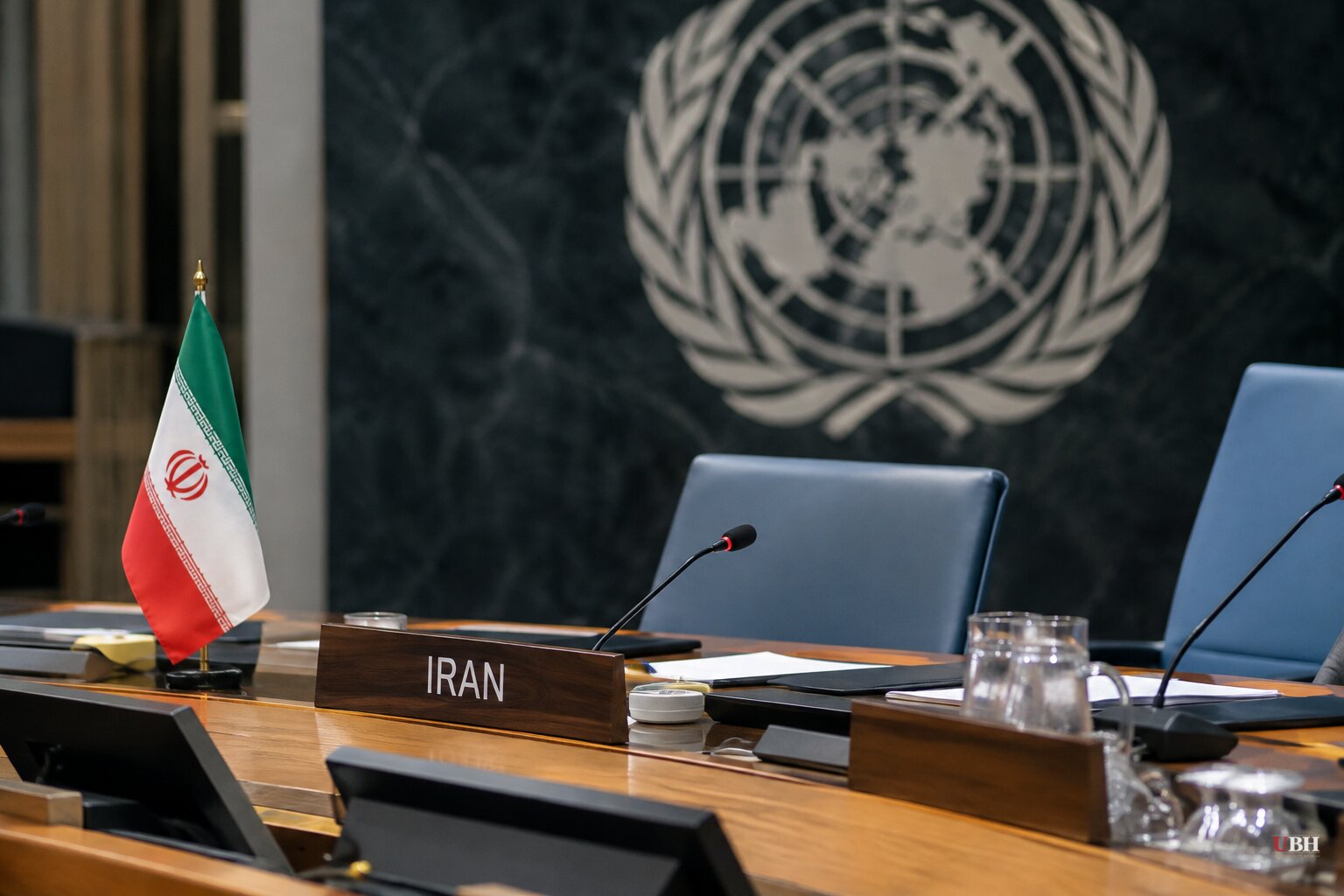
Iran's ambassador to the United Nations, Gholamhossein Darzi, accused the United States on Tuesday, Nov. 24, of using artificial intelligence to plan and carry out strikes on Iran. He made the charge at a UN Security Council meeting.
Darzi claimed U.S. forces used the technology to deploy more than 2,000 munitions against 2,000 distinct targets within 96 hours. He said Palantir's Maven system and Anthropic's Claude were used to analyze intelligence, identify and prioritize targets, and provide strike coordinates.
The 2,000-target figure is Darzi's claim. The U.S. has not confirmed it in anything cited here.
What Darzi said he was relying on
Darzi pointed to two U.S. statements. He said U.S. Central Command publicly confirmed on March 11 that it used advanced AI tools in the war. He also said a sworn Defense Department filing submitted to a court on June 15 acknowledged AI use and named the Grok system, running through the Pentagon's Maven platform, as having "enabled U.S. forces to employ more than 2,000 munitions against 2,000 separate targets within 96 hours."
The CENTCOM statement is on the record. Adm. Brad Cooper, the command's commander, said in March that American forces used a "variety of advanced AI tools" to "cut through the noise and make smarter decisions faster than the enemy can react."
The Pentagon has not said exactly how those tools are deployed. Darzi's description of the court filing, and the mix of Claude and Grok he cited, has not been matched by any public U.S. account.
The U.S. side of the AI question
Retired Navy Adm. Mark Montgomery, a senior director at the Foundation for Defense of Democracies' Center on Cyber and Technology Innovation, described the likely picture to CBS News in March. "The military is now processing roughly a thousand potential targets a day and striking the majority of them, with turnaround time for the next strike potentially under four hours," he said.
Montgomery added: "A human is still in the loop, but AI is doing the work that used to take days of analysis, and doing it at a scale no previous campaign has matched."
That is the American framing: faster analysis with humans still making the call. Darzi's framing is that speed and scale raise the risk of "escalation, miscalculation and civilian casualties."
Iran's casualty claims and legal demands
Darzi said "neither advanced technology nor the involvement of private companies can shield the United States or the Israeli regime from accountability." He demanded individual criminal accountability for those responsible for what he called deliberate attacks on civilians.
He cited Iranian casualty figures: more than 5,000 killed, including at least 254 children and 251 women, and 34,000 wounded. He also cited the strike on a school in Minab, which he said killed at least 168 students and teachers. These are Iran's numbers and were not independently confirmed in the material reviewed for this story.
He said Iran reserves the right to pursue all legal avenues for compensation and wants the UN to take charge of overseeing military AI.
A war nearly nine months old
The fighting began Feb. 28, and Darzi also referenced earlier hostilities in June 2025. President Trump told the New York Post that funding for the campaign is secured through January. He warned that Democrats could turn what he called a "total win" into a "loss" if they win control of Congress and try to restrict the operation.
Trump says the goal is preventing an Iranian nuclear weapon, not regime change. "I'm going to make a deal that is going to be permanent," he said in a Saturday Fox News interview. He described Iran's new leadership as "more rational" but doubted it would honor an agreement.
Hormuz and the wider region
On the water, Iranian army spokesman Brig. Gen. Mohammad Akraminia said Wednesday that Iran has tightened control and monitoring of the Strait of Hormuz on orders from the army's commander-in-chief. He said ships that transit without coordinating with Iran's armed forces face greater risks, including sea mines. He offered no evidence for the claim that Iran has upgraded its monitoring systems.
Trump has dismissed Iran's claims about ship attacks and mines as lies meant to inflate energy prices. The U.S. military declared the shipping lanes free of mines at the end of October. Iran's Persian Gulf Strait Authority said Tuesday it added 26 tugboats to a "Non-Compliance List" for serving non-compliant vessels, a step it indicated could make them targets.
Iran posts daily claims of ships hitting mines, few of which are corroborated. Independent monitors do report frequent incidents of "unknown projectiles" striking ships in the region.
Elsewhere, Yemen's Houthis said Wednesday they attacked Riyadh's financial district and the Ras Tanura refinery in Saudi Arabia, in retaliation for strikes on their territory. Saudi forces said they struck Hodeida the same day. Israeli Defense Minister Israel Katz said Tuesday that Iran is developing chemical weapons and floated the idea of striking earlier if Iranian intent to attack is recognized. Iran has repeatedly denied developing chemical weapons.
What comes next
No UN body has announced any action on Darzi's request for UN-led governance of military AI. The nearer deadline is on the American side: Trump says the war is funded through January, and the AI targeting questions, including what the Pentagon's court filing actually says, will land in Washington before then.
Sources used for this briefing
7 links from 7 independent newsrooms (syndicated copies of the same report count once)
These are the sources it draws on, linked so you can verify.


