
Unbiased headlines. Facts, not spin.
Unbiased Headlines is an independently owned news organization. We bring you the facts, not opinions, written fresh from 110+ named sources. Sources linked so you can verify it yourself.
 defense
Major Story (7/10)
Event date: November 18, 2026 ·
Hegseth Signs Military Cooperation Agreement With Venezuela's Acting President in Caracas
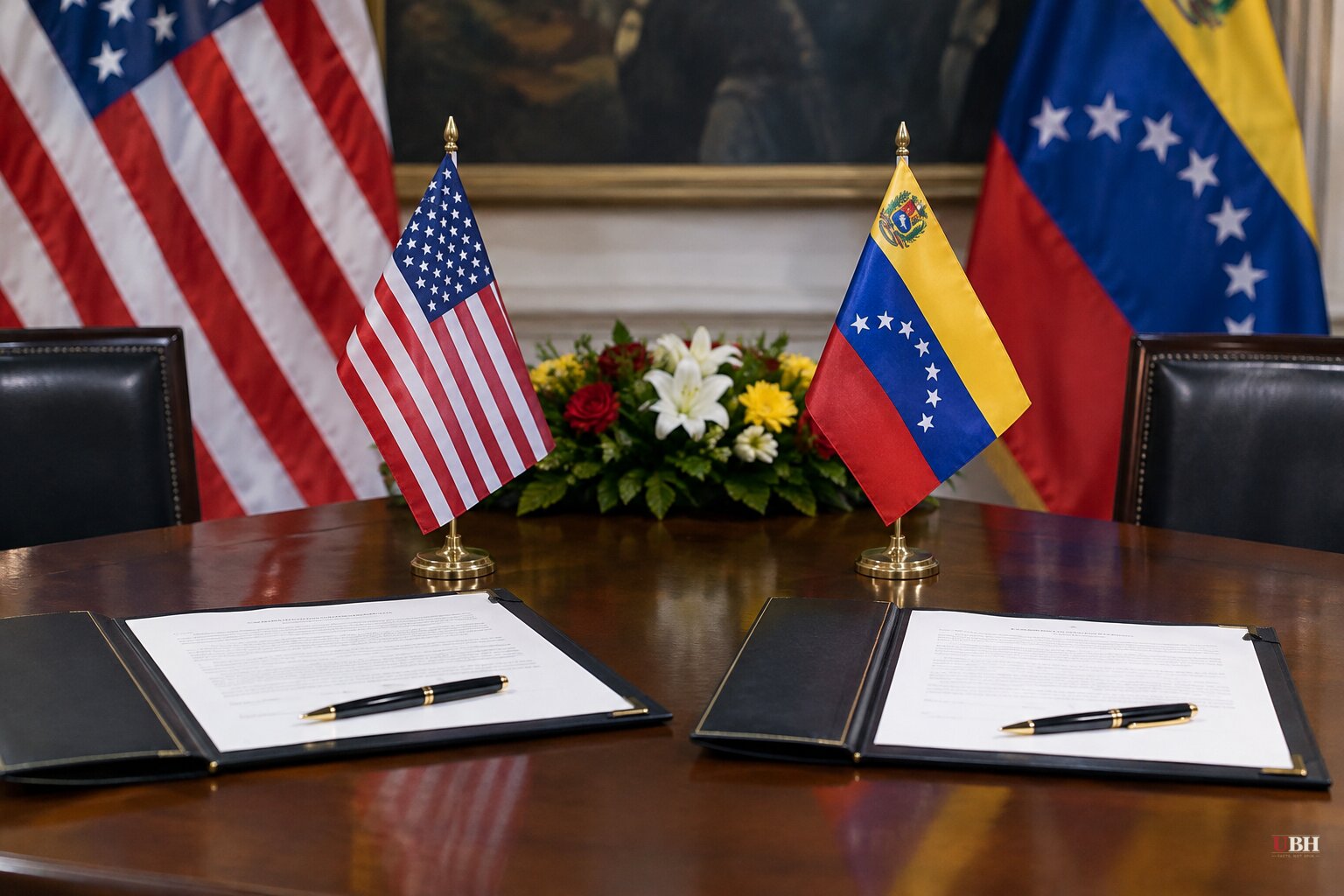
A week ago today, Defense Secretary Pete Hegseth flew to Caracas and signed a military cooperation agreement with Venezuela's acting President, Delcy Rodríguez. It was his first visit to the country since U.S. special forces seized Nicolás Maduro on Jan. 3.
Hegseth said the deal covers U.S. and Venezuelan forces "training together, partnering together, sharing intelligence, more defense equipment, and capabilities." Rodríguez called the visit "extraordinarily important" and said the arrangement would help the two countries confront "common threats."
The Pentagon has not published the full text of the agreement. Neither Hegseth nor Rodríguez offered much detail beyond those categories.
What Hegseth said
Speaking from the U.S. embassy, Hegseth tied the pact to counter-narcotics operations. "To the narco terrorists who have used this as a safe haven, your time is up," he said. "We will hunt you down. We will find you. And we will kill you."
He also said the partnership "requires the removal and eradication of all narcoterrorist networks usurping territory inside Venezuela today."
Hegseth described Venezuela as having gone "from our most aggressive regional threat to a compliant security partner on its way to rebuilding its military alongside the United States." He credited Rodríguez's leadership for what he said was rapid progress in under a year.
The agreement restores a relationship that lapsed two decades ago. Military cooperation was curtailed in 2004 and 2005 under Hugo Chávez, and Venezuela suspended the bilateral military exchange program in April 2005.
Oil is already part of the relationship
The security pact lands on top of an economic one. In August, Venezuela granted North American Blue Energy Partners, or NABEP, long-term access to 17 oilfields holding about a fifth of the country's reserves. The U.S. government took a 35% stake in NABEP's parent company, a guaranteed share of output and first refusal rights on the rest.
Alejandro Betancourt, the Venezuelan businessman who controls NABEP, was seen at the presidential palace and the embassy. He told reporters he discussed oil cooperation with Hegseth. By his account, NABEP plans to produce more than 250,000 barrels per day by year-end with 10 well clusters in service, up from 224,000 in mid-October, according to company figures.
Hegseth said the oil arrangement makes the Strait of Hormuz "a non-factor for the Western Hemisphere." The U.S. has been in a nearly nine-month conflict with Iran, which has fired on tankers in the strait and driven up gasoline prices. Voter anger over the war helped cost Republicans in the congressional elections two weeks before Hegseth's trip, according to Reuters.
The China argument
Supporters of the move frame it as a strategic win. An opinion writer in The Hill argues that the deal strips Beijing of a key ally and a foothold in infrastructure, oil and minerals. The writer says it also increases U.S. oversight of Chinese-linked space facilities at El Sombrero and Luepa.
The 2025 National Security Strategy gives that view an official footing. It promises to "deny non-Hemispheric competitors the ability to position forces or other threatening capabilities, or to own or control strategically vital assets, in our Hemisphere."
No on-record statement from Beijing about the agreement has been reported. Hegseth, for his part, said the partnership would also counter "foreign actors considered threats to the two countries."
The politics that remain unsettled
Rodríguez was Maduro's vice president when he was captured. She has served as acting president since, with the consent of the U.S. government.
The Trump administration has said it still expects new elections in Venezuela. It has pointed to U.S.-supported reconciliation talks that have freed hundreds of political prisoners. Uncertainty about the country's political future persists, even as the U.S. deepens its military and energy ties with the current government.
Hegseth called the Maduro raid "the single most sophisticated military operation in the history of Latin America," one that "lasted just 48 minutes." He said a visit like this would have been "impossible, almost unimaginable" a year ago.
Next stop: Colombia
Caracas was the first leg of a Latin America trip. Later Wednesday, Hegseth went to Colombia, where the defense minister said he would hand over a Lockheed Martin C-130 Hercules aircraft and discuss support against drug trafficking groups and other armed actors. In August, Hegseth had floated the possibility of joint strikes on Colombian armed groups.
Maduro and his wife, Cilia Flores, have pleaded not guilty to narcoterrorism conspiracy, cocaine importation conspiracy, weapons and torture conspiracy charges. Their trial is set for June, and the Pentagon has not released the agreement's text.
Sources used for this briefing
6 links from 6 independent newsrooms (syndicated copies of the same report count once)
These are the sources it draws on, linked so you can verify.


