
Unbiased headlines. Facts, not spin.
Unbiased Headlines is an independently owned news organization. We bring you the facts, not opinions, written fresh from 110+ named sources. Sources linked so you can verify it yourself.
 defense
Major Story (7/10)
Event date: October 15, 2026 ·
Pentagon Has Drawn Up Strike Options Using 'Mother of All Bombs' on Iran, US Officials Tell CNN
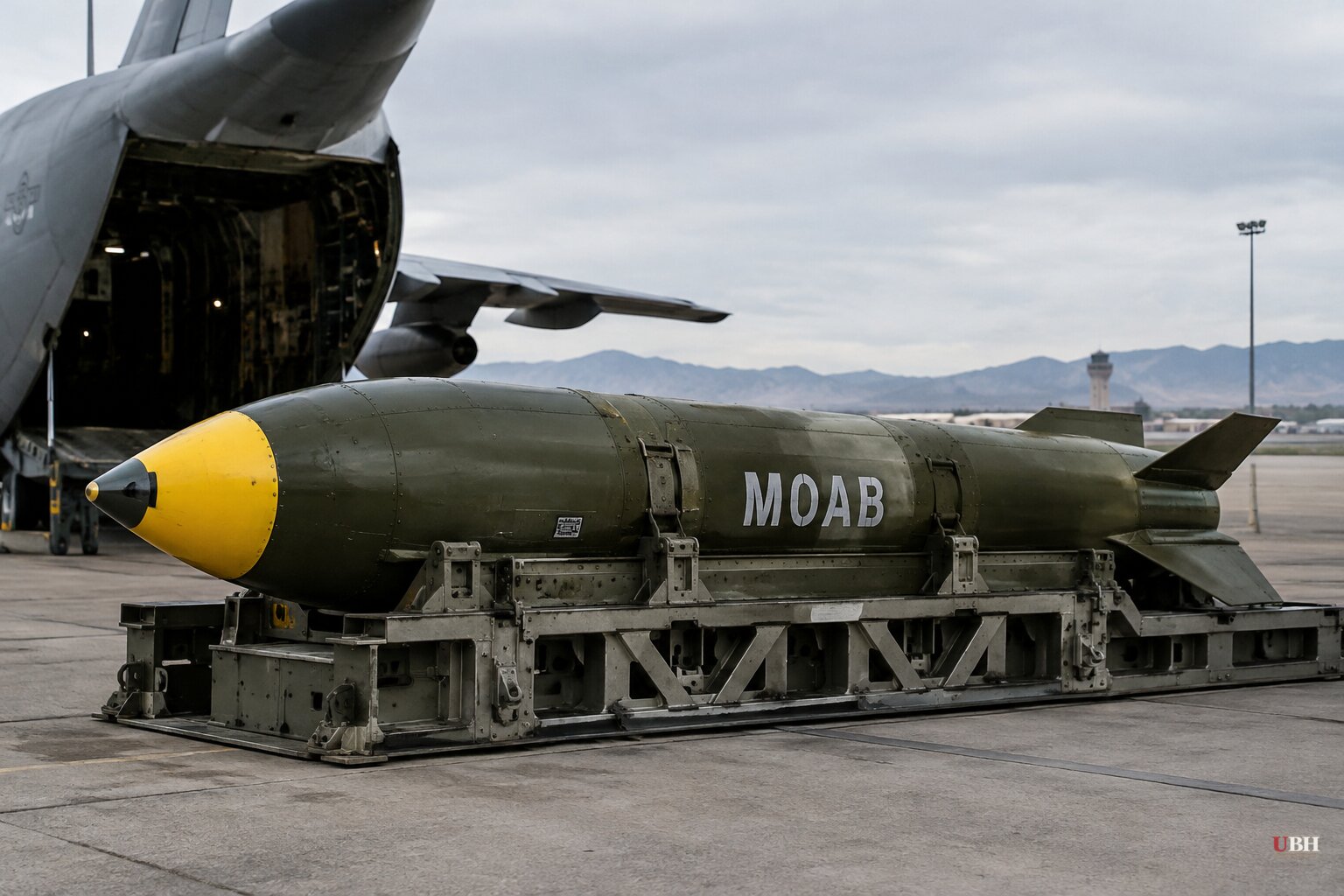
More than six months into the US air war on Iran, the Pentagon is working on a new set of strike options, and one of them involves the biggest non-nuclear bomb in the American arsenal.
Multiple US officials told CNN that military planners have developed packages that could include the GBU-43/B Massive Ordnance Air Blast bomb, known as the MOAB, against Iranian energy infrastructure and nuclear sites. The plans would be used if President Donald Trump orders combat to resume, either before or after the midterm elections. It would be the first use of the weapon in the Iran conflict.
The MOAB option
One source told CNN that Trump ordered the military to develop additional packages including "a lot of energy infrastructure" and a possible MOAB strike. The same source said the attack would come "prior to US retrograde in CENTCOM AOR," meaning before American forces draw down in the region.
Sources also told CNN there are doubts inside the military planning discussions about whether the weapon would achieve any of Trump's stated goals or shift the balance of the war. Some officials privately question whether the White House has a strategy that ties any strike plan to ending the war. Only the president can make that call.
Trump addressed the bomb in a Thursday interview on Newsmax. "It's not nuclear at all, this is just an extremely large bomb," he said. "I wouldn't use nuclear, we don't have to."
Trump has said publicly he will take no new action before the midterms. Several advisers told CNN privately they do not know whether that pledge is firm or could change before Election Day, Tuesday, Nov. 3.
At a Mississippi rally, Trump dismissed the earlier diplomatic track. The April ceasefire was later formalized in the 60-day Islamabad Memorandum signed in June, and it collapsed in July. "We did a little cease-fire, which I never liked very much," Trump said. "I considered it sort of a waste of time."
CNN also reported that Trump has told associates that bringing troops home, as some outside allies urge, would look like defeat.
The economic squeeze
The other track is financial. The Treasury Department says Operation Economic Outcast, launched Aug. 24, has sharply cut Iran's oil revenue and its access to trade and banking channels.
In its assessment, "Iran's Isolation by the Numbers," Treasury said Iran has loaded no oil onto vessels since Aug. 25. It also said Iran has reportedly sold the remaining oil stranded at sea. Using Kpler data and its own staff calculations, Treasury put the 30-day average of Iranian or suspected Iranian-origin oil unloaded at known locations at about 400,000 barrels per day by Oct. 19. That is down from more than 1 million around the launch.
Treasury says the rial reached 2,687,000 to the dollar on the unofficial market in October, a drop of roughly 25% since the operation began. It cites the Statistical Center of Iran for year-on-year inflation of about 90% in September.
Treasury says trucks are stranded at the Turkish border for up to 20 days. It says the UAE, Oman, Iraq, Georgia and Azerbaijan have barred Iranian airlines. President Masoud Pezeshkian has acknowledged sanctions are biting. "Some say sanctions have no effect at all; to those people, I really don't know what to say," he told state television in August.
Those are Treasury's own figures about its own program.
Analysts at RAND reach a similar read on the economics. Raphael Cohen and Howard Shatz, writing in Foreign Policy, argue the blockade is "going in the direction that the United States wants." They put food inflation in Iran at almost 130%. They call staying the current course the "least satisfying" option, though one that "almost certainly will not bring quick results."
They also lay out the costs on the American side:
- 800 US casualties
- Tens of billions of dollars spent
- Hundreds of damaged or destroyed buildings on US bases in the region
- Strained munitions supplies
- Inflation at its highest level since 2023, tied to higher fuel prices
The authors say polls show most Americans do not believe there was "sufficient reason" to attack Iran. They also say Iran shows no sign of ending attacks on Hormuz shipping or curbing its nuclear program.
Civilian deaths and Congress
On Capitol Hill, Democrats are pressing Defense Secretary Pete Hegseth over civilian harm. Rep. Jason Crow of Colorado, a former Army Ranger on the House Armed Services Committee, joined Reps. Yassamin Ansari of Arizona and Sara Jacobs of California in a letter. It concerns a Sept. 1 strike on a wedding in Kuhestak, in Iran's Hormozgan province.
The New York Times reported at least five people were killed, including two children, and nearly 70 were injured. Crow's office says further reporting points to a high likelihood the bomb was American. The lawmakers' letter says the dead include a 4-year-old boy and a 16-year-old boy.
"We demand urgent answers regarding the United States' role in this strike, why the strike proceeded given the clear risk of significant civilian harm, and what steps the Department is taking to prevent further civilian casualties in Iran," they wrote. They called the incident part of "a continued pattern of civilian casualties" and cited an "apparent lack of action and accountability from the Department."
The letter points back to the Feb. 28 strike on a girls' elementary school in Minab, also in Hormozgan. Crow's office says at least 175 civilians were killed. Ahlul Bayt News Agency, which reports on the lawmakers' push, puts the child death toll at 120. Crow says the Pentagon has not given a sufficient update on the school strike. Ansari called the war "disastrous and illegal." Ahlul Bayt News Agency reports 77 members of Congress are demanding answers.
The Pentagon's response to the new letter has not been made public.
What to watch
The military now has options in hand, and Trump has publicly shelved them until after Nov. 3. His own advisers told CNN they cannot say whether that holds. The decision on energy sites and any MOAB use rests with one person, who has called the ceasefire a waste of time and has not declared the war won.
Sources used for this briefing
6 links from 6 independent newsrooms (syndicated copies of the same report count once)
These are the sources it draws on, linked so you can verify.


