
Unbiased headlines. Facts, not spin.
Unbiased Headlines is an independently owned news organization. We bring you the facts, not opinions, written fresh from 110+ named sources. Sources linked so you can verify it yourself.
 defense
Breaking / Critical (9/10)
Event date: October 31, 2026 ·
Netanyahu Pressed Trump to Strike Iran Right After Midterms, Axios Reports, as Doha Talks Enter Third Day
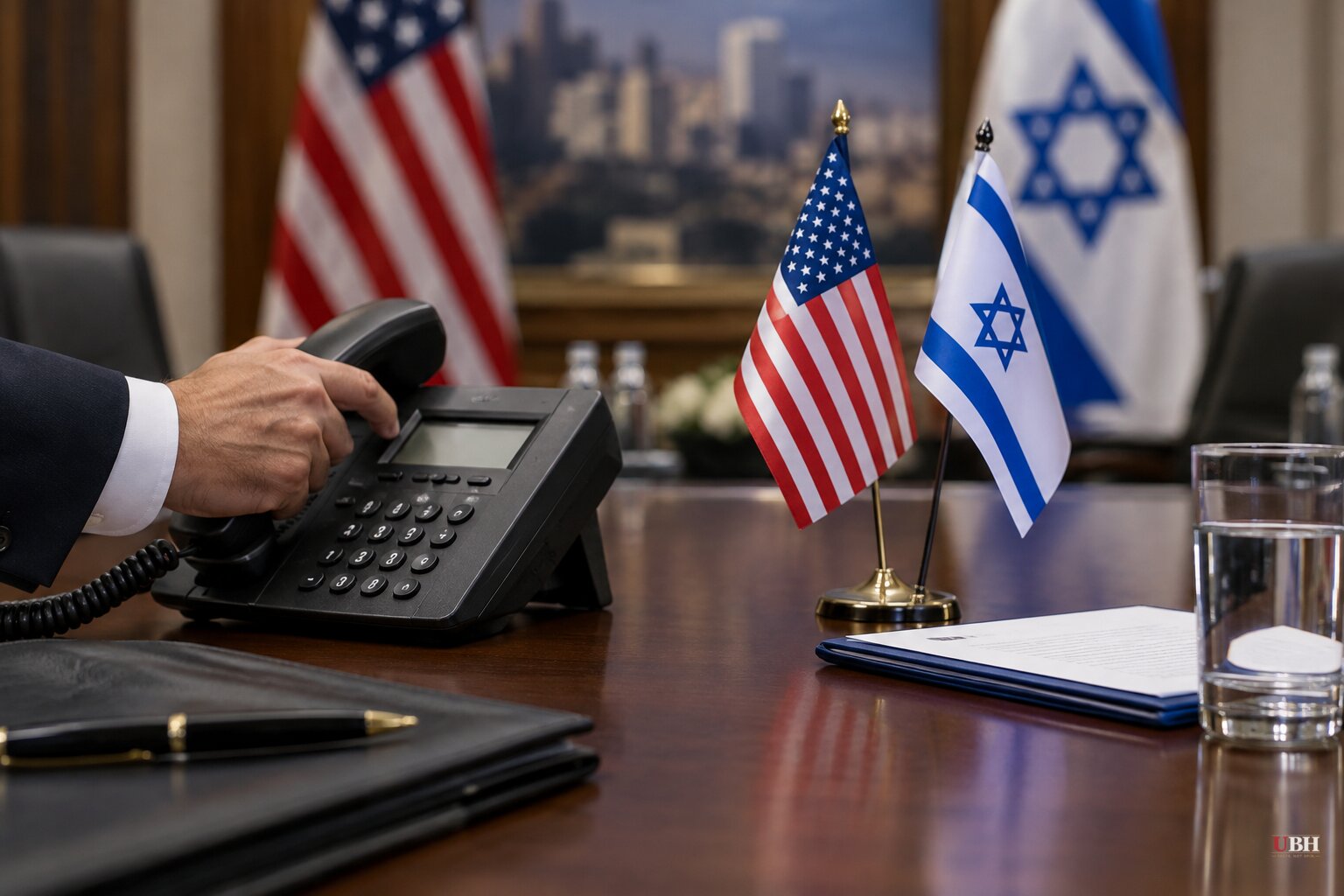
Since the U.S. and Israel struck Iran in February and killed Supreme Leader Ali Khamenei, the war has dragged into its eighth month with neither a deal nor a decisive military result. The newest development is a phone call between Donald Trump and Benjamin Netanyahu, and a disagreement over timing.
The Trump-Netanyahu call
Axios, citing one U.S. official and one Israeli official, reported that the two leaders spoke about the state of negotiations. According to those sources, Netanyahu pushed Trump to launch strikes on Iran immediately after the Nov. 3 midterms. Trump, they said, wanted to let diplomacy run its course.
The Israeli source called the conversation "tough." The American source called it "direct."
The date of the call is not settled. The Wall Street Journal, citing informed sources, put it on Friday morning, Oct. 30. Axios described it as Saturday, Oct. 31. Neither the White House nor Netanyahu's office has publicly described what was said.
Trump himself was guarded when asked about Netanyahu earlier in the week. "I can't do that now, no," he told reporters. Netanyahu said publicly that Israel is "committed to completing the elimination of the Iranian regime" and that he had raised the objective with Trump repeatedly.
What Trump is saying
Speaking at his Mar-a-Lago Halloween party on Saturday, Trump said talks with Iran are "going fine" but that Tehran is "not very reliable." "They make a deal and then they back out. I want to make a deal," he said.
He also said the U.S. is "not in that much of a hurry" because "we've knocked down their Navy, we've knocked out their air force, we've knocked out their anti-aircraft." He said "1 or 2 sites" remain, naming the underground Pickaxe Mountain facility, and added: "we can do that in ten minutes."
Days earlier in the Oval Office, Trump framed the choice as winning "the nice way or the not nice way." He said leaving now would count as a "great job," but "it's not good enough for me. We have to make sure it doesn't happen in five years, six years, ten years."
Secretary of State Marco Rubio said Saturday that Trump has not decided whether to resume strikes and prefers a diplomatic resolution. War Secretary Pete Hegseth said U.S. forces are prepared to go further if the president orders it.
Earlier this month, Trump wrote on social media that Washington "will not be attacking Iran at any time prior to the midterm elections." He has not said what happens after.
The talks
Iranian negotiators were in Doha today for a third consecutive day of talks with Qatari mediators, according to an official quoted by Reuters. Foreign Minister Abbas Araghchi said Saturday that a proposal under discussion could fully reopen the Strait of Hormuz within two days if the U.S. meets several conditions. He said Iran has no plans for direct talks with American officials.
Iran previously offered to reopen the strait within a week in exchange for a lifting of the U.S. blockade of Iranian ports, release of frozen Iranian assets and eased limits on Iranian oil exports. The U.S. rejected that offer, the AP reported.
Iran's security chief, Mohsen Rezaei, said Saturday he had received a letter from Vice President J.D. Vance seeking to revive stalled talks. The White House has not detailed the letter's contents. A Qatari delegation also arrived in Tehran on Friday, Oct. 30, according to Iranian state media.
Araghchi said in a Telegram interview that the outcome depends on U.S. answers to "Iranian questions," and that Iran is ready for both "defense and diplomacy."
Shipping and warnings
The UKMTO, Britain's maritime security agency, said today that a merchant vessel's master relayed a mayday call saying another ship had been struck by an "unknown projectile" in the Strait of Hormuz. Qatar's state news agency said the Qatari LNG carrier Al Mayeda was attacked Friday with "unidentified objects." No crew were hurt and there was no environmental impact, the agency said. No one has claimed responsibility for either incident.
Iran's armed forces chief of staff has warned the U.S. and Israel of an "unimaginable" response to any attack. Iranian officials also said today that a new war could last longer than the last one and that Trump would not control its length.
UAE presidential adviser Anwar Gargash told a conference in Manama that the Emirates hopes for a diplomatic breakthrough but is "braced for the worst."
Politics on both ends
Rising gas prices and cost-of-living pressure have made the war a political liability for Trump heading into Tuesday's vote, according to The Hindu's account of voter sentiment. Hasan Alhasan, senior fellow for Middle East policy at the International Institute for Strategic Studies, told CNN the U.S. keeps signaling escalation and that "it's becoming difficult to distinguish pressure tactics from genuine signals."
Netanyahu, meanwhile, lost his parliamentary majority in Israel's recent election but remains prime minister. Coalition negotiations are expected to begin in earnest next week.
The next fixed date is Tuesday, Nov. 3. Both Tehran and Jerusalem are waiting to see whether Trump's pre-election pledge not to attack ends on Wednesday with new strikes or with a Hormuz deal out of Doha.
Sources used for this briefing
6 links from 6 independent newsrooms (syndicated copies of the same report count once)
These are the sources it draws on, linked so you can verify.


