
Unbiased headlines. Facts, not spin.
Unbiased Headlines is an independently owned news organization. We bring you the facts, not opinions, written fresh from 110+ named sources. Sources linked so you can verify it yourself.
 defense
Breaking / Critical (9/10)
Iran Says It Is Ready for War or Diplomacy as Doha Talks on $6 Billion in Frozen Assets Enter Third Day
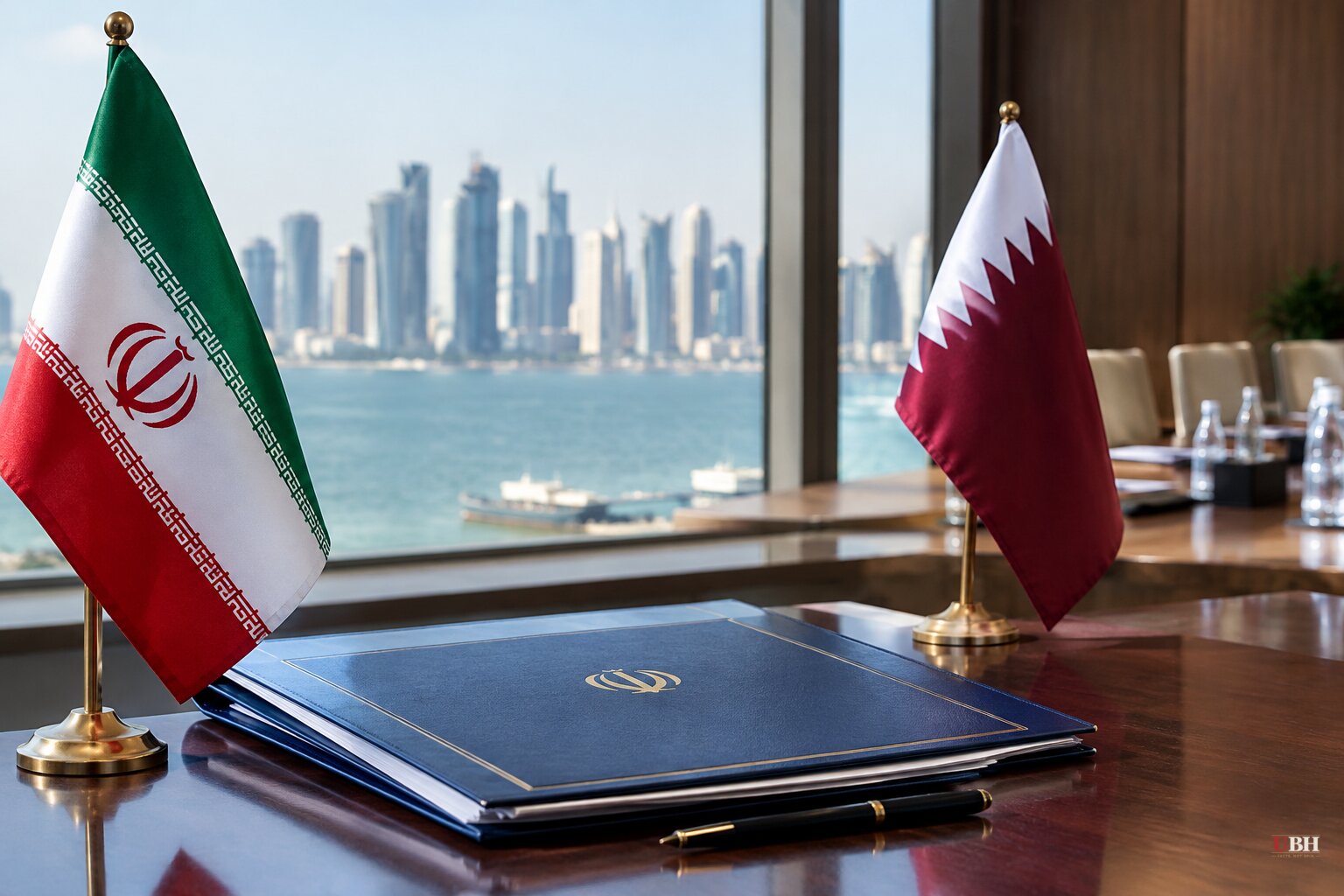
Iran's foreign minister said Sunday, Nov. 1, that Tehran is ready for both defense and diplomacy, and that which one it gets depends on Washington.
"We hope the other side will exercise rationality and choose diplomacy," Abbas Araghchi said, according to Iran's state news agency IRNA. The remarks came two days before U.S. midterm elections and as the war, which began Feb. 28, enters its eighth month.
Doha talks on frozen assets
Indirect talks in Doha ran into a third day on Sunday. Qatar is trying to negotiate the release of more than $6 billion in Iranian assets, a step that could lead to the reopening of the Strait of Hormuz and a restart of nuclear negotiations, according to The Guardian's reporting.
Qatar's plan would compress the sequence in which the U.S. lifts sanctions, Iran reopens the strait and nuclear talks begin. Iran has agreed to cut that timetable from seven days to two, per The Guardian.
Araghchi said an Iranian delegation led by the deputy foreign minister visited Qatar to consult with the mediators. He said the visit involved no preparation for negotiations with the Americans and that no final outcome has been reached. Results, he said, depend on U.S. answers to questions Iran has posed. According to The Guardian, he is not attending the Doha talks, though other Iranian diplomats are heavily involved, and there are currently no plans for direct talks with Washington.
On Saturday, Araghchi told Al Jazeera that Iran would open the strait within two days of the U.S. lifting its blockade on Iranian oil shipping, ending its block on the release of Iranian assets, and ending sanctions on Iranian oil exports.
Letters, threats and a deadline that expires Tuesday
Iran's security chief, Mohsen Rezaei, said Saturday that he received a letter from U.S. Vice President J. D. Vance seeking to revive talks. He described a positive change in "tone" but said he has not responded. Secretary of State Marco Rubio said Saturday that the U.S. is open to a diplomatic solution.
Rezaei said Tehran has told Washington that unless its conditions are met, "neither would the Strait of Hormuz be reopened nor would there be any negotiations." Those conditions include unfreezing assets abroad, ending the months-long U.S. naval blockade of Iranian ports, lifting longstanding sanctions and ending the war on all fronts.
President Trump, speaking to reporters at his Florida residence, said talks are "going fine but you know they're not very reliable." He also said the U.S. has knocked out much of Iran's military but "still [has] to take care of, I would say one or two sites, but we can do that in 10 minutes." He named "Pickaxe Mountain," described as a suspected underground nuclear complex.
Earlier this month Trump wrote on social media that Washington "will not be attacking Iran at any time prior to the midterm elections." He has not said what happens after Tuesday. Asked Sunday about a Saturday call with Israeli Prime Minister Benjamin Netanyahu, Trump said only that he "had a very good talk." Axios first reported the call.
Two diplomats told the Associated Press that U.S. officials have told several Middle East countries and regional allies to prepare for possible renewed military action against Iran after the election, and for Iranian retaliation against them. The Israeli military has warned of strikes "out of proportion, stronger than you can ever imagine," NPR reported.
Tehran's warnings
Iran's military leadership has answered in kind. Army spokesman Mohammad Akraminia said, per state television, that "a potential future war could last longer than previous conflict, and the American president would not be in a position to dictate the timing or the conditions of its conclusion."
Revolutionary Guards spokesman Hossein Mohebbi said "in a conflict with America, there are no geographical limitations." He echoed a written message from Supreme Leader Mojtaba Khamenei on Saturday, ordering that any threat be met with an "immediate, impactful, and geographically unrestricted response." The new supreme leader has not appeared in public since the war began, according to ZeroHedge and Al Jazeera's account.
Trita Parsi of the Quincy Institute for Responsible Statecraft told NPR that Iranian leaders have "very high confidence in their own capability of striking back," but that a new round would lead to "a very bad situation for Iran and for the region." He said Iran's military is built to keep operating even if central command collapses, and that Iran still gets missile ingredients from China and Russia.
That is an analyst's assessment, and it cuts against Trump's claim that most of Iran's military is gone. Iran's retaliation in earlier rounds hit U.S. bases in Saudi Arabia, Bahrain and the UAE, and tankers near Hormuz are still being targeted.
The Gulf is bracing
On Friday, unidentified missiles struck a Pakistan-bound Qatari LNG tanker near the strait. The ship had received direct safe-passage clearance from Tehran hours earlier. Qatar kept mediating anyway.
UAE envoy Anwar Gargash said another round of escalation serves neither Iran nor its neighbors. "We are also, as we have shown before, braced for the worst," he said.
Hasan Alhasan of the International Institute for Strategic Studies told CNN the U.S. "keeps signaling that another round of escalation might be imminent," and that "it's becoming difficult to distinguish pressure tactics from genuine signals."
Netanyahu, who has been pushing for new strikes, remains in office after losing his parliamentary majority in Israel's recent elections. Coalition negotiations are expected to begin in earnest next week.
The open question is Iran's reply to Vance's letter and Washington's answer to Iran's proposal to cut the sequencing timetable to two days. Both come as Trump's no-strike pledge runs out after Tuesday's vote.
Sources used for this briefing
7 links from 7 independent newsrooms (syndicated copies of the same report count once)
These are the sources it draws on, linked so you can verify.


