
Unbiased headlines. Facts, not spin.
Unbiased Headlines is an independently owned news organization. We bring you the facts, not opinions, written fresh from 110+ named sources. Sources linked so you can verify it yourself.
 defense
Major Story (7/10)
Event date: October 28, 2026 ·
CENTCOM Says Iran Blockade Has Denied It $25 Billion in Oil Exports as Trump Says War Ends 'One Way or the Other'
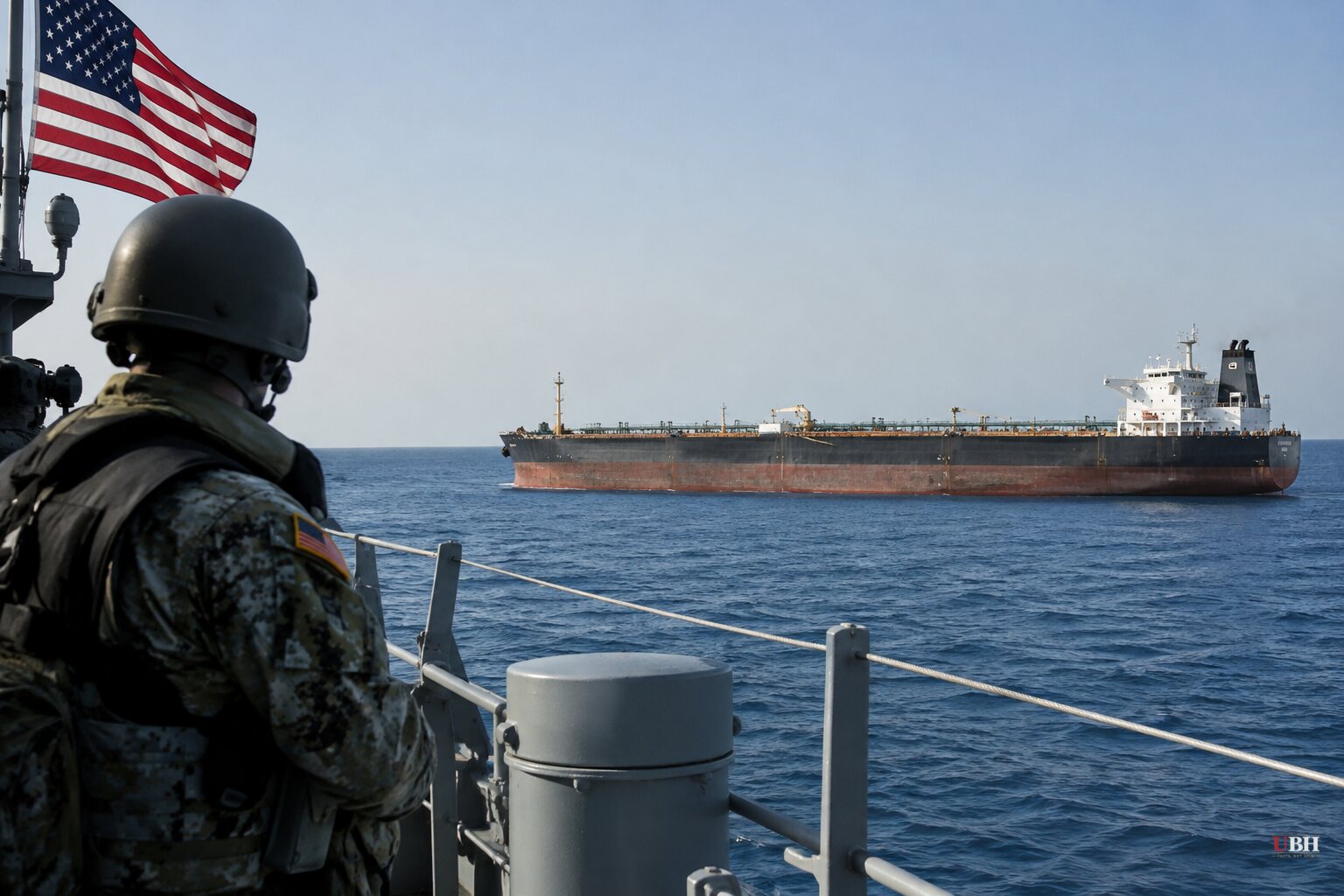
The economic squeeze on Iran is now measurable, and the diplomacy is moving at the same time. Whether the two connect is the open question as of Monday, Nov. 2.
What CENTCOM and Treasury say the blockade has done
CENTCOM commander Adm. Brad Cooper said in a video update Friday that the U.S. naval blockade and financial pressure have imposed "devastating costs" on Iran's security apparatus. He put the figure for denied oil exports at no less than $25 billion.
Cooper said CENTCOM has helped other U.S. agencies freeze nearly $350 million in cryptocurrency. He also said Iran's government is "withholding salaries, pensions, and benefits" across oil, energy, manufacturing, construction and the Islamic Revolutionary Guard Corps itself.
The most striking claim is about proxies. Cooper said there are reports of Iran-aligned militias withholding pay from their own fighters to send money back to the IRGC, which he said is also not paying its troops. That is a reported claim from the commander, not an independently confirmed one.
Treasury's assessment, titled "Operation Economic Outcast: Iran's Isolation by the Numbers," backs up the oil picture. Treasury launched the operation Aug. 24 and says Iran has loaded no oil onto vessels since Aug. 25. Treasury Secretary Scott Bessent said at the start of October that September was the first month on record with no Iranian crude loaded for export.
Using Kpler data and its own staff calculations, Treasury says the 30-day average of Iranian or suspected Iranian oil unloaded at known destinations fell to about 400,000 barrels per day by Oct. 19. It was more than 1 million around the launch.
The blockade was reimposed in July. Cooper said humanitarian aid is the only exception.
Inside Iran
Treasury cites a roughly 25% fall in the rial since Aug. 24. The report puts the unofficial rate at 2,687,000 to the dollar in October.
Iran's own Statistical Center put year-on-year inflation at 89.8% for September. The consumer price index rose 4.2% from August.
Seyed Malek Hosseini, a deputy minister in Iran's Cooperatives, Labor and Social Welfare Ministry, told the Iranian Labor News Agency that about 700,000 jobs were lost during the war. He acknowledged unofficial estimates run closer to 2 million. He warned that up to 1.4 million people could leave the labor market by the end of the Iranian calendar year if the contraction continues.
Hosseini said 54% of the labor market is informal. He said unemployment benefits of 16 million to 17 million tomans a month would not cover basic living costs.
President Masoud Pezeshkian has acknowledged the pressure. "Some say sanctions have no effect at all; to those people, I really don't know what to say," he told state television in August.
Treasury also says the UAE, Oman, Iraq (with religious-travel exemptions for Najaf), Georgia and Azerbaijan have barred Iranian airlines. It says thousands of trucks are stranded at the Turkish border, with delays of up to 20 days.
Reuters, citing unnamed sources, reported this week that Iran has still sent Hezbollah tens of millions of dollars. Those sources say the money is meant to rebuild its military capability. Tehran has not confirmed it.
Trump's timeline and the diplomatic track
Speaking to Right Side Broadcasting Network before an Iowa rally Sunday, Trump said the U.S. will "put it away very soon, one way or the other." He added: "Either they'll make a deal, or we'll just end it."
Trump said he spoke with Israeli Prime Minister Benjamin Netanyahu on Saturday and had a "very good talk." He gave no details beyond saying they discussed the Iran war. Netanyahu has made no public comment on the call.
Israel's final count gave Netanyahu's bloc 53 of 120 Knesset seats, short of a majority. Some Israelis have worried he might want to strike Iran again to shore up his political standing, according to CBS News. No Israeli official has said that.
Trump has repeatedly hinted at reigniting the war after the midterms. The Pentagon says this year's fighting has already cost tens of billions of dollars. Fox News has reported that Vice President JD Vance reached out to an Iranian hard-liner to restart peace talks.
Iran's Foreign Minister Abbas Araghchi said Saturday that Iranian negotiators are in Qatar discussing a proposal that could reopen the Strait of Hormuz within two days if the U.S. meets several conditions. He said no direct talks are being held with Washington.
On Sunday he said the outcome depends on U.S. answers to "Iranian questions." He said Iran is ready for both defense and diplomacy, depending on Washington's "rationality." A senior UAE official said Abu Dhabi hopes for a breakthrough while preparing for the worst.
Shipping is still under fire
The Strait of Hormuz remains dangerous. Qatar's state news agency said an LNG carrier, the Al Mayeda, was attacked Friday with "unidentified objects" while transiting Gulf waters. No crew were hurt.
On Sunday, Britain's UKMTO said a merchant vessel's master relayed a mayday saying another ship had been hit by "an unknown projectile" in the strait. No party has claimed responsibility for either incident.
Since the war began in February, Iran has targeted vessels in the strait and wider Gulf to assert control over shipping, according to CBS News.
The case against the approach
Critics argue the campaign punishes civilians and rests on a questionable legal footing. Writing for Truthdig, Iranian-British journalist Kamin Mohammadi called the Feb. 28 U.S.-Israeli bombardment, which killed the previous supreme leader, an "illegal war" launched without UN Security Council authorization.
She argues it gave hard-liners the pretext to revive Iran's so-called infiltration bill. Under the bill, Iranians who give interviews to outlets the Intelligence Ministry deems hostile could face up to two years in prison. Parliament approved the bill's framework 183 to 4 on Aug. 16 and Article 22 by 174 to 6 on Oct. 6. Penalties remain subject to revision and face opposition inside parliament.
Mohammadi writes that this cuts ordinary Iranians off from the outside world. Iran's own parliament, not Washington, is the one writing that law.
What comes next
The midterm elections are tomorrow, Nov. 3. Trump's own framing is a binary of a deal or an end to the war, with no date attached.
The U.S. has not publicly responded to the conditions Iran's negotiators are weighing in Qatar. Whether Washington answers them before or after Tuesday will show whether the blockade is meant to produce a deal or to set up the next round of strikes.
Sources used for this briefing
6 links from 6 independent newsrooms (syndicated copies of the same report count once)
These are the sources it draws on, linked so you can verify.


