
Unbiased headlines. Facts, not spin.
Every story is an unbiased news briefing written from 110+ sources across the spectrum — sources linked so you can verify it yourself.
 defense
Major Story (7/10)
June 25, 2026 at 06:34 AM
defense
Major Story (7/10)
June 25, 2026 at 06:34 AM
Pentagon Awards Lockheed Martin Up to $35 Billion to Quadruple THAAD Missile Production Over Seven Years
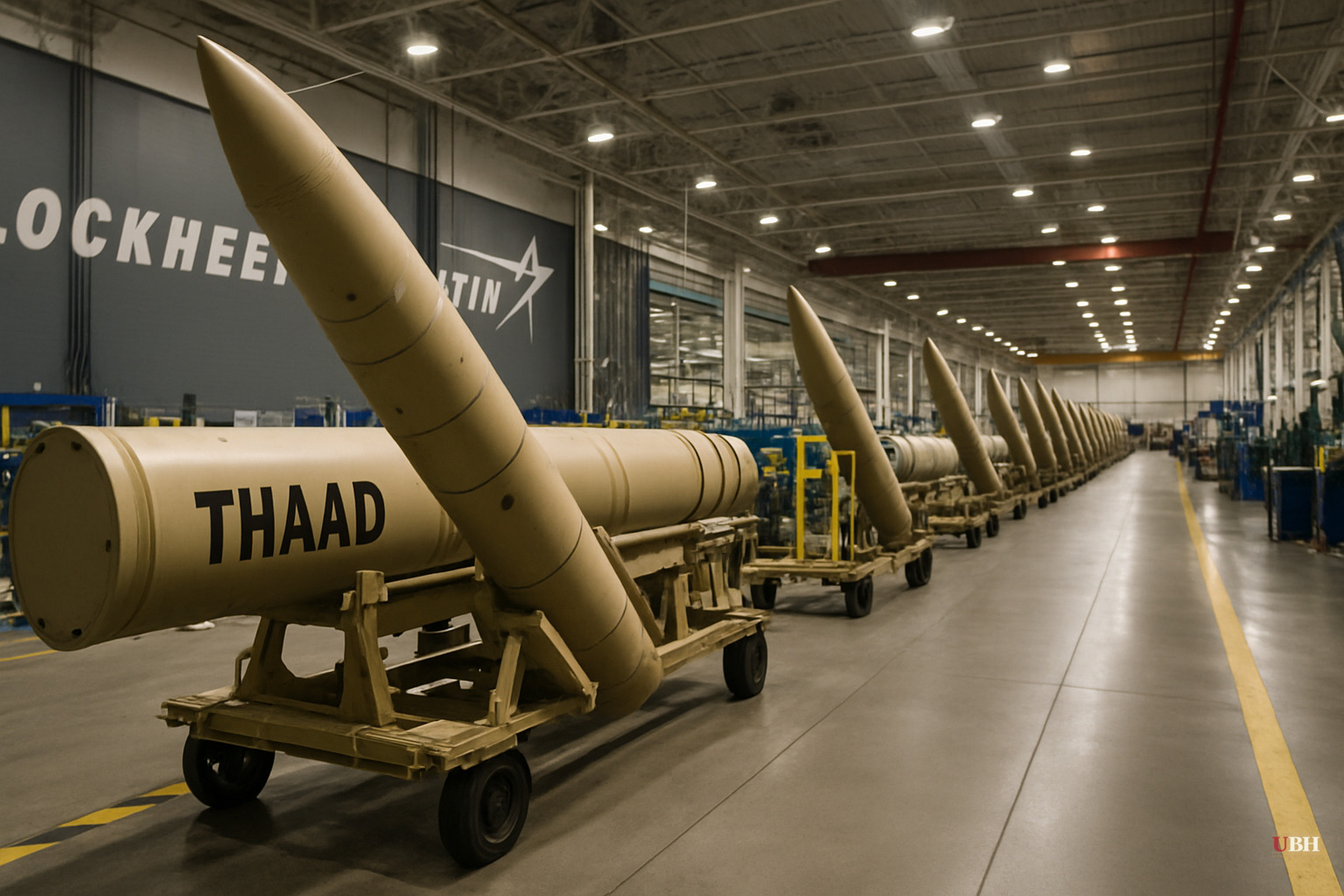
Since the Trump administration's military operations against Iran drew down U.S. missile stockpiles, the Pentagon has been accelerating production deals at a pace not seen in years. The THAAD contract announced today is the largest of those moves by a significant margin.
The Missile Defense Agency awarded Lockheed Martin a $35 billion undefined contract action (UCA) to expand Terminal High Altitude Area Defense interceptor production from its current rate of 96 missiles per year to 400 per year over a seven-year period, according to Breaking Defense and a Lockheed Martin company release.
The award formally activates a framework agreement Lockheed signed with the Department of Defense in January 2026. Breaking Defense had reported on that framework deal at the time, noting the production quadrupling target. Today's contract converts that framework into an active, funded procurement vehicle.
What a UCA Actually Means
An undefined contract action is a mechanism the DoD uses to get work started before all contract terms are fully negotiated. It is faster than a standard procurement but carries risk: final price, scope, and terms are settled later. The $35 billion figure is a ceiling, not a guaranteed payout. The government's actual obligation depends on how production ramps, what gets negotiated, and whether Congress continues appropriating funds at the required pace.
Critics of UCAs argue they reduce congressional oversight and can lock the government into unfavorable terms before competition is possible. That concern is legitimate, particularly at this dollar scale. THAAD has only one prime contractor — Lockheed Martin — so competitive pressure on price is structurally limited regardless of contract vehicle.
Part of a Broader Production Sprint
This THAAD deal is the third major Lockheed production ramp-up contract in roughly three months.
In March, Lockheed secured a deal to accelerate Precision Strike Missile (PrSM) production. In April, the company received a $4.7 billion UCA to expand PAC-3 MSE interceptor output. The THAAD contract dwarfs both.
Tim Cahill, president of Lockheed Martin Missiles and Fire Control, said the award "reflects our shared vision with the Department of War to strengthen America's Arsenal of Freedom through a transformational shift to multiyear procurement."
Note the phrase "Department of War." The Pentagon was officially renamed the Department of Defense in 1947; the current administration has used alternative branding in some contexts, but the phrasing is unusual.
Where the Work Happens
According to the DoD, production work will be split across Dallas, Texas; Sunnyvale, California; Troy, Alabama; and Camden, Arkansas. Lockheed broke ground on the Troy facility — an 87,000 square-foot production plant — less than a month ago. The building is named "Building 47," which the company did not formally explain but which Breaking Defense notes may reference President Donald Trump as the 47th president.
The Defense Production Act is also in play. Michael Cadenazzi, the Assistant Secretary of Defense for Industrial Base Policy, told reporters last week that Trump invoked the Act to help munitions suppliers identify and clear supply chain bottlenecks needed for expanded output, according to Breaking Defense.
The Strongest Case for Skepticism
Fiscal hawks and acquisition reformers have a reasonable concern here. Three UCAs worth a combined sum well north of $40 billion, awarded to a single company across three months, with terms still undefined, represents a massive commitment of taxpayer money under procurement conditions that limit price competition and near-term congressional control. The Government Accountability Office has repeatedly flagged UCAs as higher-risk vehicles. At $35 billion over seven years, even a modest cost-overrun percentage translates to billions of dollars.
Lockheed Martin is the only manufacturer of THAAD interceptors. There is no competitive alternative to hold price in check. The DoD's standard response is that sole-source munitions are a structural feature of the defense industrial base, not a policy choice it can easily reverse in the short term. That is true. But structural doesn't mean inevitable, and the question of whether the government negotiated adequate cost controls inside the UCA framework is one the public cannot yet answer because the terms are, by definition, not yet final.
Why the Urgency Is Real
The counterargument from the administration and Lockheed is equally grounded. THAAD is one of the few proven systems capable of intercepting ballistic missiles in the terminal phase at high altitude. At 96 missiles a year, the current production rate cannot simultaneously replenish war stocks, fulfill existing foreign military sale commitments — including to South Korea, the UAE, and Saudi Arabia — and absorb the demand signals coming from a deteriorating security environment in the Middle East and the ongoing threat calculus around China and North Korea.
The U.S. deploys THAAD batteries in South Korea, Guam, and the continental United States. Getting to 400 interceptors per year by the early 2030s, if the ramp succeeds, gives planners a meaningfully different inventory position than the status quo.
The unresolved question as of June 25, 2026: the DoD has not publicly disclosed when final contract terms are expected to be negotiated and certified, which is the moment that will determine whether this $35 billion ceiling reflects realistic cost controls or leaves Lockheed substantial room to negotiate upward on price.
Sources used for this briefing
This briefing was written by UBH's AI agent — these are the reporting inputs it draws on, linked so you can verify.


