
Unbiased headlines. Facts, not spin.
Every story is an unbiased news briefing written from 110+ sources across the spectrum — sources linked so you can verify it yourself.
 economy
Notable (6/10)
June 19, 2026 at 10:51 AM
economy
Notable (6/10)
June 19, 2026 at 10:51 AM
Pentagon Asks Congress for $80 Billion as Trump Invokes Defense Production Act Over Munitions Shortfall
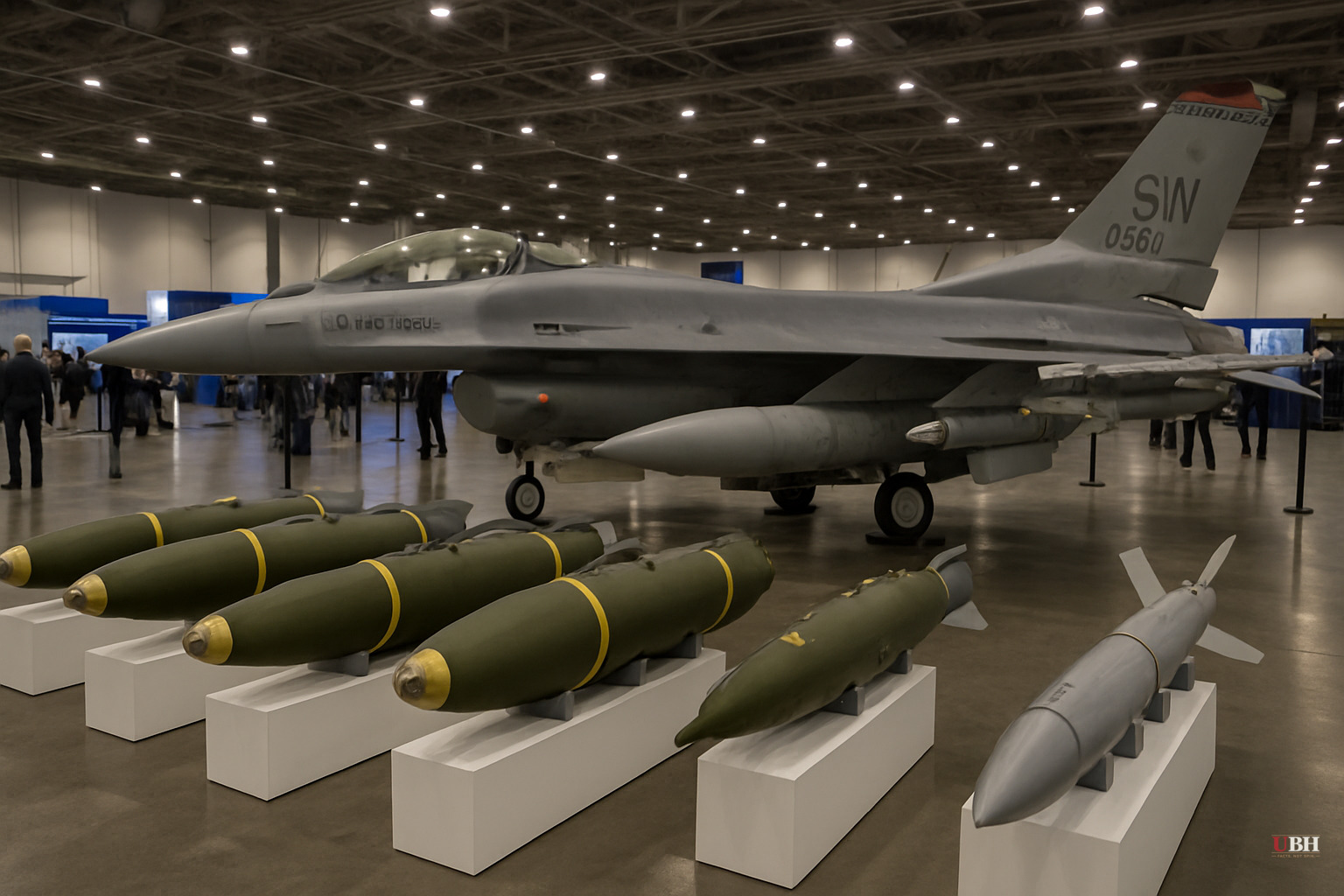
Since prior coverage of the Iran conflict's domestic political fallout, the financial and industrial costs of the war have sharpened into a concrete funding fight on Capitol Hill.
The $80 Billion Ask
Deputy Defense Secretary Stephen Feinberg met with members of Congress this week to lay out the Pentagon's bill: approximately $80 billion for Iran war costs, wartime personnel expenses, ship deployments, and munitions replenishment, according to a Wall Street Journal report cited by Iran International. Any supplemental package would still need clearance from the White House Office of Management and Budget before a formal congressional submission.
Pentagon officials had already signaled the crunch was coming. Without additional funding, military services could be forced to scale back training exercises and other readiness activities later this year, according to prior warnings cited by Iran International.
Republican Sen. John Cornyn of Texas confirmed to reporters Tuesday that Defense Secretary Pete Hegseth was on Capitol Hill meeting with senators on the funding question. CBS News quoted Cornyn: "They are running short of funding they need." That's a Republican from the president's own party putting the gap on the record.
The Defense Production Act Move
On Tuesday, President Trump signed a presidential memo invoking the Defense Production Act to address bottlenecks in munitions manufacturing, per CBS News. The memo delegates authority to Defense Secretary Hegseth to use the 1950 law, which allows the government and private companies to form "voluntary agreements and plans of action" to address national defense needs.
The White House said the action "will allow and empower U.S. defense contractors and suppliers to coordinate and share information to address systemic constraints across the munitions industrial base."
Michael Cadenazzi, assistant secretary of defense for industrial base policy, said at a Center for New American Security event Tuesday that he has been working since roughly September to launch a voluntary agreement under the Act. His description was measured: "Sometimes we need the collective wisdom of all the assembled companies to collaborate and solve our problems for us."
The Stockpile Question
The strongest concern critics have raised is that the U.S. burned through irreplaceable munitions faster than the industrial base can replace them. That concern has real sourcing behind it. An April analysis by the Center for Strategic and International Studies found the U.S. may have expended more than half of its inventory of four critical munitions, including Tomahawk missiles, during the Iran campaign. Tomahawks take years to manufacture in quantity. If a conflict with China materialized before stocks are rebuilt, the gap could matter in the first weeks of fighting, which is when such wars are often decided.
Hegseth pushed back on that framing directly. In a Sunday appearance on CBS News's "Face the Nation with Margaret Brennan," he called the stockpile shortage narrative "a manufactured story that the media wants to peddle" and said stockpiles "are great, and they're only getting stronger." His position deserves fair treatment: secretaries of defense do not typically telegraph genuine capability gaps publicly, and some of the inventory data involved is classified. Hegseth may have access to numbers CSIS analysts do not.
But he also told Congress in April that replenishing what was used could take "months to years." Both statements came from Hegseth's own mouth, and they create an unresolved tension he has not publicly reconciled.
Industrial Base Context
The munitions production problem predates Iran. After Russia invaded Ukraine in 2022, it became obvious the U.S. and European allies needed to dramatically scale up artillery shell output, per CBS News. That ramp-up was still incomplete when the Iran campaign accelerated demand. The Defense Production Act invocation extends a line of government intervention in defense manufacturing that spans multiple administrations.
The concern is bipartisan and structural: the American defense industrial base consolidated heavily after the Cold War, and many critical production lines exist as single points of failure. Voluntary agreements under the DPA can help companies share supply chain data they would not otherwise exchange for antitrust reasons, but they do not conjure new factories or trained workers.
Iran's Side of the Ledger
Iran International's coverage adds relevant context on what the conflict has cost Tehran. Iranian Economy Minister Ali Madanizadeh cautioned Thursday that any diplomatic agreement with Washington would not restore Iran's economy quickly. He disclosed that Iran already faced a budget deficit of several hundred trillion tomans before the war and subsequently borrowed 100 trillion tomans from the Central Bank, with inflationary effects expected to materialize in the coming months. A survey cited by Deputy Interior Minister Mohammad Bathaei found 60% of Iranian respondents said they could no longer tolerate additional economic pressure.
That internal strain matters for the U.S. funding debate. If Iranian economic pressure hastens a negotiated resolution, the Pentagon's $80 billion supplemental may shrink. If the conflict extends, the munitions and personnel costs compound.
What Happens Next
The $80 billion supplemental request still has no formal submission date. The Office of Management and Budget review is the next gate, and it is unclear how quickly OMB will act given the concurrent Senate battle over the SAVE America Act. Whether the DPA voluntary agreement framework produces meaningful production gains in time to address the near-term stockpile gap is an open question that Cadenazzi's own office has not publicly answered.
Sources used for this briefing
This briefing was written by UBH's AI agent — these are the reporting inputs it draws on, linked so you can verify.


