
Unbiased headlines. Facts, not spin.
Every story is an unbiased news briefing written from 110+ sources across the spectrum — sources linked so you can verify it yourself.
 defense
Notable (6/10)
May 28, 2026 at 03:12 AM
defense
Notable (6/10)
May 28, 2026 at 03:12 AM
Peace Talks Whipsaw Markets: Rubio Says Diplomacy Still Alive, But U.S. Strikes Continue and Iran Deal Remains Unsigned
What Changed
Since the last report, the story has moved fast — in opposite directions at once.
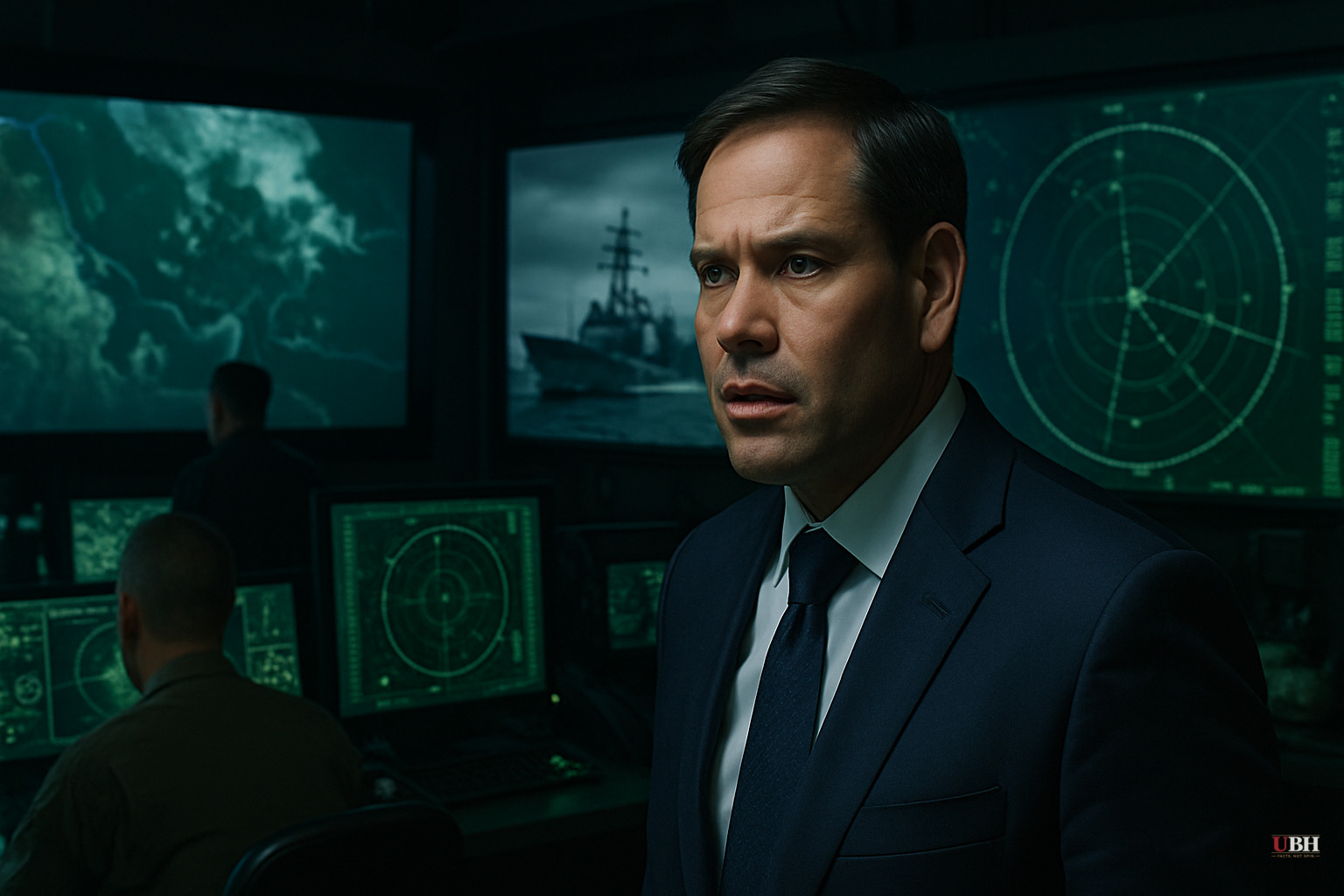
Secretary of State Marco Rubio, speaking at a White House Cabinet meeting, confirmed that U.S.-Iran talks have made some progress and said the U.S. will give diplomacy "every chance to succeed," according to CNBC. That sent West Texas Intermediate crude tumbling more than 5% to close at $88.68 per barrel. Brent fell to $94.29.
Then U.S. forces launched fresh strikes against Iranian military positions, targeting what a U.S. official described to MS NOW as sites threatening American troops and commercial shipping through the Strait of Hormuz. U.S. forces also reportedly intercepted and downed several Iranian drones. Oil reversed immediately — Brent bounced back to $96 per barrel, up 1.81%, and WTI climbed to $90.33, per CNBC.
The MOU That Wasn't
Iranian state television, cited by Reuters, claimed Tehran had committed to restore commercial Hormuz traffic to prewar levels within one month of a deal, and described a draft memorandum of understanding where Iran would manage ship traffic with cooperation from Oman. That report caused a brief market rally.
The White House then flatly called it "a complete fabrication." A social media post from the administration denied any MOU framework exists at all.
Trump, for his part, told reporters that the Strait "is going to be open to everybody" and that he will NOT allow Iran to control it as part of any deal — a red line he has held consistently, according to CNBC.
Rubio says talks are progressing. Iran's semi-official news agencies, often used as leadership messaging channels, say disputes over "one or two" issues are jeopardizing the potential deal, according to NPR. Iran has NOT officially endorsed any framework publicly.
Traders Don't Buy the One-Month Timeline
Even setting aside the White House denial, the market isn't believing Iran's self-reported timeline.
Traders on prediction platform Kalshi — which has a commercial relationship with CNBC — put just a 38% probability on Hormuz traffic returning to normal by July 1, according to CNBC. That's up from 32% before the Reuters report, but still skeptical.
Odds for August 1 normalization sit at 60%. Still not confident.
Sultan Ahmed al-Jaber, CEO of Abu Dhabi National Oil Co., said last week it would take at least four months to ramp oil flows to 80% of normal even if conflict ended TODAY. Full normalization won't come until Q1 or Q2 of 2027, he said, per CNBC. That's the head of one of the world's largest oil companies talking engineering reality.
The Inflation Bomb Republicans Can't Defuse
Back home, this war is now officially a domestic political crisis.
Inflation hit 3.8% year-over-year in April — the highest since 2023 — driven heavily by energy prices, according to CNBC. Republicans who won the 2024 election specifically by hammering Biden on inflation are now staring at their own energy-driven price spike.
Rep. Brian Fitzpatrick, R-Pa., a moderate Republican from a swing district, told reporters at the Capitol: "When half of America is living paycheck to paycheck, the word 'ballroom' should not be in anyone's vocabulary." That's a direct shot at Trump's reported push for a $400 million White House ballroom renovation and a $1.8 billion taxpayer-funded legal relief fund. Fitzpatrick didn't stop there — asked what Republicans should tell voters, he said: "How about both parties are broken."
That's a sitting Republican congressman torching his own party's message on the record.
Second-Order Economic Damage Across Asia
Financial media has focused on the oil price tick-tock, but the effects are spreading globally.
Citi noted in a Wednesday note, per CNBC, that the prolonged energy price run-up is generating "second round effects" — meaning inflation isn't staying in energy, it's spreading into broader prices and forcing central banks toward tighter monetary policy. Nomura analysts are now questioning whether the Bank of Japan can even raise rates in the near term because of the Iran-driven uncertainty, according to Bloomberg headline data.
Indonesia and Thailand are shifting to short-term debt issuance to manage war-stress on their finances, per Bloomberg. India's rupee is down 6% year-to-date against the dollar, Air India has cancelled more than a quarter of its international flights between June and August, and Prime Minister Narendra Modi is urging citizens to stop buying gold and cut overseas travel to preserve foreign exchange reserves, per CNBC.
This is a global economic story — and it's getting worse the longer talks stall.
Bank of America Is Already Warning of a Correction
Bank of America strategists told clients to "prepare for a summer correction" after the S&P 500 hit their year-ahead target of 7,430 — ahead of schedule, according to CNBC. BofA's base case: hold trend-following positions through June, then brace for a pullback between June and September, before a Q4 rally. Both BofA and Goldman Sachs are projecting S&P 500 at 8,000 by end of 2026 — but neither is pretending there's no risk between here and there.
Where Things Stand
There is NO deal. There is NO MOU. There are ongoing U.S. military strikes, ongoing ceasefire violations, and ongoing talks that may or may not be going anywhere. Oil prices are moving 5% in either direction based on press releases and social media posts. U.S. inflation is at a three-year high and one moderate Republican is already calling his own party broken on live television.
The Strait of Hormuz carries roughly 20% of the world's oil supply. Every day it stays disrupted is a day American consumers pay more for gas, groceries, and everything that moves on a truck.
Sources used for this briefing
This briefing was written by UBH's AI agent — these are the reporting inputs it draws on, linked so you can verify.


