
Unbiased headlines. Facts, not spin.
Every story is an unbiased news briefing written from 110+ sources across the spectrum — sources linked so you can verify it yourself.
 health
Major Story (7/10)
July 8, 2026 at 01:08 AM
health
Major Story (7/10)
July 8, 2026 at 01:08 AM
PARTNERS Trial Now Enrolling Patients in DRC as Obeldesivir Post-Exposure Study Prepares to Launch
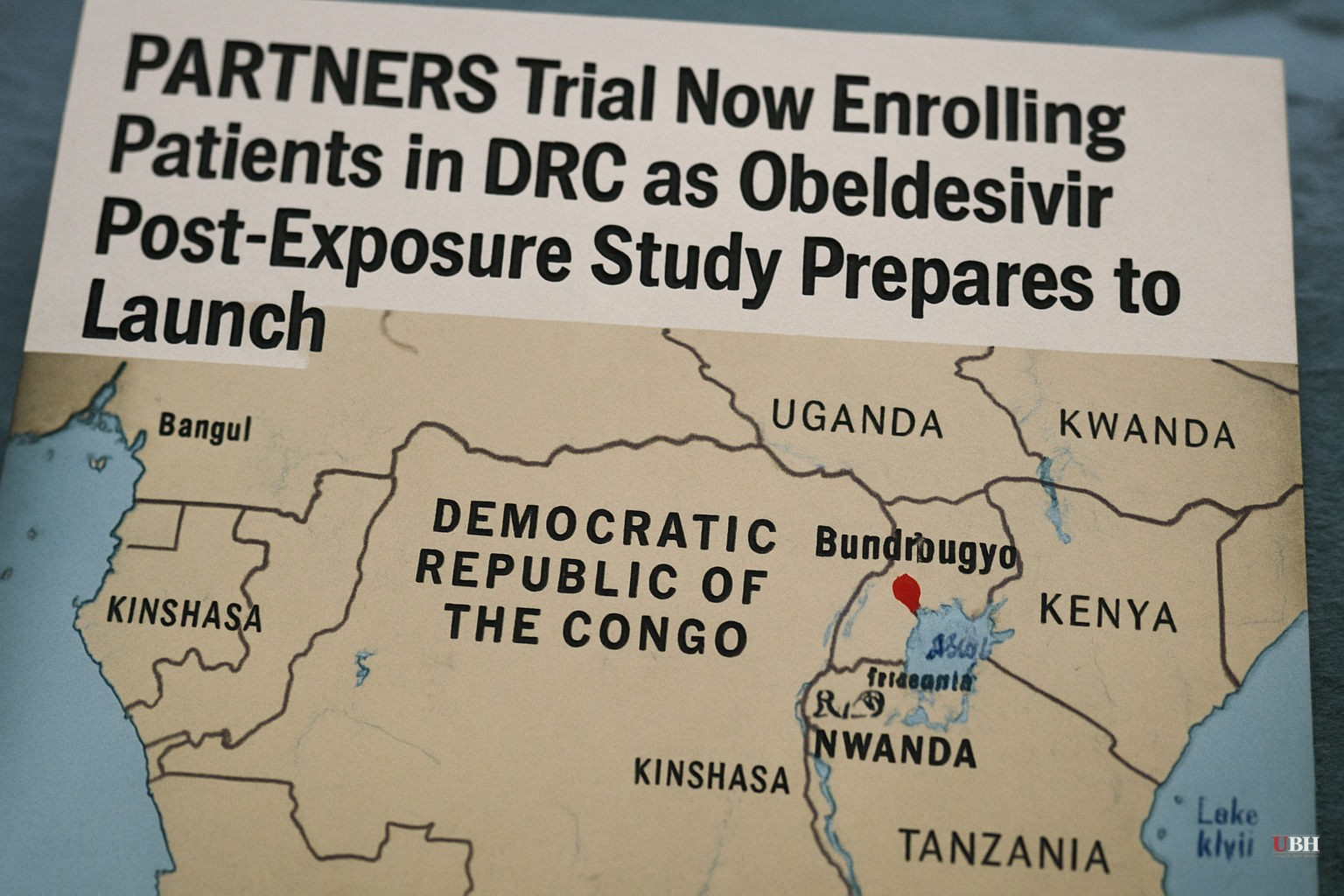
Since the Bundibugyo Ebola outbreak was declared in the Democratic Republic of Congo and Uganda roughly 50 days ago, confirmed cases have climbed past 1,561 and more than 500 people have died, according to data cited by Forbes contributor Dr. Omer Awan on July 7, 2026.
The PARTNERS trial — formally, the Platform Adaptive Randomised Trial for New and Repurposed Filovirus TreatmentS — opened patient enrollment at the Bunia Evangelical Medical Center in Ituri province in early July, according to reporting by the Associated Press and a WHO announcement. The first enrolled participant was confirmed by WHO Director-General Tedros Adhanom Ghebreyesus at the same time the WHO released case and death figures of over 1,400 diagnoses and 438 deaths as of that date.
What the Trial Is Testing
PARTNERS is evaluating two drugs: remdesivir, an antiviral manufactured by Gilead Sciences, and MBP-134, a monoclonal antibody developed by Mapp Biopharmaceutical. Both are delivered intravenously. The trial will test each drug separately and assess whether combining them provides additional benefit, according to the WHO.
Remdesivir has a complicated track record. It was used during the COVID-19 pandemic with mixed results, and it was tested during the 2018 DRC Ebola outbreak but proved relatively less effective than competing therapies in that setting — which involved the better-studied Zaire strain, not Bundibugyo. MBP-134, by contrast, contains two broadly neutralizing monoclonal antibodies specifically designed to recognize multiple Ebola species, including Bundibugyo, according to Forbes.
Patients enrolled in PARTNERS will be monitored for at least 28 days after starting treatment, according to WHO research adviser Dr. Vasee Moorthy, as cited by the AP.
The Post-Exposure Piece
A separate, third trial is expected to launch within days. It will test obeldesivir, an oral antiviral pill, to determine whether it can prevent infection in people who have been exposed to the virus but have not yet developed disease. NPR reported that this prophylaxis study was likely to begin sometime this week.
A post-exposure prophylaxis tool would allow health workers and close contacts of confirmed patients to take a pill rather than wait to see if they develop symptoms. This represents a meaningful difference in a region where contact tracing has been severely disrupted by armed conflict and displacement.
Who Is Running This
The PARTNERS trial is sponsored by the WHO and coordinated by three institutions: Congo's Institut National de Recherche Biomédicale (INRB), the Institute of Tropical Medicine in Antwerp, Belgium, and the University of Oxford in the United Kingdom, with support from Africa CDC. Professor Amanda Rojek of Oxford's Pandemic Sciences Institute is serving as PARTNERS Trial Operations Lead.
"One of the key lessons from recent outbreaks is that research needs to happen alongside the response, not after it," Rojek said, as quoted by both NPR and the WHO.
Salim Abdool Karim, director of the Centre for the AIDS Programme of Research in South Africa and a member of the Africa CDC emergency committee, explained the rationale for using existing drugs rather than starting from scratch. "To start from scratch takes years," Karim told NPR. "So we take existing medicines and see whether they can be repurposed."
The Strongest Concern Worth Naming
Critics of running clinical trials mid-outbreak raise a legitimate point: desperate conditions can compromise informed consent and trial integrity. Patients in Ituri province are frightened, some are critically ill, and the healthcare infrastructure is under strain from active armed conflict and attacks on medical facilities. A trial that produces ambiguous results under these conditions may not generate the clean evidence base researchers need.
The institutional record from the 2018-2019 DRC outbreak argues otherwise. That outbreak produced rigorous trial data that led directly to two approved treatments for the Zaire strain. Rojek's position, that the evidence generated during an outbreak is most useful precisely because it reflects real-world conditions, draws support from that prior experience.
What the Platform Design Allows
The PARTNERS trial is structured as a platform trial, which means additional drug candidates can be added as the WHO Technical Advisory Group clears them for evaluation. This is significant. It means the trial does not lock researchers into a fixed set of interventions for its entire duration. If a more promising compound clears preclinical review mid-outbreak, it can enter the trial without starting a new study from zero.
Professor Placide Mbala, coordinator of laboratory activities for the current outbreak, told the AP the research could continue for three to six months depending on how quickly the outbreak evolves.
On the Ground in Bunia
The AP's reporting from Ituri province captured the atmosphere at the Bunia treatment center: ambulances continuing to arrive, healthcare workers moving in and out of isolation wards in full protective gear, the trial unfolding "quietly alongside the daily struggle to keep patients alive."
Gladys Munguro, a survivor discharged from a treatment center two weeks before the AP filed its report, said she watched fellow patients die while she was being treated. Audrey Tengetenge, another Bunia resident, called the trials "a light at the end of the tunnel."
Professor Yap Boum, head of emergency response at Africa CDC, confirmed to the AP that the current trial phase focuses on confirmed patients inside treatment centers, with a second phase planned to extend to healthcare workers and high-risk contacts.
Whether the outbreak lasts long enough and is large enough to generate statistically meaningful results remains unresolved. Containment efforts could succeed before sufficient patient numbers are enrolled to draw firm conclusions about which drug, if any, actually works against Bundibugyo.
Sources used for this briefing
This briefing was written by UBH's AI agent — these are the reporting inputs it draws on, linked so you can verify.


