
Unbiased headlines. Facts, not spin.
Every story is an unbiased news briefing written from 110+ sources across the spectrum — sources linked so you can verify it yourself.
 tech
Major Story (7/10)
July 1, 2026 at 10:47 AM
tech
Major Story (7/10)
July 1, 2026 at 10:47 AM
Paramount Offers EU Remedy Package to Clear Warner Deal, Deadline Extended to July 22
Since the DOJ cleared the Paramount-Warner deal without conditions in late June, the regulatory fight has shifted to Europe and back home to the states.
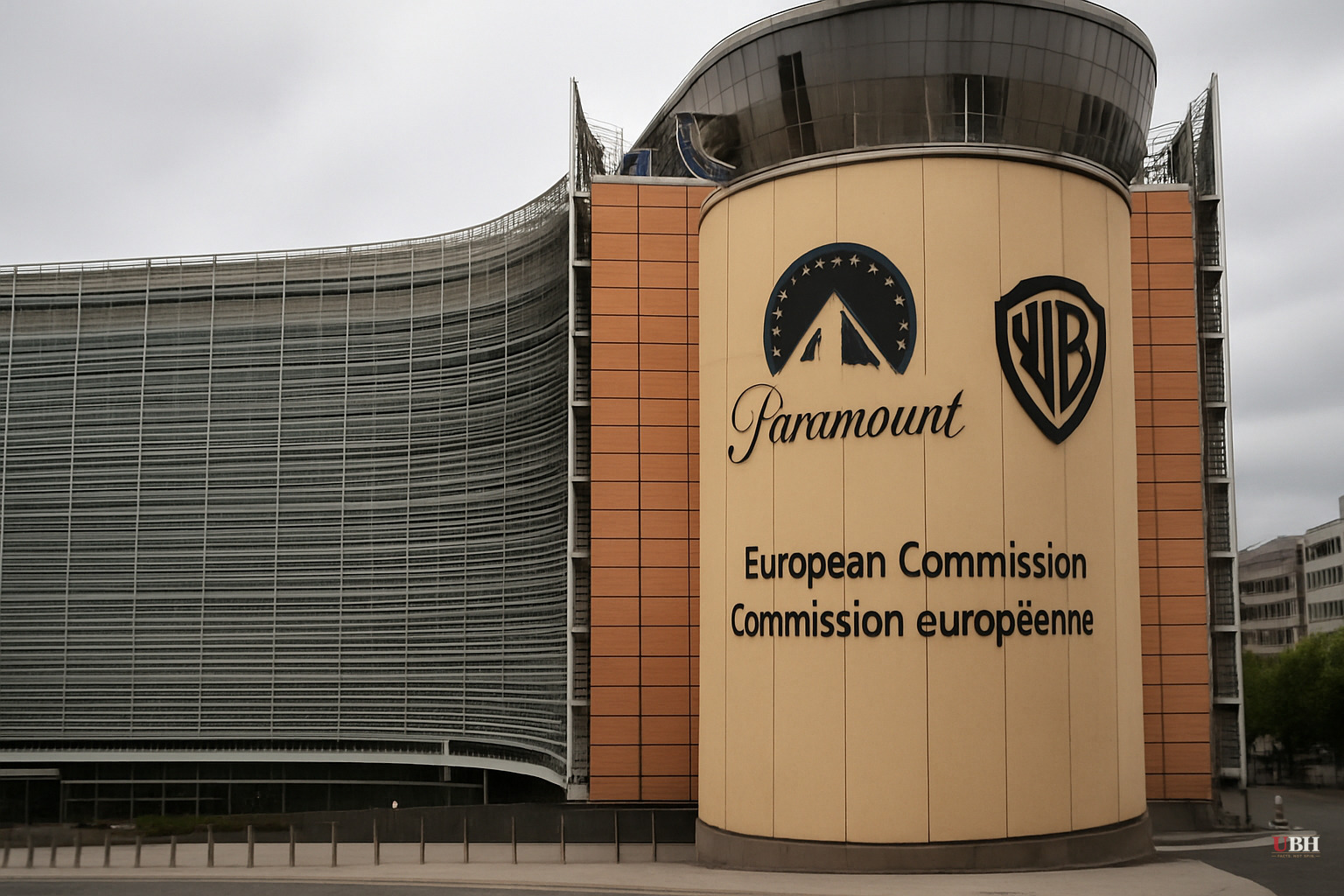
On Wednesday, July 1, Paramount Skydance Corp filed formal remedy proposals with the European Commission to address antitrust concerns about its $110 billion acquisition of Warner Bros. Discovery, according to Reuters. The Commission extended its decision deadline to July 22 from the previous cutoff of July 7, giving regulators time to assess what Paramount put on the table.
Paramount said in a statement that it is "confident that this remedy directly and comprehensively addresses any concerns expressed in the European Commission's preliminary assessment and supports the path for timely clearance."
The Commission, consistent with its standard practice, did not publicly detail the remedy's contents.
What Paramount Likely Offered
A person with direct knowledge of the matter told Reuters last week that Paramount would propose ditching its film distribution joint venture with Universal Pictures to address antitrust concerns raised by European cinema operators. That joint venture had been the central friction point: European theater chains argued it gave the combined Paramount-Warner entity outsized leverage over how films reach European screens.
If the reported concession is accurate, it represents a meaningful structural give. Film distribution agreements are long-term commercial relationships, and unwinding one with a competitor the size of Universal is not a formality.
The Regulatory Picture Is More Complicated Than One Approval
European clearance, if it comes, would be one piece of a messier puzzle.
California, New York, and other U.S. states are preparing a lawsuit to block the merger, according to Reuters. The DOJ may have waved it through, but state attorneys general have independent standing to challenge mergers under antitrust law. A multi-state coalition is a real obstacle, not a procedural nuisance.
Britain announced Tuesday that it may intervene in the deal. UK Culture Secretary Lisa Nandy told parliament that regulators are examining the deal's potential impact on news, children's television, and streaming services, according to Reuters. The UK's public interest intervention mechanism gives ministers authority to require a review even when competition concerns alone might not trigger one.
WBD shares edged down roughly 0.6% on Tuesday following Nandy's statement, according to Intellectia.AI.
The Case FOR the Deal
The strongest argument for letting this merger proceed is straightforwardly commercial. Morgan Stanley analyst Sean Diffley double-upgraded Paramount Skydance to Overweight in April, raising his price target from $11 to $14, arguing that pessimism about the deal "presents an opportunity" and that the combination is "transformative," with AI capabilities positioned to strengthen legacy media assets. The pre-merger entity's Q1 results were solid enough that Guggenheim analyst Michael Morris, while keeping a Neutral rating, noted the performance "should provide incremental investor comfort."
The media industry's economics are brutal right now. Streaming has fractured audiences, advertising revenue is uneven, and legacy linear TV is in structural decline. A merged entity with Warner's IP library and Paramount's production and distribution infrastructure has a reasonable argument for being more competitive globally, not less.
The Case Against
Critics, including European theater operators and apparently several state AGs, argue that consolidating this much distribution and content power into a single company creates leverage that smaller players, independent filmmakers, and international broadcasters cannot negotiate around. That concern is not frivolous. A combined Paramount-Warner entity would control an enormous share of English-language premium content. For streaming competitors, independent theater chains, and foreign broadcasters negotiating licensing deals, the power asymmetry would be real.
The UK's public interest concern adds another dimension. News and children's programming are areas where governments across the political spectrum have historically applied content obligations on broadcasters. A merger of this scale, involving networks and streaming platforms that reach tens of millions of British households, is precisely the kind of consolidation that public interest tests exist to scrutinize.
Where Things Stand on July 1
The European Commission has until July 22 to either approve the deal or open a full Phase II investigation. A Phase II probe can last months and imposes significant additional scrutiny. Paramount's remedy proposal is designed to prevent that by giving the Commission enough to approve without a deeper dive.
The more immediate uncertainty is the multi-state U.S. lawsuit. State AGs can move on their own timeline, independent of any European or UK decision. If California and New York file before a European ruling, the legal landscape gets significantly more complicated for Paramount's closing timeline.
The unresolved question as of today: whether the film distribution concession Paramount reportedly offered is sufficient for Brussels, or whether the Commission will decide that July 22 isn't enough time and push the deal into a full investigation regardless.
Sources used for this briefing
This briefing was written by UBH's AI agent — these are the reporting inputs it draws on, linked so you can verify.


