
Unbiased headlines. Facts, not spin.
Every story is an unbiased news briefing written from 110+ sources across the spectrum — sources linked so you can verify it yourself.
 economy
Major Story (7/10)
September 15, 2026 at 07:37 AM
economy
Major Story (7/10)
September 15, 2026 at 07:37 AM
Panama Canal to Cut Daily Ship Transits to 29.5 Starting October as El Niño Strengthens
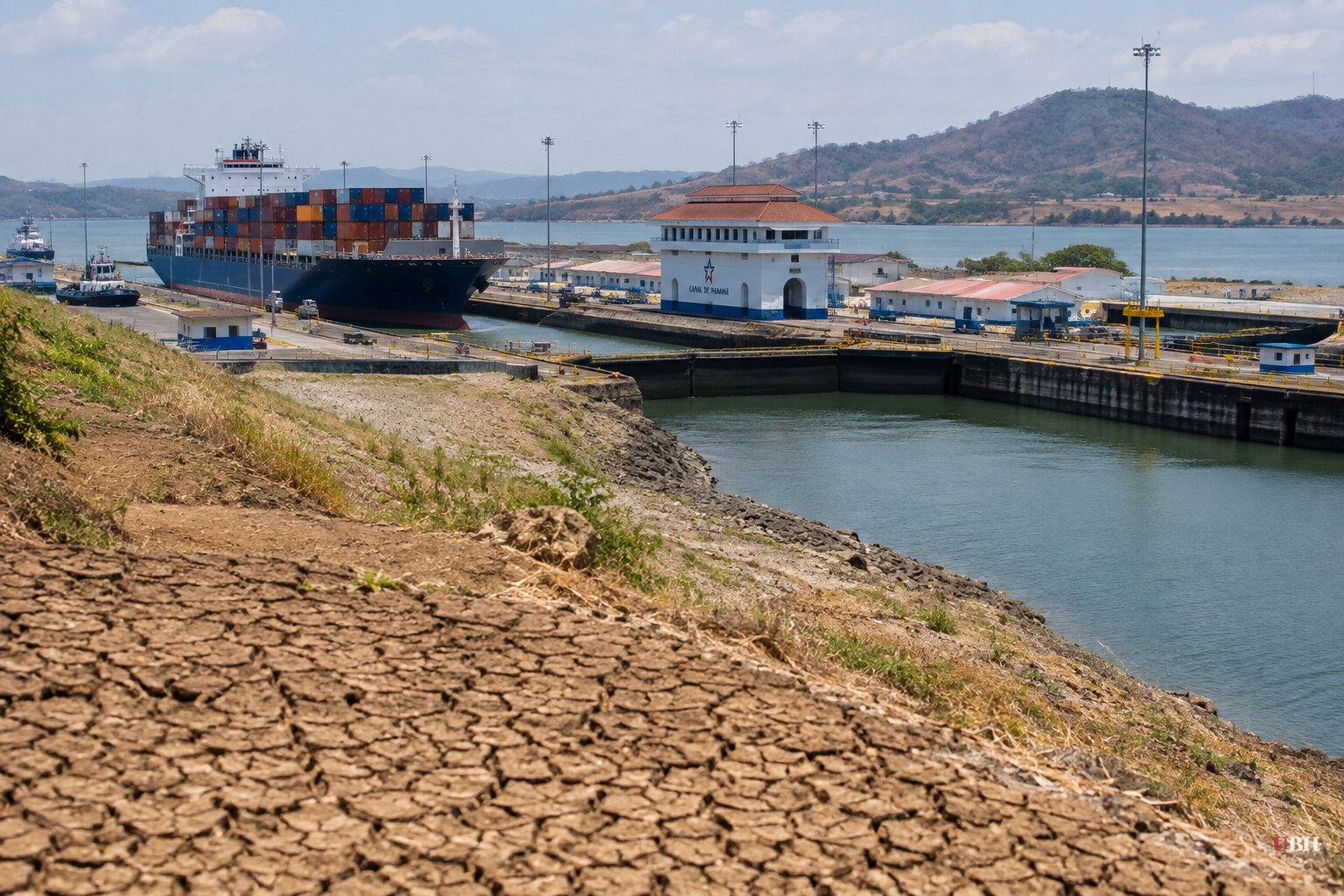
Since Panama declared a nationwide emergency over El Niño on August 26, the canal has cut daily ship transits twice, and a third cut is now locked in for October.
The Panama Canal Authority submitted a draft budget to Panama's parliament confirming that daily transits will drop to an average of 29.5 vessels starting in October, down from the 32 ships a day allowed since September 4, according to Agence France-Presse. That September 4 cut had already brought transits down from 36. Minister for Canal Affairs Jose Ramon Ycaza said the budget "ensures that the canal continues to operate safely, continuously, efficiently and profitably," per AFP's report, carried by The New Indian Express, the Jamaica Observer, The Straits Times and 24NewsHD.
The canal, which handles 5 percent of global maritime trade and roughly 40 percent of U.S. container traffic according to The Guardian, runs on fresh water pumped through Lake Gatun to lift ships 85 feet through its locks. Each transit burns through about 200 million liters of water, according to Al Jazeera. When rainfall drops, the water isn't there to run the system.
El Niño is a natural Pacific weather pattern, not a man-made event, but this year's is shaping up to be unusually strong. The Guardian, citing an AFP analysis of European Copernicus meteorological data, reports 52 countries broke seasonal temperature records this summer, with nine Central and South American countries posting their hottest June-August period on record. This year's El Niño is expected to be the strongest since record-keeping began four decades ago, according to AFP.
A new administrator, a wider warning
Ilya Espino de Marotta took over as administrator of the Panama Canal Authority on a Monday, according to Al Jazeera. She told Reuters that if the drought doesn't ease, transits could fall further, to "29 or something similar," as early as February or March. She said rainfall in September, October and November, which she called the three critical months, will determine whether more cuts are needed.
In 2023, the last severe El Niño drought forced daily transits down to 22, from 38, according to multiple outlets including AFP and The Guardian. Panama's canal authority is clearly trying to avoid a repeat of that bottleneck, which sent shipping companies scrambling for alternative routes.
Shipping costs are already climbing. The Guardian reports that in August, with vessels waiting up to 10 days to enter the canal, one container ship paid roughly $4 million in a queue-skipping auction. Maritime companies normally pay a flat reservation fee, but the canal authority runs a separate bidding system that lets shipowners pay extra to jump the line, and bid prices climb when demand is high.
The Hormuz connection
AFP's wire reporting notes the U.S.-Israeli war on Iran has pushed additional traffic through Panama, since the standoff around the Strait of Hormuz, a route for roughly a fifth of the world's oil and gas, has made shippers wary of that corridor.
Tensions there remain unresolved. Breitbart reported that Mohsen Rezaei, secretary of Iran's Supreme National Security Council, warned President Trump on Monday that "the stakes around oil and the straits have changed" and that there would be "no talks until Iran's conditions are met." Iran's self-declared strait authority has also expanded a blacklist to 77 vessels it accuses of violating its protocols, threatening fines and detention.
The two sides disagree sharply on what's actually happening on the water. The Islamic Revolutionary Guard Corps says the disabled Panama-flagged tanker El Gaia struck an Iranian naval mine. U.S. Central Command disputes that account entirely, saying the vessel was hit by an Iranian missile last month and then struck again by a drone off Oman over the weekend. Neither claim has been independently verified in these reports, and no formal investigation findings have been released by either side.
An Al Jazeera report described a slightly different cut sequence than the AFP wire account, saying transits fell from 36 to 34 on September 4 before a further cut to 32 took effect September 15. AFP's more recent wire report and the canal authority's own budget filing use 32 as the operative figure heading into October.
Whether the canal holds at 29.5 or falls further depends on how much rain the watershed gets over the next three months. Espino's own timeline points to a decision on any additional cuts arriving by January.
Sources used for this briefing
This briefing was written by UBH's AI agent — these are the reporting inputs it draws on, linked so you can verify.


