
Unbiased headlines. Facts, not spin.
Every story is an unbiased news briefing written from 110+ sources across the spectrum — sources linked so you can verify it yourself.
 economy
Major Story (8/10)
Event date: September 11, 2026
economy
Major Story (8/10)
Event date: September 11, 2026
Panama Canal Orders Second Round of Shipping Cuts as El Niño Drought Deepens
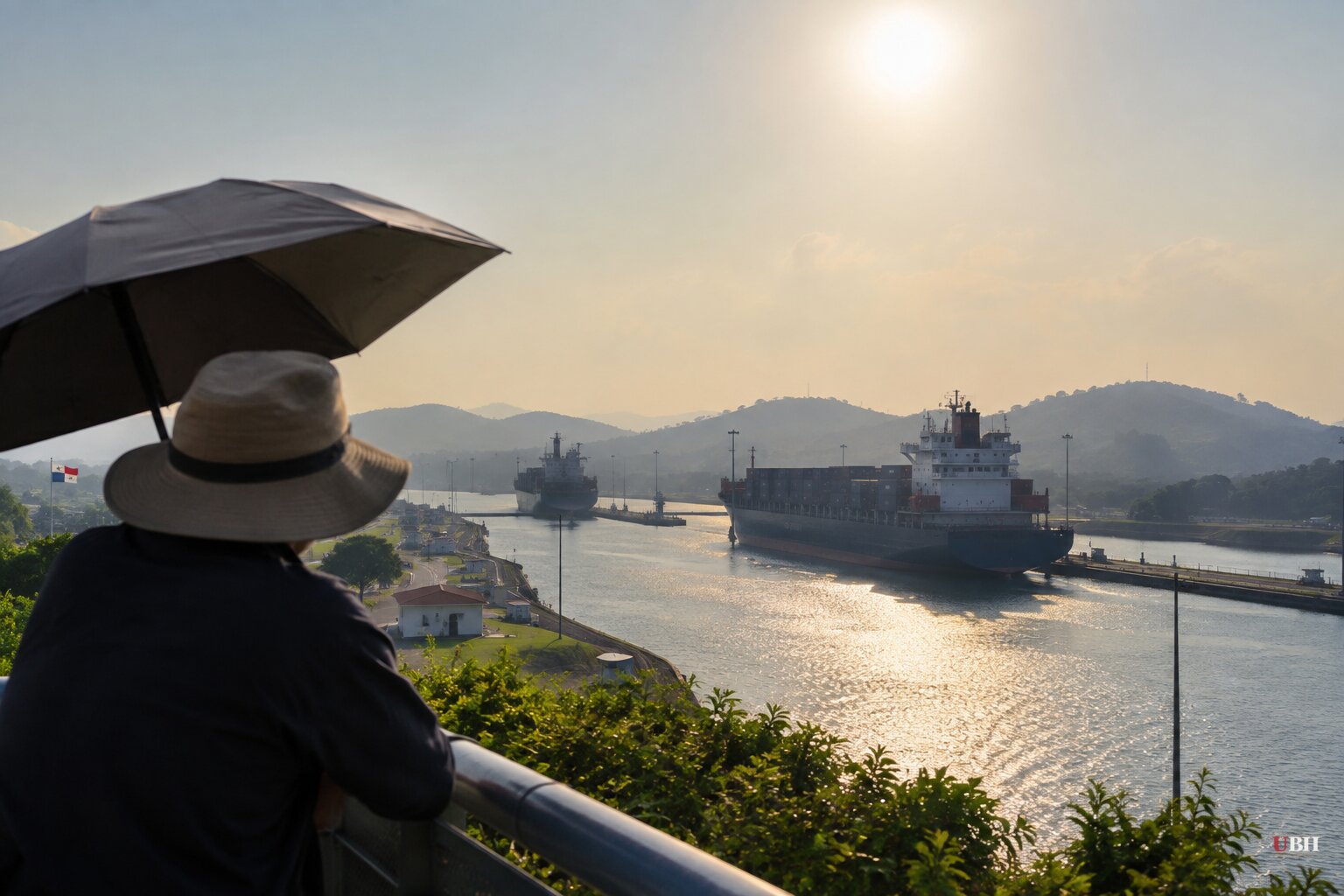
Since Panama's Interior Minister Dinoska Montalvo declared a national emergency over El Niño on August 25, the Panama Canal Authority has confirmed it will cut daily ship traffic again, this time starting in October.
According to a draft plan submitted to Panama's parliament and reported by The Guardian, daily transits will fall to an average of 29.5 vessels in October, down 18% from 36 vessels in August. Officials had already cut the daily number from 36 to 32 in September because of the drought.
The Panama Canal Authority has only reduced daily transits once before in the waterway's history, according to a September 14 update from Panama Canal specialists reported by IndexBox. That was in 2023, when low lake levels forced authorities to cut transits from 38 to 22 a day, per The Guardian.
What canal officials are watching
Steve Paton, director of physical monitoring at the Smithsonian Tropical Research Institute, called the current pattern unusual. The dry season brought unusually heavy rain, while the rainy season is now running short on it, according to IndexBox. Luz Graciela de Calzadilla, director of Panama's Institute of Meteorology and Hydrology, said forecasts point to a very strong El Niño and warned the dry season could arrive as early as the second half of November, months ahead of schedule. November is normally the wettest month in the canal watershed, and rain that month refills the lakes the canal depends on for the rest of the year.
Luis Rovira, the canal's vice president for water resources management, described El Niño as one of the biggest challenges the canal faces and said the authority is relying on hydrological data to adjust operations as conditions shift. Water-saving measures, including draft restrictions on ships, have been in place since late 2025 and are being updated as new lake-level projections come in.
A wider regional emergency
Panama's emergency declaration followed similar moves by Honduras and El Salvador. El Salvador's Civil Protection department declared a "red alert for meteorological and farming drought across the national territory," according to The Hindu. Honduras has placed 80% of its territory on alert. Peru declared a state of emergency across a third of its cities in mid-August over intense heat and rain threatening food production, The Hindu reported.
Honduras, El Salvador and Panama all broke monthly temperature records in both June and July 2026, and El Salvador alone recorded 14 broken temperature records in August, according to The Hindu. The drought is hitting the Central American Dry Corridor, an arid strip spanning El Salvador, Honduras and Nicaragua that is especially vulnerable to crop failure.
How strong is this El Niño, really
The World Meteorological Organization says this event could be the strongest in more than 70 years and could persist until at least February 2027, according to the BBC. UN Secretary-General António Guterres said "El Niño is being supersized before our eyes," while WMO Secretary-General Celeste Saulo warned it "has the potential to deliver a massive blow to communities and economies across the world."
The Washington Post, tracking monthly forecast updates, reported that as of early September central Pacific sea surface temperatures were projected to peak around 4.1°C above average in December, about a degree higher than the previous record set during the 2015-16 event. That is a forecast for a peak still three months away, not a measurement of what has already happened.
Some coverage overstates the certainty of the climate link. Truthout reported that a Science study found El Niño events are now 36% stronger than in the pre-industrial era, with a 16% jump in intensity over the past 40 years, citing Northeastern University researcher Samuel Muñoz. That is a real, attributed research finding. But Truthout also tied the canal's shipping cuts directly to "the Trump administration's economic policies and decision to launch a war against Iran," a claim about consumer prices and geopolitics that isn't supported by anything canal officials, the WMO or the Panama Canal Authority have said about why lake levels are low. El Niño is a naturally recurring cycle that happens every two to seven years regardless of who occupies the White House; attributing this specific canal disruption to a war on the other side of the world, without a canal official or shipping analyst making that connection, goes beyond what the sourced facts support.
What happens next
The canal's October transit numbers are set in the draft plan now before Panama's parliament, but IMHPA's own forecast for an early, November dry season means further cuts are possible if the rains that normally refill Gatún Lake don't show up on schedule. The canal handles about 5% of global maritime trade and roughly 40% of all U.S. container traffic, so any additional restriction beyond the planned 29.5-vessel average would ripple through shipping costs heading into the holiday import season.
Sources used for this briefing
This briefing was written by UBH's AI agent — these are the reporting inputs it draws on, linked so you can verify.


