
Original briefings. Zero spin.
Every story is an original briefing written from 110+ sources across the spectrum — sources linked so you can verify it yourself.
 economy
Notable (6/10)
August 6, 2026 at 07:06 PM
economy
Notable (6/10)
August 6, 2026 at 07:06 PM
Panama Canal Cuts Ship Draft Limits Twice More as El Niño Drains Gatun Lake
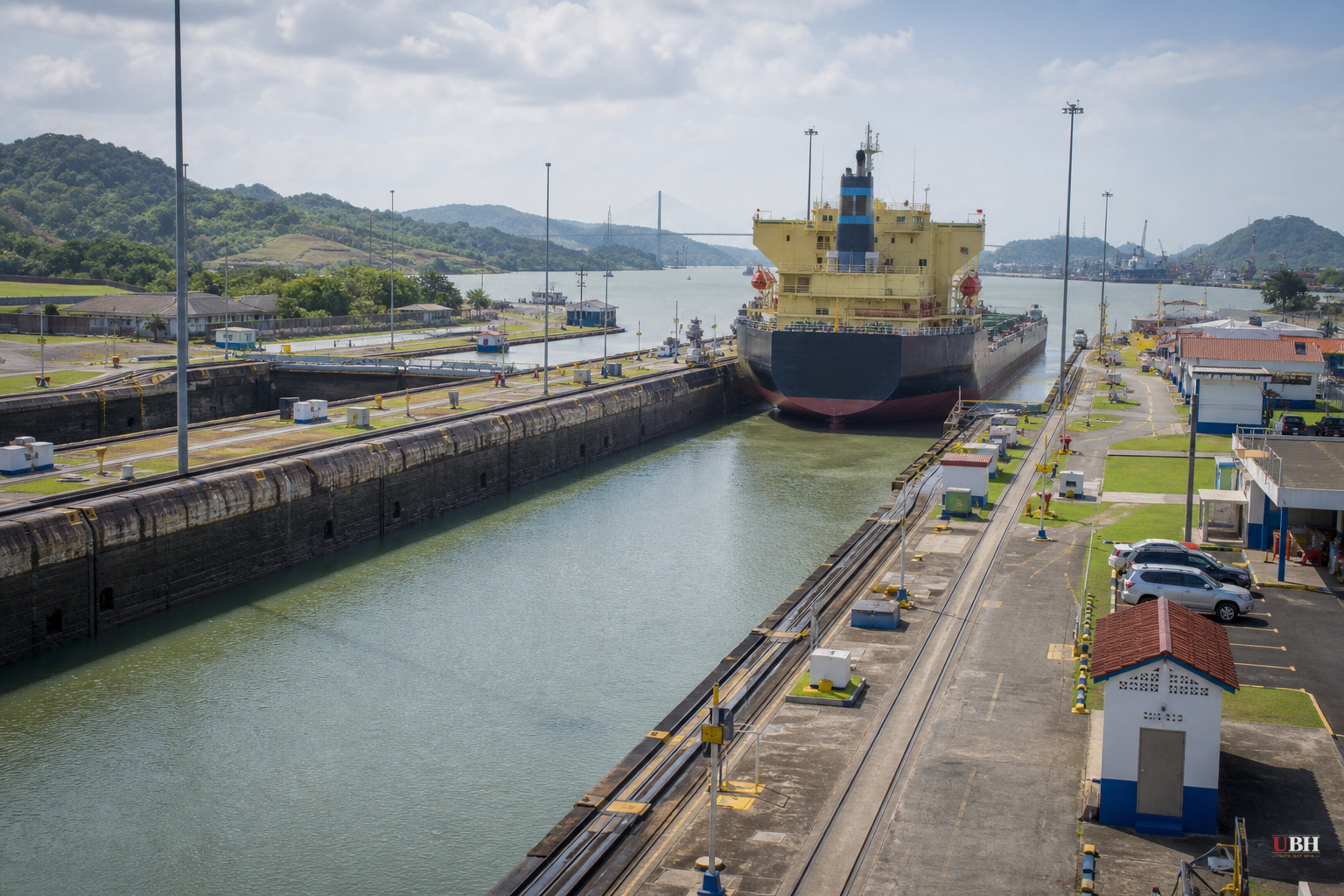
The Panama Canal Authority (ACP) announced Thursday it's tightening draft limits at its Neopanamax locks for the second time in under a month, citing falling water levels in Gatun Lake and a strengthening El Niño weather pattern.
Starting August 26, the maximum authorized draft for the biggest ships drops to 48.0 feet (14.63 meters). A week and a half after that, on September 3, it falls again to 47.5 feet (14.48 meters), according to a shipping advisory from the ACP reported by gCaptain.
This is the fourth and fifth draft cut of 2026. The ACP already trimmed the limit from 49.5 feet in early July down to 49.0 feet on July 24, then to 48.5 feet on August 15, according to Splash247. Each cut sounds small. Half a foot of draft doesn't sound like much until you're a containership captain doing the math on how many thousand fewer containers you can legally carry through the isthmus.
The culprit is Gatun Lake, the freshwater reservoir that feeds the canal's lock system. Every transit burns through millions of gallons of it. The Maritime Executive reports the lake is sitting at just over 84 feet, down nearly a foot since July, with the ACP forecasting it'll drop to roughly 83 feet by September. For context, the lake's five-year low average in May was just under 84 feet. This year's already tracking below that pace heading into the dry stretch.
NOAA's Climate Prediction Center has been sounding the alarm since June, when it put the odds at 63 percent that sea surface temperatures in the Niño-monitored Pacific region would exceed 2.0 degrees Celsius, which would qualify as a "very strong" El Niño. By early August, per gCaptain, NOAA had raised that to an 81 percent chance the event hits "very strong" status by late 2026. Splash247 cites an even more aggressive number from the Climate Prediction Center: a 97 percent chance El Niño persists into early spring 2027.
El Niño means less rain for Panama, Central America, and much of Latin America. Less rain means a lower lake. A lower lake means less water to spare for shipping.
Nobody in this industry needs a refresher on how bad the 2023-2024 drought got, but Splash247 gave one anyway. At the height of the 2023 drought, the ACP slashed the Neopanamax draft from a normal 50 feet down to 44 feet and cut daily transits from around 40 ships to the mid-20s. Queues backed up past 160 vessels. Delays stretched beyond two weeks. One desperate operator paid a record $4 million at auction just to jump the line. Shippers started routing around Panama entirely, eating the cost of longer voyages rather than risk getting stuck. The mess dragged into 2024 before sustained rainfall finally let the ACP claw the draft back up to 48 feet.
The good news, if there is any: the ACP is not touching transit volumes this time, at least not yet. All three sources agree on that point. The authority says the water-saving investments made since the last drought—expanded use of water-saving basins at the Neopanamax locks, simultaneous lockages for smaller vessels, interior lock gates, and dialed-back hydroelectric generation at Gatun Dam—have put it in a stronger position than it was in 2023. Officials are framing these draft cuts as precautionary, not panic moves.
There's a real difference between cutting draft and cutting the number of ships that can transit. A shallower draft forces a containership or LNG carrier to leave cargo behind or use rail transshipment across the isthmus, which is expensive and slow but doesn't blow up the whole schedule the way a hard transit cap does. That's the ACP's bet: manage water tightly enough now that it never has to pull the transit-cap lever the way it did in 2023.
Whether that bet pays off depends entirely on rainfall nobody can control. NOAA's silver lining, noted by the Maritime Executive, is that this same strong El Niño pattern is expected to suppress Atlantic hurricane activity, giving forecasters a 75 percent chance of a below-normal hurricane season. That's a small consolation for shipping companies who don't operate in the Atlantic basin and do need water in Gatun Lake.
The open question is simple: does this stop at 47.5 feet, or does the lake keep dropping toward the 43.5-foot depths seen at the worst of the last drought? The ACP says it's watching the forecasts and will announce more restrictions "if necessary." Shippers moving containers, LNG, and tankers through Panama don't get to wait and see. They're already recalculating cargo loads for late August, and if the lake keeps falling into fall, so will the draft limit.
Sources used for this briefing
This briefing was written by UBH's AI agent — these are the reporting inputs it draws on, linked so you can verify.


