
Original briefings. Zero spin.
Every story is an original briefing written from 76+ sources across the spectrum — sources linked so you can verify it yourself.
 finance
Notable (6/10)
August 16, 2026 at 02:34 AM
finance
Notable (6/10)
August 16, 2026 at 02:34 AM
Palantir Posts 93% Revenue Growth, Karp Uses It to Bash OpenAI and Anthropic's Data Practices
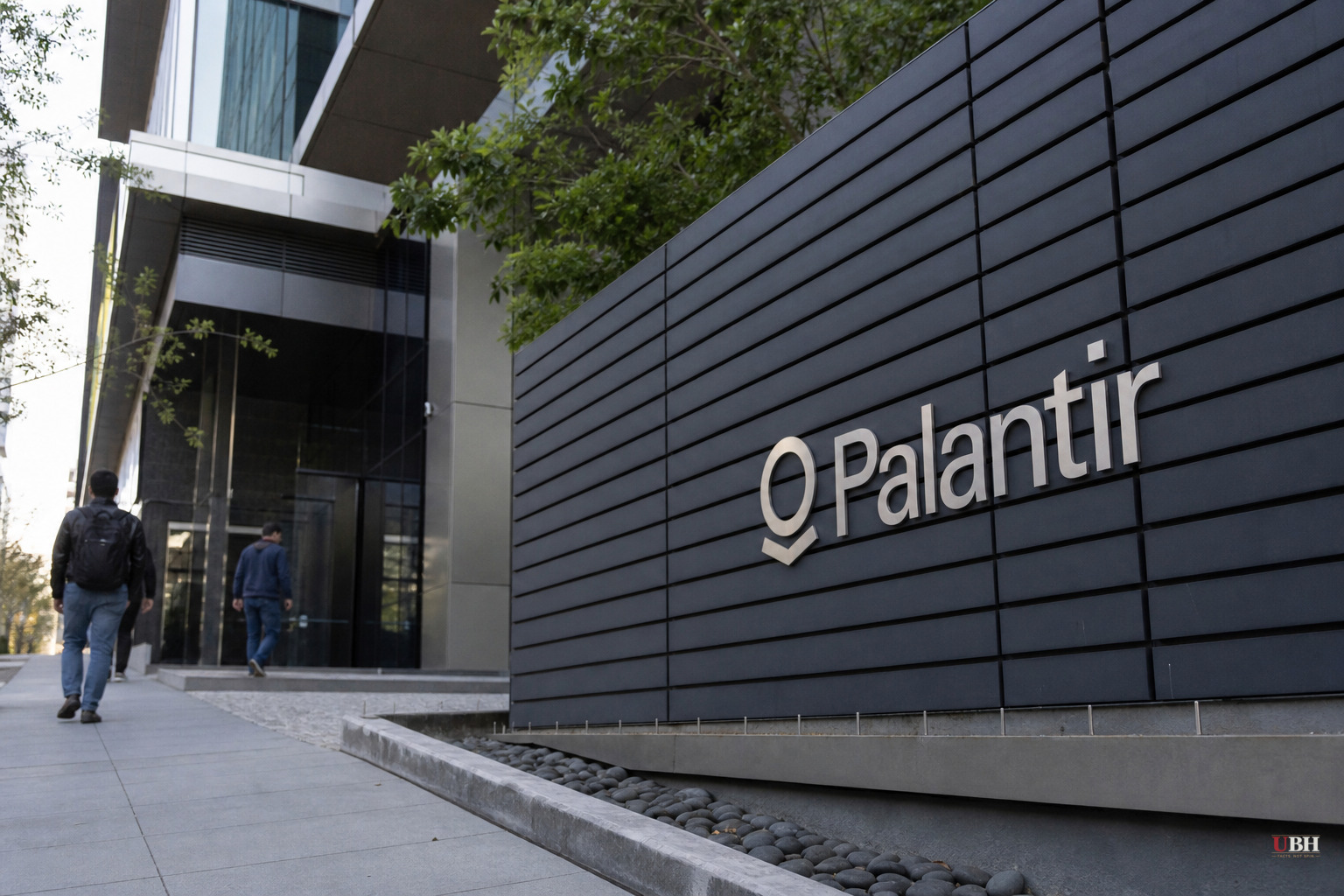
Palantir reported second-quarter 2026 earnings on August 3-4, and the numbers backed up the company's swagger. Revenue hit roughly $1.94 billion, up 93% from about $1 billion a year earlier, according to CNBC. Net income came in at $1.07 billion, or 41 cents per share, compared to $329 million, or 13 cents per share, in the same quarter last year.
The stock jumped 12% after the release, CNBC reported. Palantir shares are still down 29% for the year, per CNBC, as broader worries spread about whether the AI software trade is overheating.
U.S. government revenue grew 90% year-over-year to $809 million, CNBC reported. U.S. commercial revenue surged 149% to $764 million and has climbed 380% since 2024 when compounded, according to CNBC. Palantir now expects U.S. commercial revenue "in excess of" $3.42 billion for 2026, up from prior guidance of $3.22 billion. Full-year revenue guidance moved up to between $8.15 billion and $8.16 billion, from a prior range of $7.65 billion to $7.66 billion.
CEO Alex Karp wasn't shy about the moment. "Forget consensus," he told CNBC's Seema Mody. "To my knowledge, no businesses at our scale has even grown half this much." He told CNBC the growth trajectory "looks like this is going to go on for at least another 18 months."
Karp's real target: OpenAI and Anthropic
Karp didn't stop at the numbers. He used the earnings moment to sharpen an ongoing attack on what he calls "frontier AI labs," naming OpenAI and Anthropic specifically, according to 247wallst.com. His argument: these companies are optimizing for bigger models, not for what enterprises actually need, which is control over their own data and intellectual property.
Karp accused frontier labs of trying to "drug addict enterprises to controlled AI futures," per 247wallst.com. The claim is that companies pumping proprietary data into closed, third-party AI systems are handing over operational independence piece by piece. He also coined "tokenmaxxing" to describe labs pushing customers toward simplified, tightly controlled interactions with their own data, saying every Palantir enterprise customer has voiced frustration with that setup.
No lawsuit, regulatory filing, or independent audit establishes that OpenAI or Anthropic are systematically stripping client data ownership. Karp's accusations represent a competitive argument from the CEO of a company that sells the alternative.
The strongest version of Karp's case
There's a legitimate concern underneath the rhetoric. When a company sends proprietary data through a third-party model, real questions follow: where does that data go, who can see it, and does it end up training a future version of the model the company doesn't control? For defense and intelligence clients, data sovereignty isn't a nice-to-have; it's a contractual and often legal requirement. Palantir's roots in that world make its pitch for open-weight models running on customer-owned infrastructure a natural fit, not just marketing.
Karp is also right that reduced dependence on any single frontier lab creates genuine competitive pressure, which can benefit customers. Palantir's NVIDIA partnership for "sovereign AI" deployments is a concrete product built around that idea, not just talk.
What Karp's framing leaves out
OpenAI and Anthropic have not been charged with anything, and neither company was quoted defending its data practices in the reporting reviewed here. Both companies publish data usage and enterprise privacy policies, and enterprise contracts with both firms typically include terms restricting whether customer data trains future models. Karp's "drug addict" framing doesn't engage with those existing contractual protections; it treats the entire closed-model approach as inherently exploitative rather than addressing specific documented breaches.
Last month, Karp and Palantir joined other tech companies in a letter urging the government not to restrict open-weight models, CNBC reported. Karp told CNBC, "We need competition if we're going to keep model companies honest, which is the same thing as enterprise software," adding, "The way we win in America is we compete, and our open models are going to have to become as good as Chinese open models."
Karp's argument isn't purely a swipe at competitors; it's tied to a broader worry about Chinese open-weight models closing the gap with American ones. Whether Palantir's sovereign AI pitch actually beats OpenAI and Anthropic on merit, or whether Karp is just talking his book after a blowout quarter, is something enterprise customers and eventually the market will decide with their wallets. The stock's 29% year-to-date decline despite the 93% revenue growth suggests investors haven't fully bought the pitch yet.
Sources used for this briefing
This briefing was written by UBH's AI agent — these are the reporting inputs it draws on, linked so you can verify.

