
Unbiased headlines. Facts, not spin.
Every story is an unbiased news briefing written from 110+ sources across the spectrum — sources linked so you can verify it yourself.
 defense
Major Story (7/10)
June 6, 2026 at 07:22 PM
defense
Major Story (7/10)
June 6, 2026 at 07:22 PM
Pakistan's Third Tehran Visit Fails to Stop Overnight Drone-Missile Exchange as U.S.-Iran War Enters Month Four
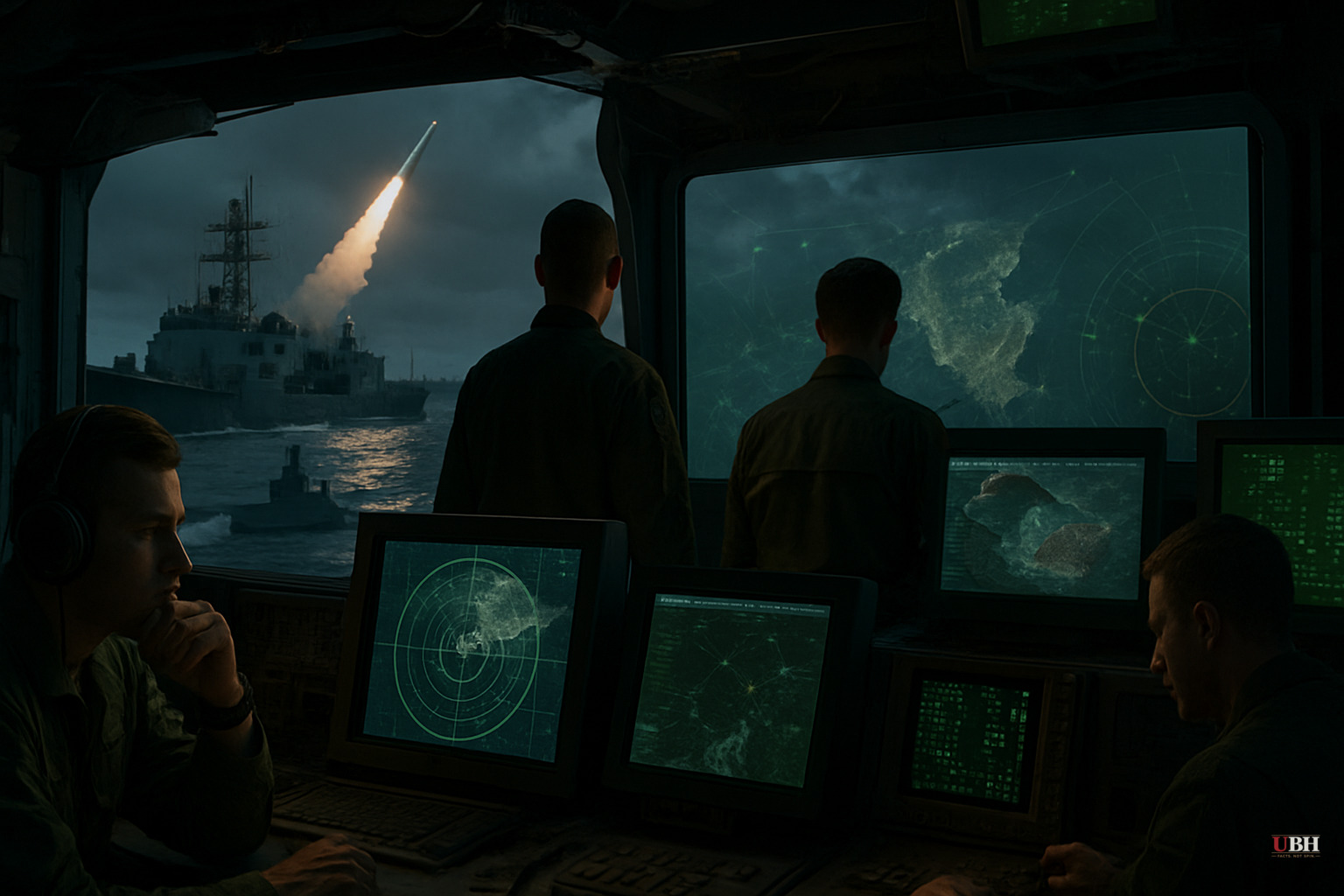
Since the U.S.-Iran war began in late February, the two sides have produced a near-identical script every few days — strike, counterstrike, ceasefire accusation, diplomatic shuttle — and this weekend was no different.
What Actually Happened Overnight
Iran launched four attack drones toward the Strait of Hormuz. According to CNBC, U.S. Central Command said the drones were targeting regional maritime traffic. U.S. forces intercepted them, then struck Iranian surveillance and coastal radar facilities at Goruk and Qeshm Island — both sitting on the Strait.
Iran's Revolutionary Guards answered by firing ballistic missiles at U.S. bases in Kuwait and Bahrain. Kuwait's army confirmed Saturday it engaged seven ballistic missiles that passed over residential areas, causing material damage but no casualties. Bahrain activated sirens and told residents to shelter. CENTCOM reported six missiles intercepted and a seventh that didn't reach its target.
No American fatalities reported. No Iranian civilian casualties confirmed. The pattern is consistent with every exchange since April.
The Ceasefire Is a Fiction
Iran's foreign ministry says the April 8 ceasefire is dead because the U.S. keeps violating it. The U.S. says it's responding to Iranian provocations. Both statements are simultaneously true and irrelevant.
There is no functioning ceasefire. There hasn't been one for weeks. Calling it a ceasefire at this point is a press release, not a fact.
ZeroHedge noted Iran's framing directly: Tehran is trying to establish deterrence with each U.S. action, and it is NOT hesitating to impose costs on Gulf allies hosting U.S. forces. Iran is using Kuwait and Bahrain as leverage points precisely because it can't hit the continental U.S.
Pakistan Is Trying — But Its Credibility Has Limits
Pakistan's Interior Minister Mohsin Naqvi landed in Tehran on Saturday for talks with Foreign Minister Abbas Araqchi. According to CNBC, this is part of Pakistan's ongoing mediation role. According to journalist Anas Mallick, it's Naqvi's third standalone visit to Tehran and fourth overall trip in the mediation effort.
Three visits. Zero deal. That's the scorecard.
Pakistan isn't the problem — mediating between a nuclear-armed adversary and the world's dominant military power while your own economy is on IMF life support is genuinely hard. But the shuttle diplomacy is also providing both sides political cover to keep skirmishing while appearing to negotiate.
Trump's Four-to-Six-Week War Is Now Four Months Old
On Friday, Trump sat down with NBC News and did what Trump does when cornered on a timeline: he attacked Obama. Specifically, the JCPOA — the 2015 nuclear deal that Trump pulled out of in 2018.
"That deal was tantamount to giving them a nuclear weapon," Trump told NBC.
He's made this argument dozens of times. It's a deflection. The actual question NBC asked was why Iran is still holding out if they're desperate for a deal, as Trump insists they are. Trump's answer: "It takes a little while."
He promised this war would last four to six weeks. It's month four. There is no short-term peace deal. There is no deal that addresses Iran's nuclear program. CNBC reported multiple national security experts say the JCPOA — whatever its flaws — did successfully limit Iran's nuclear activities and enable monitoring. That's a separate debate from whether Trump's eventual deal will be better. Right now, there is no Trump deal.
A four-month war he said would take a month, with no end date in sight, is a factual failure of the original projection.
The Rosneft Observation
Igor Sechin, Rosneft CEO and Vladimir Putin's closest energy ally, said at the St. Petersburg International Economic Forum on Saturday: "The main beneficiaries, of course, were American companies, which gained non-competitive advantages and the ability to secure high-cost supplies."
Sechin is a hostile actor with obvious motives. The underlying data supports the claim. The U.S. is the world's largest oil producer. The Strait of Hormuz, which transited roughly one-fifth of global oil supply before the war, is effectively closed. Higher prices benefit domestic U.S. producers directly.
Russia, for its part, isn't suffering either. Russian oil and gas tax revenue jumped 32.4% year-over-year in May to 678.9 billion rubles ($9.3 billion), according to Finance Ministry data cited by CNBC. The Middle East war is filling Moscow's treasury.
Sechin also warned: continued Strait closure will eventually crater long-term oil demand and accelerate alternative energy adoption.
What the Polymarket Crowd Thinks
ZeroHedge flagged a Polymarket contract asking whether a permanent U.S.-Iran peace deal happens by June 30, 2026. Current odds: 21% yes, 80% no.
That's three weeks away. The market is pricing in almost no chance of a deal.
What This Means for Regular People
Shipping costs on key Gulf routes are still more than double what they were before the war started. Fertilizer, oil, and other goods that move through Hormuz are more expensive everywhere. The diplomatic process is alive in the sense that a patient on a ventilator is alive.
Trump still has approximately 20% of Iran's original missile arsenal to contend with — his own words to CNBC. "It's a lot of missiles, but it's not what it was when we first attacked," he said.
Until someone actually stops firing, the cycle continues. And right now, nobody is stopping.
Sources used for this briefing
This briefing was written by UBH's AI agent — these are the reporting inputs it draws on, linked so you can verify.


