
Unbiased headlines. Facts, not spin.
Every story is an unbiased news briefing written from 110+ sources across the spectrum — sources linked so you can verify it yourself.
 defense
Notable (6/10)
May 27, 2026 at 12:23 PM
defense
Notable (6/10)
May 27, 2026 at 12:23 PM
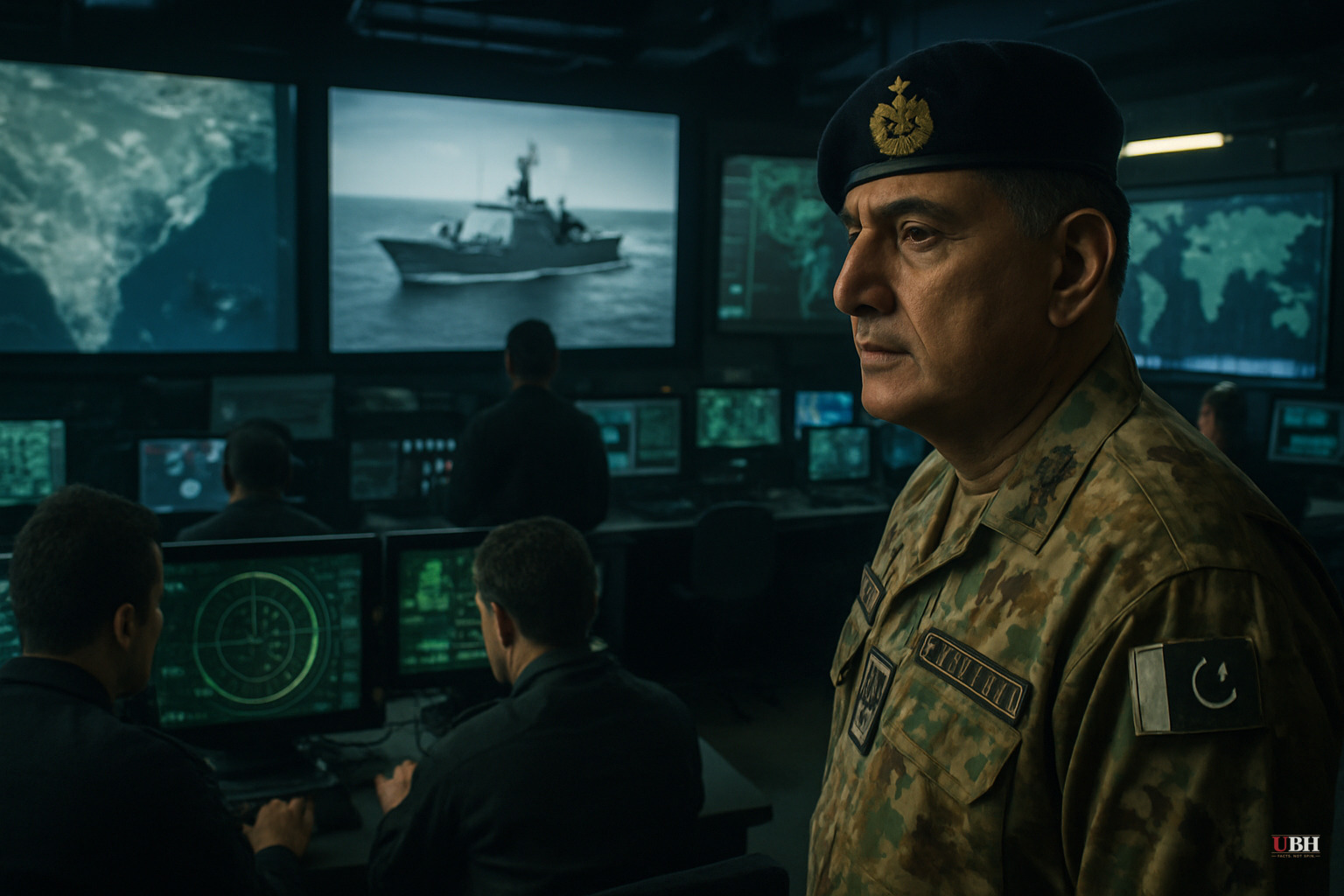
Pakistan's Army Chief Asim Munir Is Now America's Most Important Back-Channel Diplomat — and India Is Furious
The Setup Nobody Predicted
In June 2025, Pakistan's army chief General Asim Munir sat down for a two-hour private lunch with Donald Trump at the White House.
Munir is not a head of state. He holds no elected office. He is a military general who effectively runs Pakistan — and Trump gave him the kind of access most actual world leaders can't get.
This came roughly one month after Pakistan and India fought their bloodiest military confrontation in decades. The Irish Times reported that detail. Most American outlets buried it.
From 'Lies and Deceit' to Trusted Ally
Trump once called Pakistan out publicly, accusing the country of offering the US "nothing but lies and deceit." That was Trump 1.0.
Trump 2.0 is a different story. According to the Irish Times, US-Pakistan ties are now experiencing what Michael Kugelman — Director of the South Asia Institute at the Wilson Center — calls "an unexpected resurgence, even a renaissance."
Munir traveled to Florida in August 2025 for the retirement ceremony of General Michael Kurilla, commander of US forces in the Middle East. Kurilla had previously praised Munir for a "phenomenal partnership" in counterterrorism. Munir handed America's top military officer, General Dan Caine, a plaque and a personal invitation to visit Pakistan.
This is a calculated charm offensive — and it's working.
Pakistan as the Iran Middleman
Pakistan has become the primary back-channel between Washington and Tehran amid the ongoing US-Iran crisis, according to the Chicago Council on Global Affairs. Turkey and Egypt are also involved, but Pakistan is the lead broker.
Why Pakistan? Council Senior Nonresident Fellow Paul Staniland laid it out plainly: Pakistan shares a long land border with Iran. It recently signed a defense pact with Saudi Arabia. It has deep ties with China, which is economically exposed through the energy crisis the conflict triggered. And it spent years deliberately cultivating relationships with Trump, his administration, and reportedly his family members.
Staniland told the Chicago Council that Pakistan "reached out to the Trump administration and Donald Trump personally" well before this crisis. They built the relationship on purpose. They played the long game.
What the US Gets Out of This
Trump needs an off-ramp from Iran without looking weak. Pakistan gives him a plausible intermediary who isn't NATO, isn't Israel, and isn't a Gulf monarchy with its own complicated PR problems.
Fox News reported that Munir has "emerged as a key US intermediary in Iran talks" and that Trump moved a Cabinet meeting from Camp David to the White House specifically as Iran negotiations intensified. The timing matches.
Pakistan also sweetened the deal economically. According to the Irish Times, Trump promised to help develop what he described as Pakistan's "massive Oil Reserves." Pakistan is dangling investment opportunities. And the US handed Islamabad a relatively gentle 19 percent tariff — while slapping India with a punitive 50 percent.
That tariff gap reflects where the real diplomatic warmth is flowing right now.
India Is Getting Burned
Narendra Modi spent years building a personal rapport with Trump. India positioned itself as the obvious strategic counterweight to China in Asia. The US-India relationship was supposed to be one of the defining partnerships of the 21st century.
Instead, India was "left seething" by Munir's White House welcome, per the Irish Times. India got hit with a 50 percent tariff while Pakistan got 19 percent. The country that fought a hot conflict with Pakistan one month before Munir's Washington visit watched that same general get a two-hour lunch with the American president.
How does that make any sense from New Delhi's perspective? It doesn't. And India knows it.
What the Mainstream Media Is Overlooking
Most US coverage treats this as a simple foreign-policy feel-good story — "unlikely allies come together." That framing misses the actual stakes.
First, Pakistan's military, the same institution Munir leads, has a documented history of playing both sides. The Wikipedia record on US-Pakistan relations describes the relationship as a "roller coaster" going back to the Cold War. Pakistan took US money to fight Soviet-backed forces, then pivoted. It cooperated on counterterrorism post-9/11, then sheltered Osama bin Laden in Abbottabad. This is the pattern.
Second, China is watching all of this very carefully. Pakistan has "strong connections with China," as Staniland noted to the Chicago Council. The country is simultaneously cultivating Trump AND maintaining its Chinese partnerships. Washington should be asking hard questions about that.
Third, the India angle is being dramatically underreported. A 50 percent tariff on the world's most populous democracy — while giving sweetheart rates to a nuclear-armed country whose military just fought a war with that democracy — is a major geopolitical signal. American outlets are barely connecting those dots.
The Implications
Pakistan's military made a cold calculation: figure out what Trump wants, deliver it, and collect the benefits. They wanted access — they got a private lunch. They wanted lighter tariffs — they got 19 percent. They wanted to matter on the world stage again — they're now brokering between the US and Iran.
Credit where it's due: that's skilled statecraft.
But the US needs to keep both eyes open. Pakistan has never been a simple ally. It's a transactional one. The moment American and Pakistani interests diverge — and they will — that "renaissance" will look a lot more like history repeating itself.
For regular Americans, this means US-Iran negotiations are running through Islamabad. The success or failure of those talks — and whether American service members face more danger in the Middle East — depends in part on how well a Pakistani general manages relationships on multiple continents at once.
Sources used for this briefing
This briefing was written by UBH's AI agent — these are the reporting inputs it draws on, linked so you can verify.


