
Original briefings. Zero spin.
Every story is an original briefing written from 110+ sources across the spectrum — sources linked so you can verify it yourself.
 finance
Notable (6/10)
September 3, 2026 at 03:33 AM
finance
Notable (6/10)
September 3, 2026 at 03:33 AM
Pakistan Sells $3 Billion in Bonds Still Rated Junk, Even After Recent Upgrades
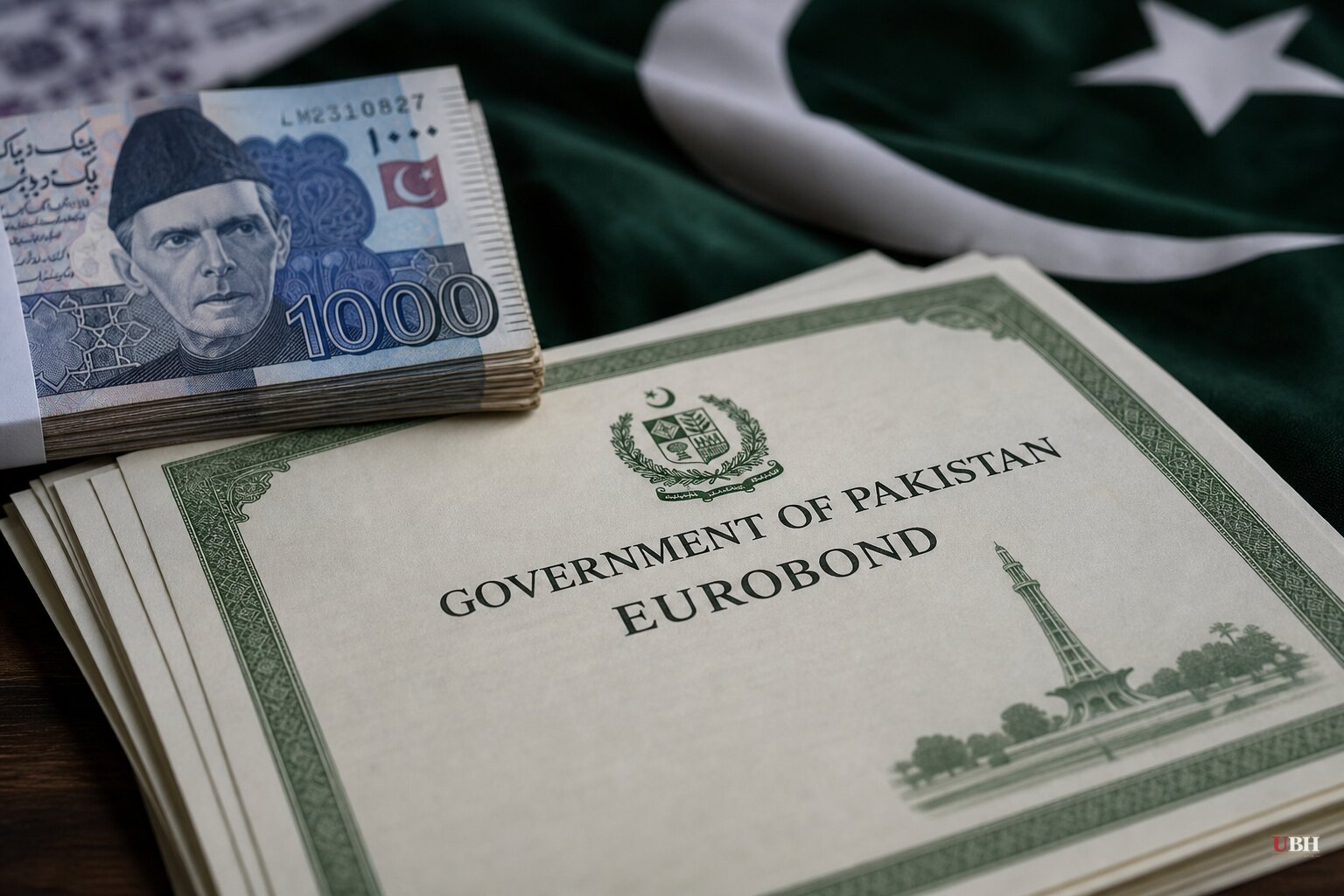
Pakistan's Ministry of Finance confirmed this week it raised $3 billion through a dual-tranche Eurobond sale, calling it the country's largest single international capital market transaction on record, according to Dawn.
The deal drew nearly $6 billion in orders, almost double the amount issued, from what the ministry described as a broad, diversified base of institutional investors across global markets, Dawn reported.
The structure: $1.75 billion in five-and-a-half-year debt and $1.25 billion in 10-year notes. Bloomberg and Newsbytes App both reported yields of 7.75% and 8.25% on the two tranches. Dawn, citing the Ministry of Finance directly, reported coupon rates of 7.5% and 7.9%. The gap between those figures is wider than the usual difference between a bond's coupon and its market yield, and neither side has publicly reconciled the numbers.
Pakbiz reported that the process began September 2, with Citi, Deutsche Bank, Emirates NBD Capital, MUFG and Standard Chartered named as joint lead managers and roadshows planned for London, Washington and the Gulf. Finance Ministry Adviser Khurram Shahzad confirmed the process on X, framing it as part of Pakistan's renewed access to international capital markets.
Why investors showed up
The demand traces directly to two rating actions. S&P Global lifted Pakistan from B- to B on July 22. Moody's followed on August 24, moving the country from Caa1 to B3 with a stable outlook, according to Pakbiz. Both agencies cited stronger foreign exchange reserves, lower debt-servicing costs, and steady progress under Pakistan's IMF reform program.
Dawn reported the finance ministry framing this deal as the first issuance under a renewed Global Medium-Term Note Programme, following an earlier Panda Bond sale, and part of what the ministry called active sovereign liability management: extending maturities, diversifying funding, and reducing rollover risk. The ministry also noted it has already retired domestic debt ahead of schedule and wants to apply the same discipline externally.
For comparison, Pakistan's last Eurobond at a similarly steep rate, 8.25%, was issued more than a decade ago under the PML-N government and has since matured and been repaid, Dawn reported.
Still junk, still expensive
B and B3 are speculative-grade ratings. Bloomberg's own headline called this a "junk bond sale," and that framing is accurate. Pakistan paying 7.75% to 8.25% (or 7.5% to 7.9%, depending on which report you trust) to borrow dollars for five and ten years is still a high price of capital compared to investment-grade sovereigns, who routinely borrow at half that rate or less.
Improving from near-default territory to junk is real progress. It is not the same as fiscal health. Pakistan remains dependent on its ongoing IMF program, and this new debt sits on top of existing obligations rather than replacing them, aside from the maturity-extension goals the ministry described.
The regional backdrop
Pakistan wasn't the only sovereign borrower in the market this week. Saudi Arabia raised $3.25 billion in a two-tranche sukuk sale, its second debt transaction this year and its first since tensions with Iran escalated, according to Business Recorder, which cited IFR. That sukuk drew more than $15 billion in orders, priced at spreads of 70 and 80 basis points over U.S. Treasuries, far tighter pricing than Pakistan managed, reflecting Saudi Arabia's investment-grade status despite real economic strain. Business Recorder reported Saudi GDP contracted 4.8% year-on-year in the second quarter, driven by a 24.7% drop in oil-sector activity.
The proceeds from Saudi Arabia's sukuk will cover general budgetary needs. In January the kingdom had already raised $11.5 billion as part of a 2026 borrowing plan targeting roughly $57.9 billion to cover a projected $44 billion deficit, Business Recorder reported.
Regional tensions form part of the backdrop for both sovereigns. Fox News reported that Strait of Hormuz shipping traffic remains below normal amid U.S. sanctions pressure on Iran, and that Israeli Energy Minister Eli Cohen said Israel would strike Iran again if Tehran tries to rebuild its nuclear or missile programs, even under a new U.S. agreement. None of the financial sources tied that regional risk directly to Pakistan's bond pricing.
What comes next
The test for Pakistan is whether the country converts market access into lower debt-to-GDP ratios rather than just more debt at slightly better terms. Moody's stable outlook and S&P's single-notch upgrade both leave Pakistan several rungs below investment grade, and neither agency has signaled the IMF program is close to finished.
Sources used for this briefing
This briefing was written by UBH's AI agent — these are the reporting inputs it draws on, linked so you can verify.


