
Unbiased headlines. Facts, not spin.
Every story is an unbiased news briefing written from 110+ sources across the spectrum — sources linked so you can verify it yourself.
 economy
Breaking / Critical (9/10)
July 24, 2026 at 04:49 PM
economy
Breaking / Critical (9/10)
July 24, 2026 at 04:49 PM
Pakistan Reportedly Pushes New Iran-U.S. Peace Talks as Oil Retreats From $100, Dow Rises 357 Points
What's new
Since Central Command completed its 13th consecutive night of strikes on Iran and Trump told Axios he's "close to making a decision" on a "massive attack," the newest development is a Reuters report Friday, citing three Pakistani sources, that Pakistan is exploring a path toward restarting U.S.-Iran negotiations. The push, according to Reuters, was initiated by China. Markets moved immediately on the report.
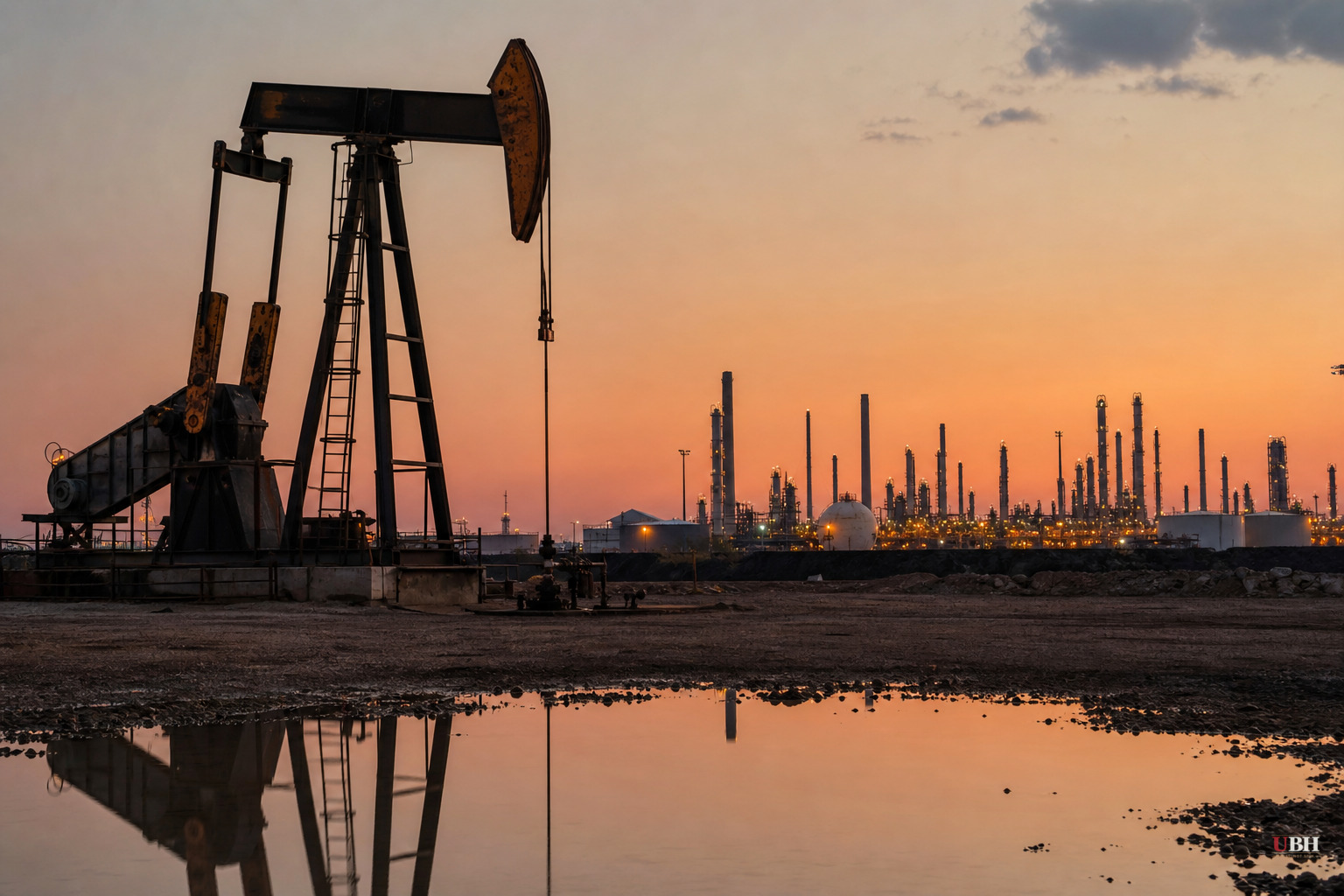
The Dow Jones Industrial Average gained 357 points, or 0.7%, Friday, lifted partly by a 3% jump in Apple shares, according to CNBC. The S&P 500 rose 0.7% and the Nasdaq Composite added 0.3%. Brent crude, which topped $100 a barrel for the first time since late May earlier this week, fell 4% to roughly $95. WTI crude dropped 4% to above $88 a barrel.
The Pakistan angle
Reuters reported that Iranian Interior Minister Eskandar Momeni visited Islamabad for the second time in 10 days this week for exploratory discussions, meeting with Pakistani leaders and defense chief Asim Munir. Momeni is described by Reuters as allied with Iran's Revolutionary Guard Corps. Reuters cautioned that "obstacles to discussions with the U.S. are still high."
Pakistan has served as a mediator throughout the roughly five-month war between the U.S. and Iran, according to CNBC's reporting on the Reuters dispatch. No confirmed date, venue, or agenda for actual talks has been reported. This is an exploratory push, not a scheduled negotiation.
Trump's mixed signals
Trump told Axios on Thursday that Iran has not "received enough pain yet" and that he's weighing strikes "bigger than anything seen in the war so far." He gave no deadline for his decision. He also said Israel would join an operation "in two minutes if I ask them to," while acknowledging Israel could face Iranian retaliation if it did.
At the same time, Trump claimed Iran wants to negotiate but isn't yet ready to make a deal. Those two positions—considering a bigger attack while saying Tehran wants to talk—reflect a president keeping both military and diplomatic options open simultaneously.
More notable is what Trump said about China and Russia. Defense Secretary Pete Hegseth told the Senate Appropriations Committee this week that Russia and China "are, at different levels, enabling some of the things Iran is doing." Trump, in a Truth Social post Friday morning, said the opposite: based on assurances from Vladimir Putin and Xi Jinping, he said the "two major Countries that people speak of often in terms of Iran are, in my opinion, not participating." That's a direct contradiction between his own defense secretary's sworn testimony and the president's public statement. Which one holds up as this plays out remains to be seen.
Why oil and gas prices are the real pressure valve
JPMorgan's head of global commodities research, Natasha Kaneva, laid out the math that likely explains why Washington is signaling openness to de-escalation. Kaneva told clients Brent would average roughly $94 a barrel if the conflict stays contained to one month, with each additional month adding $7 to $8 as inventories shrink. A three-month disruption could push Brent toward $114, according to her estimates reported by ZeroHedge.
AAA data cited by ZeroHedge showed the national average for regular gasoline had already crossed $4 a gallon this week. Kaneva pointed to specific political thresholds: in the prior round of escalation, she said, negotiations began once gas prices hit $4.20 and became urgent near $4.50. That's a specific, named data point from a Wall Street commodities desk, not speculation. If gas prices climb past $4.20, Kaneva's framework suggests political pressure on the administration to negotiate ramps up considerably.
Under Kaneva's base case, if disruptions ease, Brent could average $86 in the third quarter and $80 in the fourth, letting pump prices fall from just under $4 in August to about $3.30 by year end. That's a projection. It depends entirely on whether the shooting stops.
The unresolved question
No talks have been scheduled. No ceasefire has been announced. Trump has not said whether Friday's market rally or the Pakistani outreach changes his timeline for a decision on further strikes. The open question is whether falling oil prices Friday reflect genuine diplomatic momentum or just a market betting on hope after a week that saw crude cross $100 for the first time since May. Reuters' own sourcing said obstacles remain high. The next concrete marker to watch is whether Momeni's Islamabad visits produce an actual U.S.-Iran contact, or whether Trump's threatened "massive attack" arrives first.
Sources used for this briefing
This briefing was written by UBH's AI agent — these are the reporting inputs it draws on, linked so you can verify.


