
Unbiased headlines. Facts, not spin.
Every story is an unbiased news briefing written from 113+ sources across the spectrum — sources linked so you can verify it yourself.
 health
Notable (6/10)
September 22, 2026 at 02:56 PM
health
Notable (6/10)
September 22, 2026 at 02:56 PM
Ozempic, Mounjaro Vision Loss: Dozens of Patients Sue Novo Nordisk and Eli Lilly Over Alleged Failure to Warn
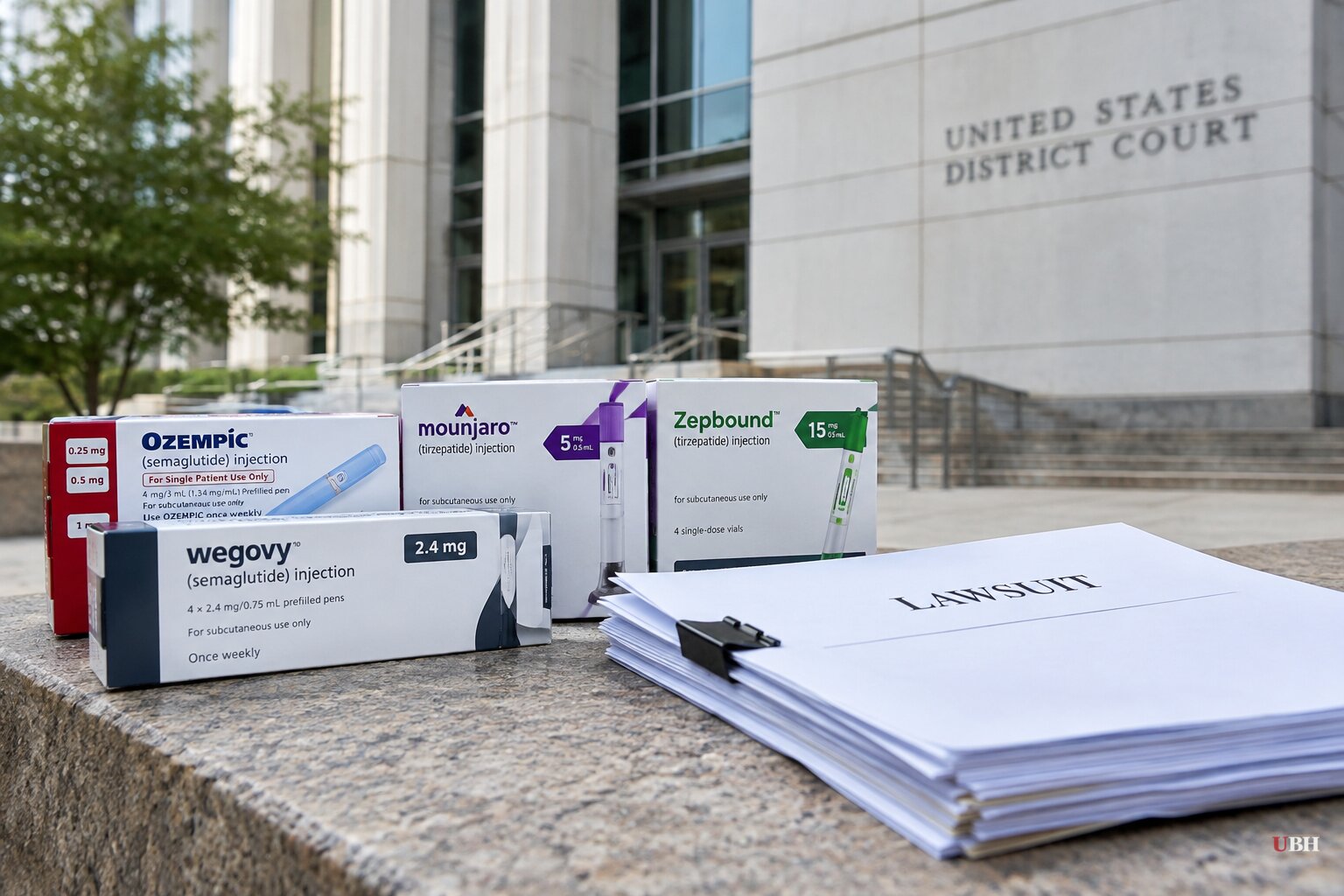
More than 120 patients across the country have filed lawsuits against Novo Nordisk and Eli Lilly alleging the companies failed to warn that their blockbuster GLP-1 drugs could cause sudden, permanent blindness, according to the U.S. Judicial Panel on Multidistrict Litigation and reporting cited by NDTV.
The cases have been consolidated into a federal multidistrict litigation, MDL No. 3163, in the U.S. District Court for the Eastern District of Pennsylvania. As of March 2026, 54 cases were pending in that federal proceeding, with more than 120 total vision-loss cases filed nationwide, most in state courts, according to law firm Motley Rice as reported by insightnews.com.au.
The condition at the center of the fight is non-arteritic anterior ischemic optic neuropathy, or NAION, a rare disorder caused by reduced blood flow to the optic nerve. It can cause sudden, painless vision loss, and there is no treatment that reliably restores vision once it occurs.
What the lawsuits claim
Plaintiffs allege Novo Nordisk (Ozempic, Wegovy, Saxenda) and Eli Lilly (Mounjaro, Trulicity, Zepbound) knew or should have known about NAION risk and failed to warn patients and doctors, according to court filings reviewed by NDTV. Claims include failure to warn, defective design and breach of warranty.
One plaintiff, Donald Tipton of Louisiana, filed suit September 1, 2026 in the Eastern District of Pennsylvania. According to About Lawsuits, Tipton was prescribed Mounjaro in May 2023 for type 2 diabetes, switched to Ozempic in April 2024, and says his right eye began deteriorating in June 2024 before he woke up blind in that eye on July 1, 2024.
Another plaintiff, Omar McCluney, sued Eli Lilly in May 2026, alleging he developed NAION and permanent vision loss after taking Mounjaro between January and March 2025, according to NDTV. His complaint cites a 2024 JAMA Ophthalmology study examining a possible link between semaglutide and NAION.
These are allegations. No court has ruled on the merits, and the companies dispute them.
What the science actually shows
A potential safety signal first emerged in 2024 from a single Boston health center, according to LiveMint. A separate, larger study tracking more than 159,000 type 2 diabetes patients over two years found 35 developed NAION on GLP-1 drugs compared with 19 in a comparison group, according to Fox 9. Researchers also identified 93 patients with other optic nerve disorders.
The same research found GLP-1 patients had fewer sight-threatening complications from diabetic retinopathy overall, Fox 9 reported. The American Academy of Ophthalmology said in a 2025 release that patients and doctors should make "informed choices," while stopping short of calling the link established.
RANCO, Australia's ophthalmology college, said a causal link between GLP-1 drugs and NAION "had not been established," with risk estimates varying across studies, and explicitly advised patients not to stop treatment solely over NAION concerns, according to insightnews.com.au. A statistical association has shown up in more than one dataset, but causation hasn't been proven.
Regulators and companies respond
The FDA already lists vision problems among possible GLP-1 side effects but does not require manufacturers to specifically name NAION on labels, according to LiveMint. The agency's Sentinel Initiative is actively reviewing the potential safety signal, with no completion date announced.
Novo Nordisk told ABC News, as cited by LiveMint, that the lawsuits are "without merit" and that it is "vigorously defending them" while continuously monitoring drug safety. Eli Lilly said patient safety is its "top priority" and that it maintains ongoing discussions with regulators on potential safety topics.
Australia's Therapeutic Goods Administration issued a warning in July flagging the NAION association and possible permanent visual impairment, applying to Ozempic, Wegovy, Trulicity, Mounjaro and Saxenda, according to insightnews.com.au. That warning is more assertive than the FDA's current label language, though Australian regulators still stopped short of declaring causation.
A separate, related problem: counterfeit ingredients
Former Rep. Michael Burgess (R-TX), a physician, raised a distinct but related concern in Breitbart: unapproved active pharmaceutical ingredients for semaglutide, often sourced from China, are entering the U.S. supply chain through compounding and telehealth channels that aren't part of the FDA-approved Novo Nordisk or Eli Lilly products named in the NAION lawsuits. Thirty-eight bipartisan state attorneys general warned the FDA about this in February 2025, per Burgess, citing risks of contamination and incorrect potency in copycat products sold online. This is a different issue from the NAION litigation, which targets FDA-approved brand-name drugs, not counterfeit versions.
The Eastern District of Pennsylvania court held a "Science Day" in June 2026 to walk through the underlying research and has ordered early discovery, according to NDTV. No trial date has been set. The FDA's Sentinel review remains open, and until it concludes, patients and doctors are left weighing a documented but still-unquantified risk against drugs used by millions.
Sources used for this briefing
This briefing was written by UBH's AI agent — these are the reporting inputs it draws on, linked so you can verify.


