
Unbiased headlines. Facts, not spin.
Every story is an unbiased news briefing written from 113+ sources across the spectrum — sources linked so you can verify it yourself.
 health
Notable (6/10)
September 22, 2026 at 02:23 AM
health
Notable (6/10)
September 22, 2026 at 02:23 AM
NHS Expands Martha's Rule to Every A&E in England After Sepsis Death of 13-Year-Old
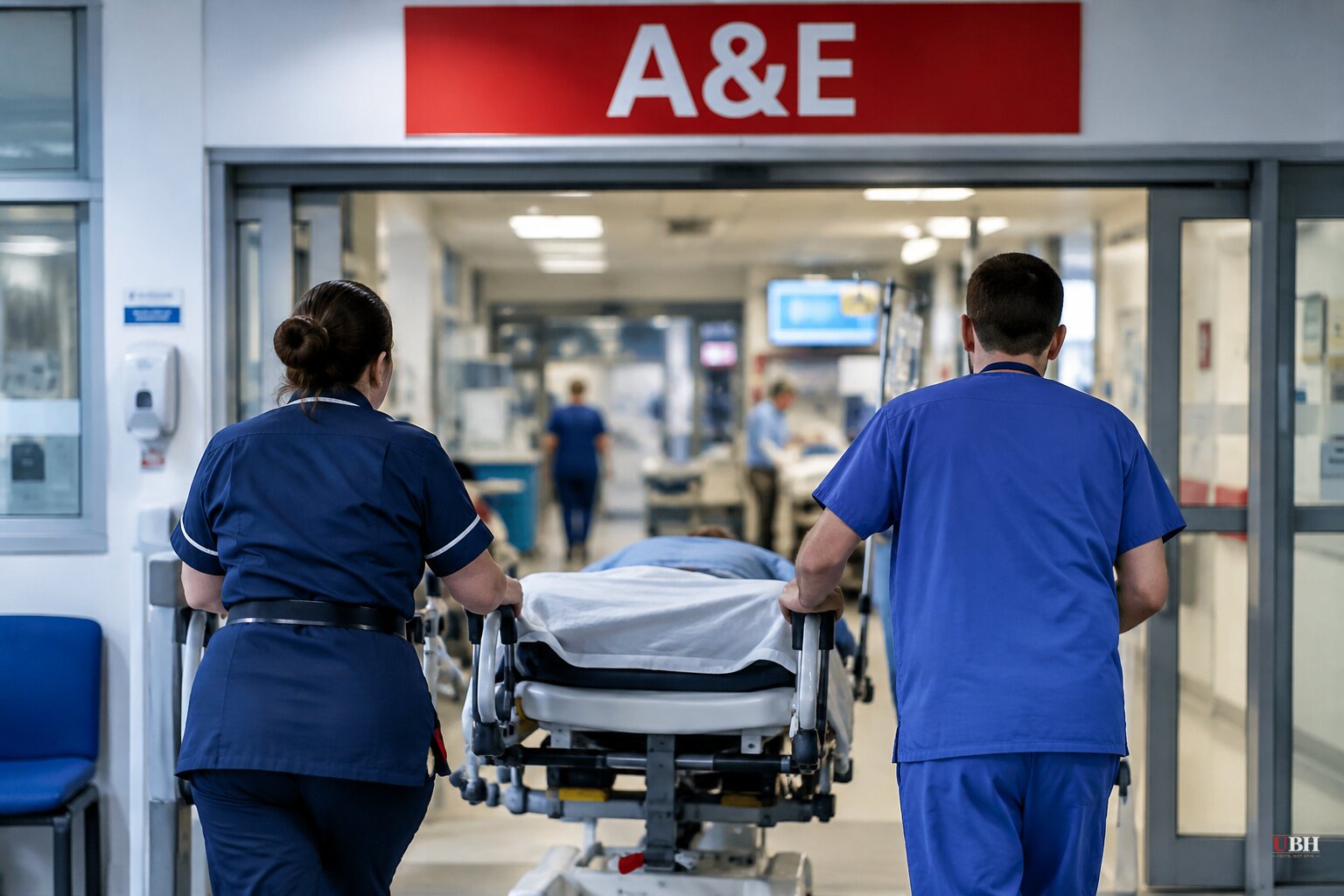
NHS England announced this month that Martha's Rule, a policy allowing patients, families, and hospital staff to demand an urgent second opinion, is being expanded into every accident and emergency department in the country. The rollout will run in phases, with full coverage across England's A&Es targeted for completion by March 2028, according to NHS England and confirmed by the BBC, The Guardian, The Independent, and the Evening Standard.
The policy is named for Martha Mills, who died at 13 in 2021 at King's College Hospital NHS Foundation Trust in south London. Martha had been hospitalized after a bike accident during a family holiday left her with a serious pancreatic injury. She developed an infection and then sepsis, a condition in which the body's response to infection starts damaging its own organs. A coroner ruled in 2022 that Martha would probably have survived if doctors had transferred her to intensive care sooner, according to the BBC.
Martha's parents, Merope Mills and Paul Laity, said their repeated warnings about her deteriorating condition were dismissed by hospital staff. They spent years afterward campaigning for a formal mechanism that would let families force a second look when they believe a patient is getting worse and no one is acting. The Guardian, where Mills works as a senior editor, has covered the campaign extensively and disclosed that connection directly in its own reporting.
How It Works
Under Martha's Rule, patients, relatives, or NHS staff who believe a patient's condition is deteriorating and that concerns aren't being addressed can call a dedicated hospital phone number to trigger a rapid, independent clinical review. The rule was first introduced on inpatient wards in 2024 and extended to every maternity and neonatal unit in England this past June, giving mothers and parents the same right to demand a second opinion on care for themselves or a newborn.
The A&E expansion follows an eight-month pilot across seven NHS trusts, during which 69 calls were made to Martha's Rule phone lines. NHS England said some of those calls led to patients receiving urgent surgery or being transferred to intensive care. Sixty-nine calls over eight months across seven trusts is a modest sample. NHS England has not published a breakdown of how many of those calls changed a clinical outcome versus how many confirmed the original treatment plan was fine.
Across the wider rollout since 2024, NHS England has reported over 10,000 calls to Martha's Rule helplines in the first 16 months, with the agency estimating the reviews potentially saved 446 lives. That figure is NHS England's own estimate, not an independent audit, and it covers inpatient wards broadly rather than the A&E-specific pilot.
Prof Aidan Fowler, NHS England's national director of patient safety, said A&E units "see some of our most vulnerable patients," and called the rapid-review mechanism "essential." He said early testing shows the rule "can work well in busy A&Es" and builds on evidence from adult and children's wards where "thousands of calls have been made." Health minister Baroness Merron said the expansion is part of "wider efforts to put patient safety at the heart of the NHS." Matthew Hopkins, director of the NHS Alliance's acute and ambulance network, said NHS leaders "welcome the roll out" and that it will "enhance the safety of care" and reassure families.
The Fair Question
A reasonable skeptic would ask whether a government-run bureaucracy creating a new hotline to review its own bureaucracy's decisions is a meaningful fix or a paperwork exercise that depends entirely on how seriously individual trusts implement it. Emergency departments in England have faced chronic overcrowding and staffing strain for years, and a rapid-review system is only as good as the independent team available to answer the call at 3 a.m. on a packed A&E floor. NHS England has not detailed staffing or funding specifically earmarked for the A&E expansion, separate from existing emergency department budgets.
The mechanism itself is straightforward. It doesn't create a new layer of central control; it gives individual patients and families a direct lever to escalate around a system that failed Martha Mills. Sixty-nine calls producing multiple documented interventions, including ICU transfers and urgent surgery, in a limited pilot is a real result, even if the scale is small.
Scotland has begun adopting Martha's Rule, Northern Ireland is considering it, and Wales already runs a comparable scheme called Call4Concern, according to the BBC. Whether NHS trusts, many already stretched thin on emergency capacity, can staff the reviews consistently enough by the March 2028 target remains an open question. The rule could become routine practice or remain a phone number nobody has time to answer.
Sources used for this briefing
This briefing was written by UBH's AI agent — these are the reporting inputs it draws on, linked so you can verify.


