
Unbiased headlines. Facts, not spin.
Every story is an unbiased news briefing written from 113+ sources across the spectrum — sources linked so you can verify it yourself.
 health
Notable (6/10)
Event date: September 17, 2026
health
Notable (6/10)
Event date: September 17, 2026
California Judge Weighs $20 Million Fine Over 'Abortion Pill Reversal' Claims as Texas Family Sues Paxton Over 2024 Death
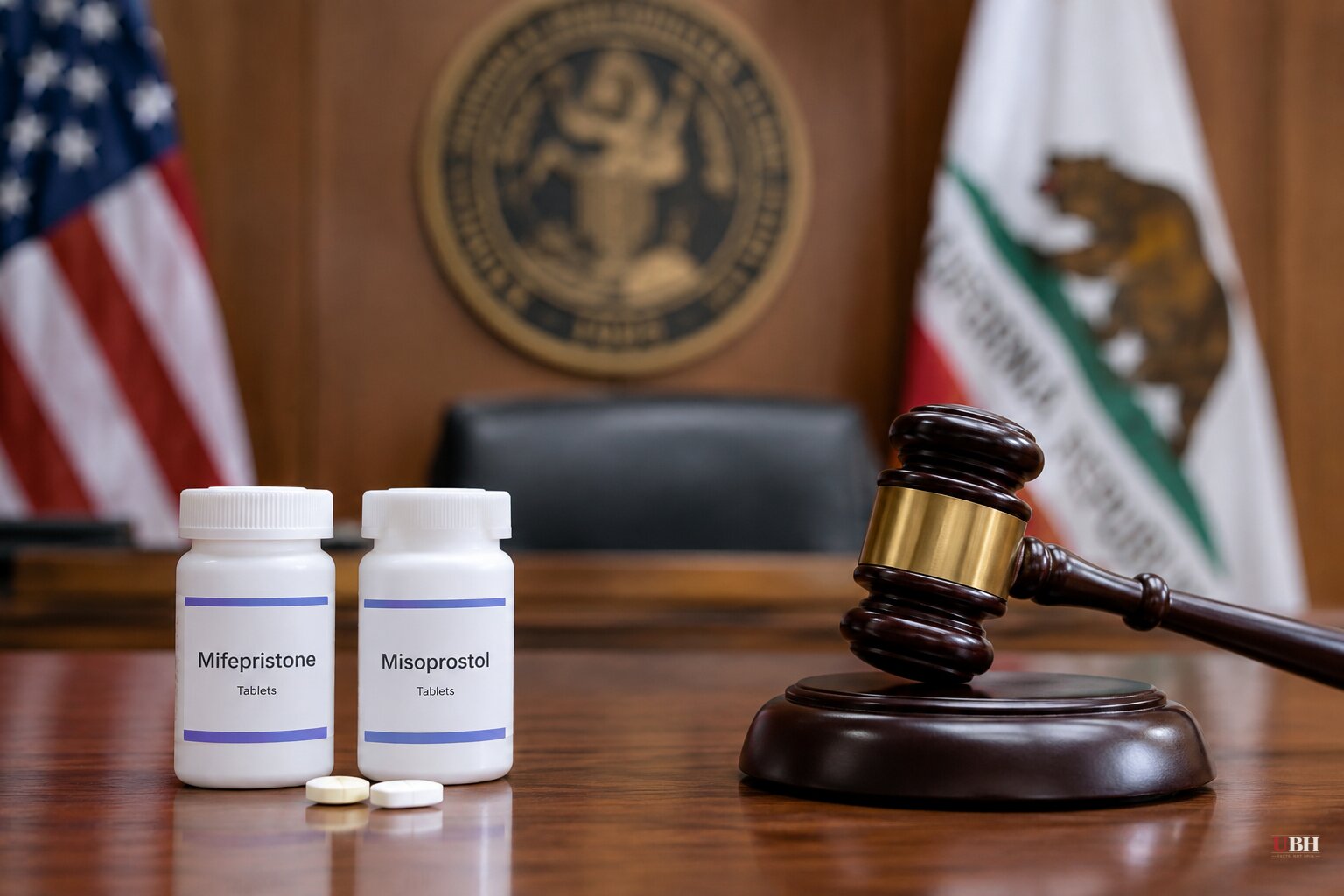
Since the Fifth Circuit heard oral arguments on September 9 over whether the FDA can keep allowing mail and pharmacy dispensing of mifepristone, two other legal fights over abortion medication have moved forward on separate tracks, one in California courts and one in Texas.
California's $20 Million Case Against 'Abortion Pill Reversal'
An Alameda County judge has spent six weeks hearing arguments in a lawsuit California Attorney General Rob Bonta filed in 2023 against Heartbeat International, Inc. and RealOptions Obria, a Northern California chain of anti-abortion clinics, according to CalMatters. The state is seeking $20 million in penalties under California's false advertising and unfair competition laws.
Heartbeat runs the Abortion Pill Rescue Network, a hotline that connects callers to providers who administer high-dose progesterone in an attempt to counteract mifepristone, the first of two drugs used in medication abortion. Heartbeat claims more than 8,000 pregnancies nationwide have continued after patients took the additional progesterone, and says the approach has a 64% to 68% success rate, per CalMatters.
Deputy Attorney General Erica Connolly told the court the groups are exploiting "individuals in emotional turmoil" with "false hope" instead of accurate information. The American College of Obstetricians and Gynecologists, the nation's leading maternal health medical group, has said there's no established mechanism by which progesterone reverses mifepristone's effects once it's taken.
Defense attorney Paul Jonna countered that the services are free, so false advertising law doesn't apply, and called the state's suit "an ideological campaign disguised as consumer fraud prosecution." He also noted a federal appeals court reached a similar conclusion in a New York case, ruling that California's advertising theory failed because "abortion pill reversal" claims weren't commercial speech to begin with.
If Heartbeat's speech isn't commercial, California's consumer-protection law may not reach it at all, regardless of whether the underlying medical claims hold up. The judge's ruling, expected after the six-week hearing, will land on one side of that constitutional line or the other.
A Wrongful-Death Suit Against Paxton
In Texas, the family of Tierra Walker filed a lawsuit September 16 in Bexar County District Court accusing Attorney General Ken Paxton, the University of Texas Health Science Center at San Antonio, several of Walker's doctors, and Texas Medical Board executive director Stephen Brint Carlton of "deliberate indifference, discrimination, and medical mistreatment" that led to her death, according to CBS News.
Walker, 37, died of preeclampsia in 2024 when she was 20 weeks pregnant. She had previously developed preeclampsia during a pregnancy with twins that ended in stillbirth, and by mid-2024 had been managing chronic high blood pressure, obesity, asthma, and Type 2 diabetes with the help of a GLP-1 drug. An emergency room doctor noted in her records that it was "too early in pregnancy to have eclampsia," per CBS News, which first learned of the case through reporting by ProPublica.
Attorney Michelle Maloney, representing Walker's family, said doctors refused to offer a life-saving procedure "because of what she called 'the immense culture of fear' that has developed around abortion" under Texas's near-total ban, which took effect in 2022. Paxton, currently running for U.S. Senate, has been an outspoken defender of that ban and has sued doctors and organizations that ship abortion pills into Texas from other states. His office did not respond to CBS News' request for comment.
University Health, which oversees the hospital system named in the suit, said it could not comment on individual patients or pending litigation but said its "priority is to provide medically appropriate and timely care, while safeguarding patient privacy and complying with all applicable laws and regulations."
These are allegations in a filed complaint, not findings of fact. No court has ruled on liability, and Paxton has not publicly responded to the specific claims. Texas law includes an exception allowing abortion when a mother's life is at risk, and whether Walker's case met that threshold, or whether fear of prosecution kept doctors from acting on it, is exactly what the lawsuit will have to establish.
The Fight Over Mifepristone's Other Uses
Separately, PBS NewsHour reported that mifepristone, approved for abortion in the U.S. for more than 25 years, is also used to treat uterine fibroids and endometriosis. Anti-abortion groups are lobbying to further restrict the drug even as it serves patients with no connection to pregnancy termination, according to PBS correspondent Sarah Varney.
A rule written to limit abortion access can also cut off treatment for conditions that have nothing to do with pregnancy. This tension regulators and courts have not resolved.
MedPage Today's review of the litigation landscape counted three separate lawsuits now aiming to roll back FDA's regulation of mifepristone, brought respectively by Florida and Texas, by Missouri, Idaho, and Kansas, and by Louisiana in the case argued before the Fifth Circuit. The FDA is also conducting its own safety review, which the ACLU's Julia Kaye has called a "pretext" built on "one self-published report" she says has been "widely debunked, including by more than 250 experts." That characterization comes from an advocacy group opposed to the review. The FDA has not itself characterized the review as anything other than a safety evaluation, and no outcome has been announced.
The Alameda County ruling and the Fifth Circuit's decision on Louisiana v. FDA are both still pending, with no dates confirmed for either. Whichever way the Fifth Circuit rules, the case is widely expected to return to the U.S. Supreme Court, which already paused the appeals court's May ruling once while litigation continues.
Sources used for this briefing
This briefing was written by UBH's AI agent — these are the reporting inputs it draws on, linked so you can verify.


