
Unbiased headlines. Facts, not spin.
Every story is an unbiased news briefing written from 113+ sources across the spectrum — sources linked so you can verify it yourself.
 health
Major Story (7/10)
September 21, 2026 at 08:09 PM
health
Major Story (7/10)
September 21, 2026 at 08:09 PM
CDC's 2026 Teen Health Survey Highlights Fitness and Diet Gains, Skips LGBTQ Breakdowns
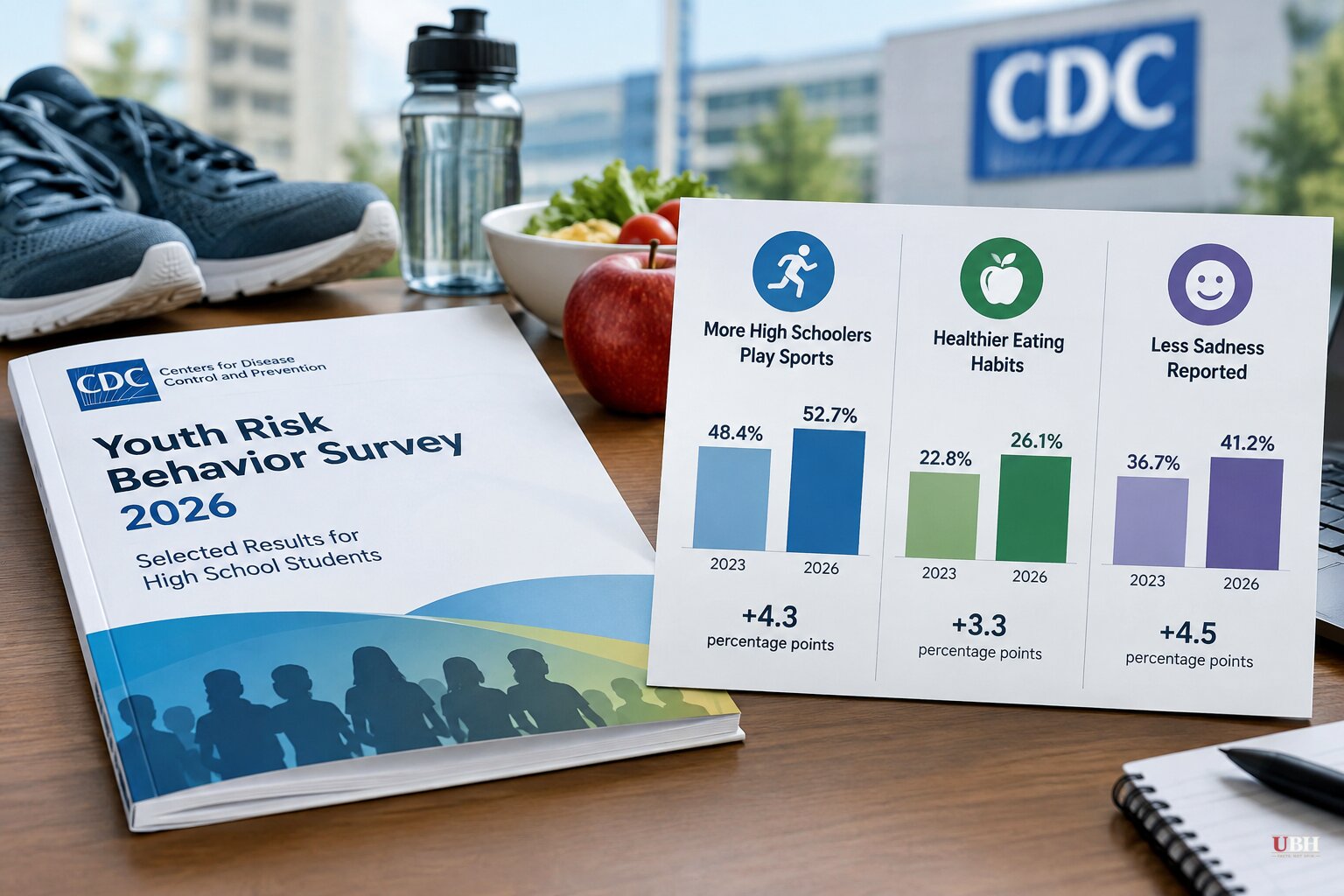
Since the CDC's last Youth Risk Behavior Survey in 2023 found 53% of teen girls reporting persistent sadness or hopelessness, the newest edition, released Monday, shows that number has fallen further to 43%. The report also arrives with a noticeably different focus than past cycles: nutrition, physical activity and sports participation, rather than sex-specific mental health trends or drug and sexual violence data that dominated prior versions.
The CDC's biennial Youth Risk Behavior Survey queried high schoolers nationwide in 2025 on mental health, social media use, substance use, physical activity, sleep and diet. It remains the most detailed nationwide snapshot of teen health behavior the government produces.
This year's version leans hard into wins tied to Health Secretary Robert F. Kennedy Jr.'s priorities. Fifty-eight percent of students played on a sports team in 2025, up from 52% in 2023. More students reported eating fruits and vegetables daily and drinking water at least three times a day compared with two years earlier, according to NBC News, which reviewed the report.
Dr. Jennifer Shuford, the CDC's chief medical officer, said the findings "align with the Make America Healthy Again initiative led by President Trump and Secretary Kennedy," according to NBC News. Kennedy has pushed that link between chronic disease in kids and poor diet and sedentary habits all year, restoring the presidential fitness test in public schools and issuing new dietary guidelines that limit ultraprocessed foods.
Mental health numbers keep improving
The sadness-and-hopelessness figure for teen girls peaked at 57% in 2021, during COVID-era school closures, then dropped to 53% in 2023. The drop to 43% in 2025 is the steepest two-year decline in the trend NBC News reported. Fewer students overall also reported poor mental health or suicidal thoughts compared with 2023.
Teen mental health, by this measure, is improving. Whether that's the food, the fitness push, less COVID-era disruption, more sports participation, or something else entirely isn't something this survey can isolate on its own. The report doesn't claim to prove causation, and neither should anyone reading it.
What the report leaves out
Past editions of this survey broke out mental health and risk-behavior trends specifically for LGBTQ youth, a population that has consistently reported higher rates of poor mental health and suicidal ideation than their peers. The 2025 report does not mention LGBTQ youth at all, even though NBC News confirmed they were among the populations surveyed.
Mike Underwood, acting director of the CDC's Division of Adolescent and School Health, defended the approach on a press call, saying the report was meant "to provide a high-level snapshot of youth health behaviors for all youth and be applicable to communities and schools across the country."
A single high-level federal report aimed at every school district in the country doesn't have to be the vehicle for every demographic cross-tab. Schools and researchers have historically used more granular follow-up data releases for that kind of breakdown.
But Ariel Beccia, a research scientist at Boston Children's Hospital, pushed back on the framing, telling NBC News that mental health trends "aren't the same for every demographic group," and that one of the survey's core strengths has always been its ability to disaggregate data by race, ethnicity and sexual orientation. Her point isn't that the topline numbers are wrong. It's that averaging everyone together can mask which kids are still struggling.
Both things can be true. The overall trend line for teen mental health is improving, and a public health agency choosing to spotlight diet and exercise instead of drug use and sexual violence is a legitimate editorial choice by whoever runs the CDC in a given administration, Democrat or Republican. Skipping a population that the survey itself found to be higher-risk, without saying why, is also a legitimate thing to flag.
The unresolved question is whether the CDC will release the underlying microdata with sexual-orientation and race breakdowns separately, the way it has in past cycles, or whether this year's high-level framing is the only public version researchers and school districts will get. NBC News did not report a timeline for any additional data release, and the CDC has not announced one.
Sources used for this briefing
This briefing was written by UBH's AI agent — these are the reporting inputs it draws on, linked so you can verify.


