
Unbiased headlines. Facts, not spin.
Unbiased Headlines is an independently owned news organization. We bring you the facts, not opinions, written fresh from 110+ named sources. Sources linked so you can verify it yourself.
 health
Major Story (7/10)
Overdose Deaths Hit Decade Low. CDC Data Show the Decline Began in Spring 2023
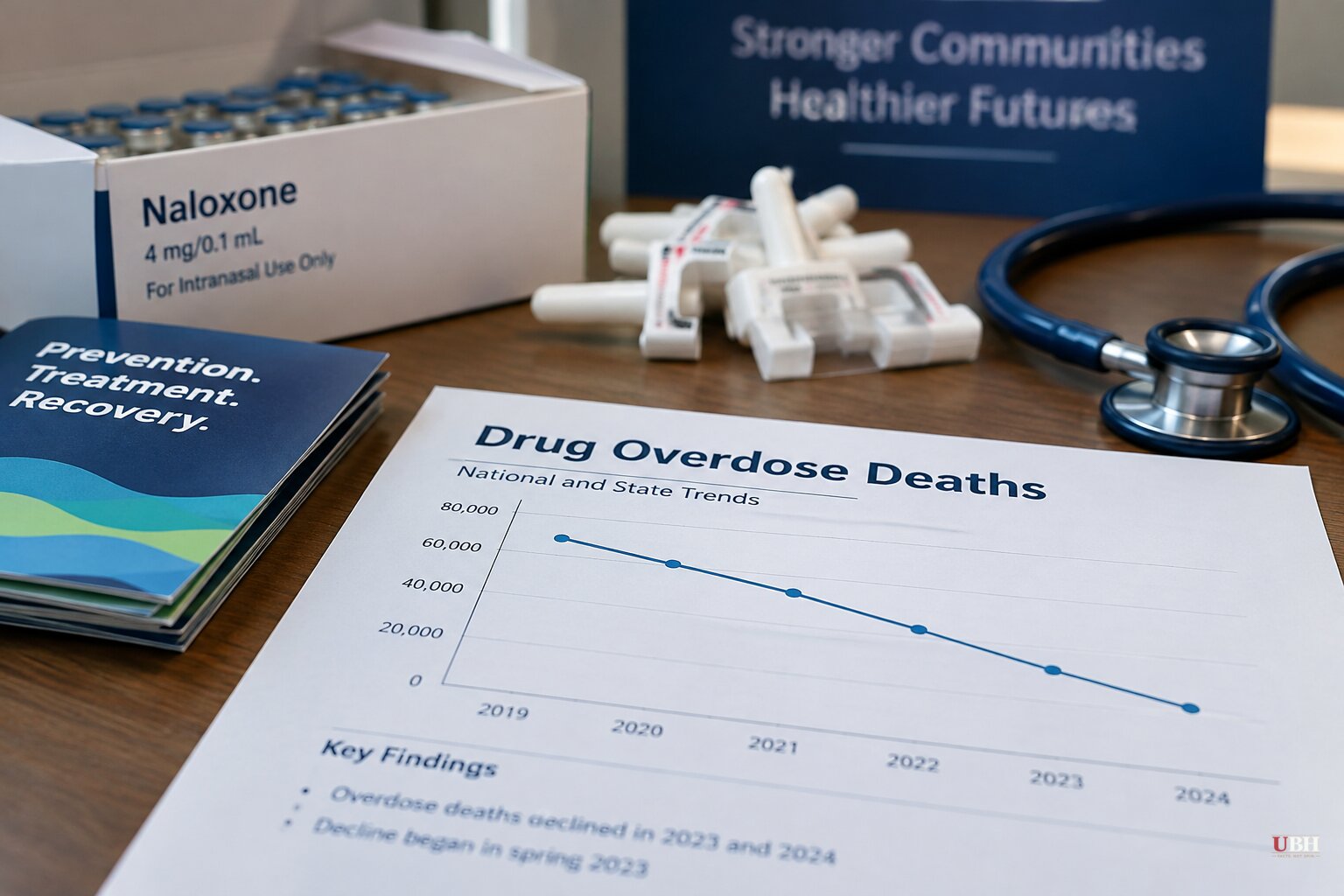
U.S. overdose deaths are at their lowest level in roughly a decade. Who gets the credit is now a fight.
The White House announced the new CDC figures earlier this week, today being Wednesday, Nov. 18. Sara Carter, director of the Office of National Drug Control Policy, said in a statement: "The historic decline in drug overdose deaths demonstrates that America is unequivocally winning the fight against illicit drugs."
Carter credited tighter border security and what she called success dismantling "narco-terrorist" organizations. The statement said the drop represents "an approximately 41.5% decrease in total drug overdose deaths compared to the peak under the previous administration." It also said the gains came primarily over the last 18 months.
What the CDC data show about timing
The timeline does not fit that 18-month window. CDC data show overdose deaths have fallen for at least 39 consecutive months, starting in 2023, according to NPR's analysis. By the time Joe Biden left office, deaths had already dropped by roughly one-third.
"Since the spring of 2023, we have seen a steady decline in overdose deaths," said Vanda Felbab-Brown, a drug policy expert at the Brookings Institution. "The fact that it has been sustained is very important."
Nabarun Dasgupta, a street drug researcher at the University of North Carolina at Chapel Hill, was among the first scientists to spot the drop. He said it began in some regions and demographic groups as early as 2021 and gained speed nationwide.
"It was really the period early 2024 through spring 2025 where we were seeing the greatest rate of decline that we've ever seen," Dasgupta said. That window covers most of Biden's final year and only the first months of Trump's second term.
The long climb before the fall
Deaths from fentanyl smuggled in from Mexico began rising in 2013 under Barack Obama and accelerated during Trump's first term. They spiked sharply in the first two years of Biden's presidency, during the COVID-19 pandemic.
Dasgupta, Felbab-Brown and other addiction experts credit the Biden administration with wider access to health care, broader availability of the overdose-reversal drug naloxone, and a deal with China that disrupted the flow of industrial chemicals used to make fentanyl.
The administration's case
The numbers did not stall when Trump took office. Breitbart, citing the CDC, reported that overdose deaths, which averaged more than 100,000 a year at their peak from 2021 until 2024, dropped below 70,000 in the one-year period ending December 2025, and as of May 2026 were approximately 65,000.
Health Secretary Robert F. Kennedy Jr. made the administration's argument at a roundtable at the Detroit Wayne Integrated Health Network. "President Trump has attacked the opioid crisis from every direction — rightsizing opioid prescribing, disrupting the fentanyl supply chain, and expanding treatment and recovery," he said. "Those actions are saving lives and driving opioid deaths to the lowest in nearly a decade."
Trump signed the Halt All Lethal Trafficking of Fentanyl Act at the White House on July 16, 2025. Kennedy told Breitbart News that the administration's accomplishments go uncovered, including the border and drug prices.
HHS's Office of the Assistant Secretary for Planning and Evaluation released two analyses alongside the announcement. One covers the record-low 2025 age-adjusted death rate, which the CDC provisionally put at 689.2 deaths per 100,000 people. The other examines pharmacy opioid dispensing from March 2015 through March 2026, under the title "Two Opioid Policy Trends Are Moving in the Right Direction: Sustaining a Decade of Progress."
What is still unsettled
Dasgupta and Felbab-Brown both said improvements in reducing drug mortality have continued under Trump. Their objection is to the claim that the gains came mainly in the last 18 months and from his policies. Carter, for her part, said the Biden administration doesn't get to take credit for overseeing the highest overdose numbers in history and then bringing them down, and said the earlier decline "could be misinterpreted as progress on a graph, but it was not progress."
Felbab-Brown also pushed back on the cartel claims: "I cannot think of one narco-terrorist organization that has been dismantled," she said.
Dasgupta said he is concerned about whether progress can be sustained next year as the administration implements deep Medicaid cuts. The Congressional Budget Office has estimated the cuts could mean as many as 10 million Americans losing access to health insurance coverage. "Medicaid is the largest funder of addiction services in the United States," Dasgupta said.
Researchers say they are still trying to understand why deaths involving fentanyl surged and why so many fewer people are now dying. Despite the progress, fentanyl remains the leading cause of drug deaths nationwide.
Sources used for this briefing
7 links from 3 independent newsrooms (syndicated copies of the same report count once)
These are the sources it draws on, linked so you can verify.


