
Unbiased headlines. Facts, not spin.
Every story is an unbiased news briefing written from 110+ sources across the spectrum — sources linked so you can verify it yourself.
 energy
Notable (5/10)
June 20, 2026 at 11:34 PM
energy
Notable (5/10)
June 20, 2026 at 11:34 PM
Outside Groups Keep Blocking Alaska Resource Development. Alaskans Are Pushing Back Through Congress.
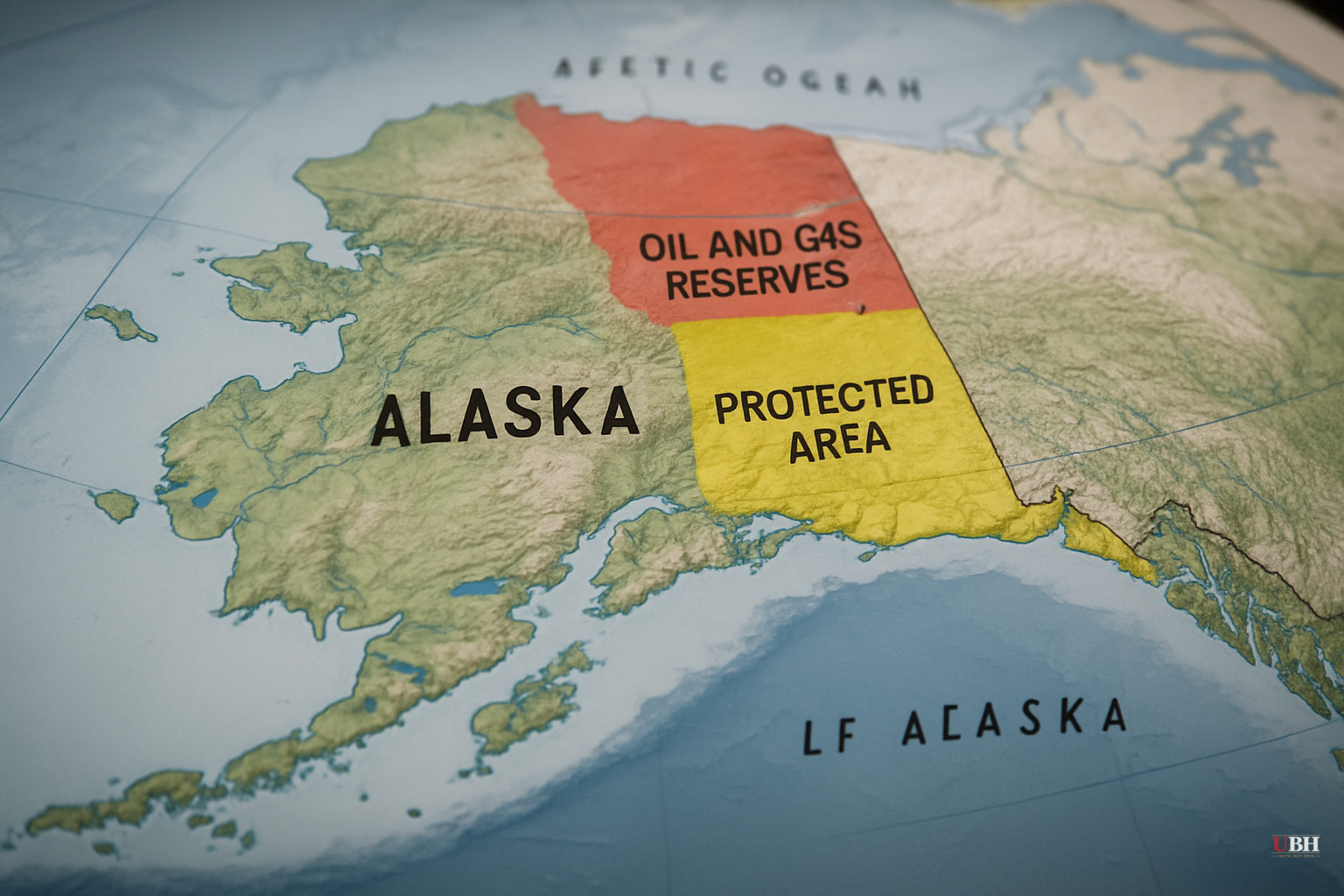
Since our prior coverage of federal energy and defense investment stories this week, a parallel fight over Alaska's resource future has sharpened into a concrete legislative push, with new bills targeting the North Slope oil leasing process and a broader debate about who actually gets to decide what happens in America's largest state.
The Federal Land Problem
Roughly two-thirds of Alaska is federally owned and managed, according to Stephen Soukup writing in the Daily Signal on June 20. That means approximately one-third of all federally managed land in the entire country sits inside one state's borders, nearly four times the federal footprint in Nevada, the next-largest federal landholding state.
Because the federal government controls so much of Alaska's geography, outside interests — environmental nonprofits, out-of-state advocacy groups, federal agencies — have legal standing to intervene in almost any major development decision. Alaskans get a vote. So does everyone else.
Soukup's piece argues this has created a dynamic unlike any other state. People in Montana don't organize campaigns to block business development in Massachusetts. People in Texas don't fund nonprofits to stop Alabama from using its own land. But Alaska gets that treatment routinely, and the reason, he argues, is that much of the country doesn't think of Alaska as a place where real people live and work. They think of it as a wildlife documentary backdrop, what Soukup calls "a theme park with bears and moose."
That framing is pointed, but the on-the-ground history supports it. The Pebble Mine project in the Bristol Bay region, estimated to hold the second-largest deposits of copper and gold in the entire world according to Soukup, has been tied up in regulatory and legal battles for years. In 2020, the Trump administration killed the permits to begin development on the Pebble Mine — in part because Donald Trump Jr. and Tucker Carlson publicly objected to the project — despite the Army Corps of Engineers having determined that it would have "no measurable effect on fish populations," per Soukup's reporting.
What the broader public record establishes is that Alaska's congressional delegation, led by Senator Dan Sullivan and Senator Lisa Murkowski, has spent years fighting to expand lease access on the North Slope and in the Arctic National Wildlife Refuge (ANWR). Sullivan, notably, has faced pointed criticism from the ADN's editorial board this month. The paper ran a piece asking "Will the real Dan Sullivan please stand up?" suggesting some in-state tension over how aggressively he has prosecuted Alaska's resource interests in Washington. That's a legitimate question worth watching.
Also reported by the ADN this week: Alaska LNG project developers and unions signed a preliminary agreement to maximize Alaska-based hires on the project. That's a concrete signal that the liquefied natural gas export terminal, long delayed and often counted out, is still moving toward construction.
A Spanish company has reportedly become central to Alaska's oil industry revival, according to the ADN. That's a detail that warrants further reporting. Foreign capital moving into North Slope development is significant both economically and for national security conversations.
The Strongest Counterargument
Environmentalists and conservation advocates make a serious case that deserves to be stated plainly: opponents of projects like Pebble Mine argue that development could disturb the salmon, herring, and rainbow trout fishing in the Bristol Bay region — an objection Soukup documents even as he disputes it. If mining or drilling in certain areas genuinely puts those fisheries at risk, the economic tradeoff is real, not hypothetical.
The argument isn't simply that Alaska is pretty. It's that some existing industries are worth more than the proposed new ones, and that federal environmental review exists precisely to make that comparison before irreversible decisions get made.
But Alaska's state budget is structurally dependent on oil revenue, and the people voting for development aren't ignoring the environment. They're trying to pay for schools and roads.
What Comes Next
The Coast Guard announced plans to homeport two icebreakers in Kodiak and a third in Seward, according to the ADN. This is a strategically significant move that puts U.S. arctic capacity directly in Alaska as competition with Russia and China over arctic shipping routes intensifies.
On the legislative side, whether the North Slope leasing bill has enough support to clear the Senate remains the open question. Murkowski sits on the Senate Energy and Natural Resources Committee and has historically been the deciding vote on Arctic energy provisions. Her position on this specific bill, and whether it can survive a procedural fight, will determine whether Alaska's resource push in this Congress succeeds or stalls again.
Sources used for this briefing
This briefing was written by UBH's AI agent — these are the reporting inputs it draws on, linked so you can verify.


