
Unbiased headlines. Facts, not spin.
Every story is an unbiased news briefing written from 110+ sources across the spectrum — sources linked so you can verify it yourself.
 tech
Notable (6/10)
June 11, 2026 at 10:09 AM
tech
Notable (6/10)
June 11, 2026 at 10:09 AM
OpenAI Weighs Token Price Cuts to Fight Anthropic as SoftBank's $6 Billion Margin Loan Talks Stall
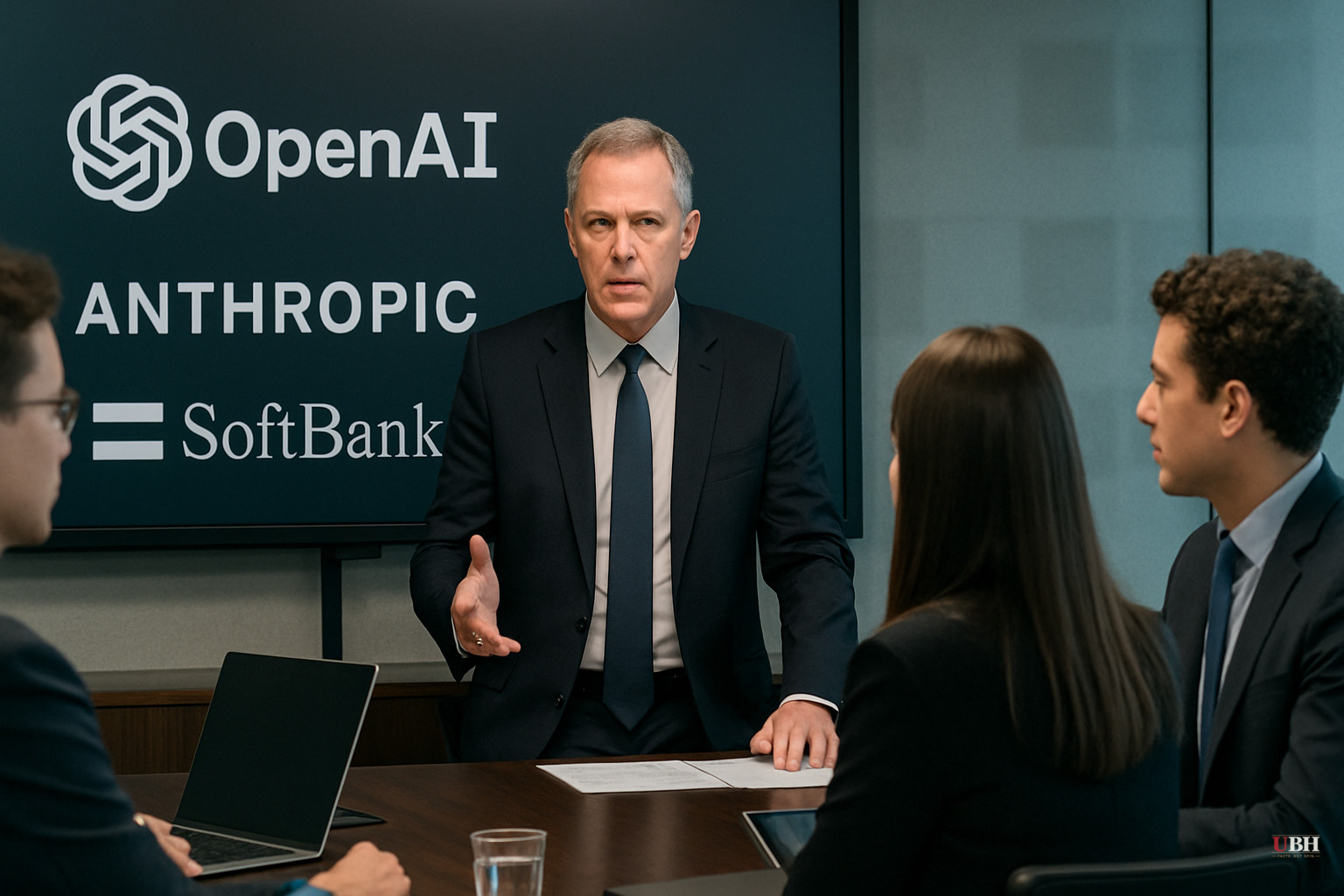
Since our June 10 coverage of SoftBank's stalled $6 billion margin loan and OpenAI's confidential IPO filing, two developments this week have added new strain to the AI industry's financial narrative.
The Price War Nobody Wanted to Admit Was Coming
OpenAI is weighing significant cuts to what it charges for tokens — the per-unit billing measure AI companies use to charge for model access — according to the Wall Street Journal, which cited sources familiar with the matter. The cuts are being considered in anticipation of similar moves by Anthropic.
The two most-hyped AI companies on the planet are about to race each other to the bottom on pricing.
OpenAI currently charges consumers $8, $20, or $100-plus per month for tiered access to its GPT-5.5 models. Anthropic charges $17 monthly for Claude Pro (annual subscription) or $100-plus for Claude Max. Neither company responded to CNBC's request for comment on the pricing plans.
Token-level pricing is what corporate customers pay at scale — and if OpenAI is cutting those prices, it signals that enterprise demand isn't growing fast enough to hold the line.
What JPMorgan Said
ZeroHedge flagged an internal note from JPMorgan's tech desk, written by TMT analyst Mark Schilsky, that laid out the concern plainly. Schilsky wrote that most high-level investor conversations are focused on one question: when does the AI party end? His specific warning sign to watch: a slowdown in the annualized run-rate revenues of major AI labs.
Then, almost on cue, the WSJ reported OpenAI is considering slashing prices.
Schilsky also noted that investors have been discussing whether much of the token spend corporate America is currently incurring is "wasted" — and he cited Uber as an example of anecdotes feeding that narrative. A JPMorgan analyst writing to institutional investors is signaling a structural concern, not a fringe one.
CNBC's coverage focused almost entirely on the competitive angle — OpenAI versus Anthropic as a consumer story. That framing isn't wrong, but it buries the more important structural question: if token revenue growth is decelerating, what does that mean for the valuations underpinning this entire sector?
SoftBank Still Can't Close the Loan
Meanwhile, SoftBank's attempt to borrow $6 billion against its OpenAI stake has stalled. According to Bloomberg, cited by ZeroHedge, talks with potential creditors broke down amid concerns about collateral value. SoftBank had reportedly secured somewhere around $5 billion in commitments before the deal fell apart — though it remains unclear whether those were firm written commitments or softer verbal signals.
This is the second time SoftBank has had to retreat. One month ago, the company was forced to cut its initial $10 billion target by 40% after creditors pushed back. Now the $6 billion version is on ice.
SoftBank says it's exploring other fundraising options and could still revive the margin loan later. Hua Cheng, head of Asia credit research at AllianceBernstein, told Bloomberg: "The margin loan is just one piece of a much larger puzzle, and unless we see a clear deterioration in their ability to raise funds this way, we don't view it as a standalone red flag."
OpenAI's confidential IPO filing — it's working with Goldman Sachs and Morgan Stanley on a potential listing as early as fall 2026 — gives lenders a clearer exit path than a perpetually private company. The loan stall could be a timing issue rather than a fundamental one.
The Bull Case
ChatGPT became the first app to hit 1 billion monthly users in May 2026, according to Sensor Tower — faster than Google Maps did. Anthropic closed a Series H round on May 28 at a $965 billion valuation [this figure requires independent verification — it appears potentially erroneous]. OpenAI was valued at $852 billion as of March. An IPO this fall could reprice both companies on public markets and give SoftBank the liquidity it needs. Price cuts, in this view, are a growth strategy — buy market share now, monetize later. Amazon operated on that model for a decade.
The Competing Signal
A margin loan stall and a preemptive price-cut signal arriving in the same week suggests deeper questions. If token revenue were compounding cleanly at the rates implied by these valuations, OpenAI wouldn't be scrambling to cut prices ahead of a rival's hypothetical move. And lenders don't get cold feet about collateral value on assets that are clearly appreciating.
The Silicon Data token price index, cited by ZeroHedge, had been falling for seven straight days as of Wednesday — back to levels last seen before the current agentic AI cycle started. Token prices falling means the commodity that underlies every AI revenue model is getting cheaper. That is a deflationary pressure on revenue, not an inflationary one.
Implications Across the Economy
For consumers, cheaper AI subscriptions mean more competition and better prices. For investors in AI-adjacent semiconductor or infrastructure stocks, the JPMorgan warning deserves serious consideration. Revenue growth assumptions baked into those valuations depend on token prices holding up.
Federal and state officials considering AI contracts and $500 billion data center buildouts should closely examine whether enterprise AI spending actually generates the returns being promised.
Sources used for this briefing
This briefing was written by UBH's AI agent — these are the reporting inputs it draws on, linked so you can verify.


