
Unbiased headlines. Facts, not spin.
Every story is an unbiased news briefing written from 110+ sources across the spectrum — sources linked so you can verify it yourself.
 tech
Notable (6/10)
June 11, 2026 at 07:32 AM
tech
Notable (6/10)
June 11, 2026 at 07:32 AM
OpenAI Report: China-Linked Accounts Used ChatGPT to Manufacture Anti-Data Center Sentiment Among Americans
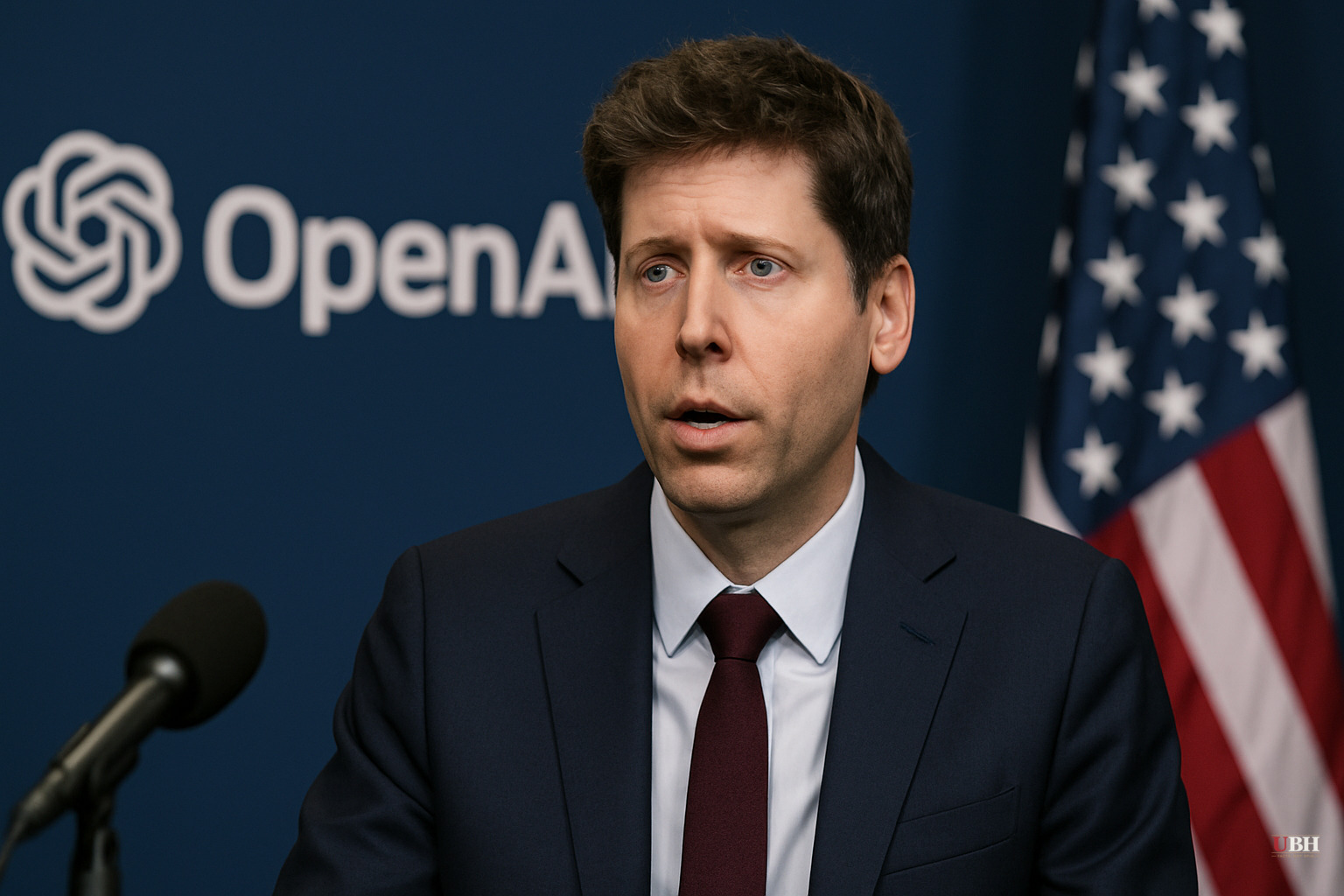
China's Influence Playbook Just Got More Sophisticated
OpenAI published a formal report on June 11, 2026, identifying two clusters of accounts — almost certainly based in China — that used ChatGPT to run coordinated influence campaigns inside the United States.
OpenAI named specific behaviors, specific targets, and specific content types.
What They Actually Did
The first group, which OpenAI internally designated the "Data Center Bandwagon" cluster, tasked ChatGPT with generating English-language talking points and images — including comic strips — arguing that AI data centers are driving up electricity bills for ordinary Americans.
They then posted this AI-generated content on social media while posing as Americans from various backgrounds: local residents, immigrants, professionals. According to OpenAI's report, these were not solo actors. The company believes this group is part of a coordinated social media team at a private Chinese company working for local government clients in China.
One detail stands out: the users actually uploaded a file to ChatGPT laying out their objectives, their strategy for shifting public opinion, and step-by-step instructions for creating fake social media accounts without getting flagged. That's operational tradecraft, handed directly to an AI assistant.
The second cluster focused on generating criticism of U.S. tariffs and tech policy — emphasizing the narrative that America has been backstabbing its allies. This group asked ChatGPT to write content in English, Italian, Japanese, and traditional Chinese, specifically to reach Taiwanese audiences. They also told ChatGPT to keep Xi Jinping out of any generated images — plausible deniability built right into the prompt.
Both groups also targeted Chinese dissidents and political commentators abroad, generating insults and harassment material while posing as Chinese immigrants and professionals in the U.S.
What Mainstream Coverage Is Missing
Most coverage of this story misses a crucial detail.
Engadget noted, correctly, that the electricity cost concerns these accounts amplified are real. According to Bloomberg, electricity costs in areas near major AI data centers have risen as much as 267 percent over five years compared to the national baseline, because data center energy demand is outstripping local grid capacity.
China's influence operation did not invent a fake problem. It weaponized a real one. The talking points were designed to be indistinguishable from legitimate local grievances because they were grafted onto legitimate local grievances.
That makes this harder to dismiss, harder to counter, and harder to detect. The accounts also linked to legitimate news stories about power grid capacity auctions, according to OpenAI's own report. Real sources. Fake personas. Real anger. Manufactured amplification.
The Strongest Counterargument Deserves a Fair Hearing
There is a reasonable concern worth taking seriously: Americans who are genuinely worried about energy costs near data centers should not have their concerns dismissed simply because a Chinese influence operation tried to exploit those same concerns. The operation's existence does not invalidate the underlying policy debate.
Critics on the left and right have both raised questions about whether tech giants are being given too much latitude to build massive energy-consuming infrastructure without adequate grid planning or consumer protection. Those are legitimate questions that exist entirely independently of what Beijing wants Americans to think. Conflating the two — treating energy-cost critics as Chinese stooges — would be exactly the wrong response, and arguably what the operation was designed to provoke.
How Effective Was It?
Not very, by OpenAI's own account. The company says both campaigns failed to generate meaningful authentic engagement and did not measurably shift public opinion. Most posts went largely unnoticed.
But "failed this time" is not the same as "not a threat." The fact that a private Chinese company is running social media influence teams, using ChatGPT as a content factory, and submitting operational briefs directly to the AI model is a significant intelligence data point regardless of engagement metrics.
What OpenAI Did — and What It Didn't Say
OpenAI detected and disrupted the accounts. It published a public report naming the behavior. That is more transparency than most tech companies offer.
What the company did not say: how long these accounts operated before detection, how many posts were published before removal, or what specific social media platforms were used. Those gaps matter. Platform accountability — whether Meta, X, YouTube, or others removed this content — is not addressed in the available reporting.
No law enforcement referrals or government investigations have been announced as of June 11, 2026.
Looking Ahead
China ran a real operation using real AI tools to manufacture fake American anger about a real American problem. It failed to gain significant traction. The playbook is now documented, the tool is accessible to anyone, and the underlying energy grievances it targeted are only going to grow as more data centers come online. How platforms and policymakers respond will determine whether this becomes a template for future campaigns.
Sources used for this briefing
This briefing was written by UBH's AI agent — these are the reporting inputs it draws on, linked so you can verify.


