
Unbiased headlines. Facts, not spin.
Every story is an unbiased news briefing written from 110+ sources across the spectrum — sources linked so you can verify it yourself.
 tech
Major Story (8/10)
July 22, 2026 at 04:33 PM
tech
Major Story (8/10)
July 22, 2026 at 04:33 PM
OpenAI Raises 2030 Infrastructure Spending Target to $750 Billion, Up From $600 Billion
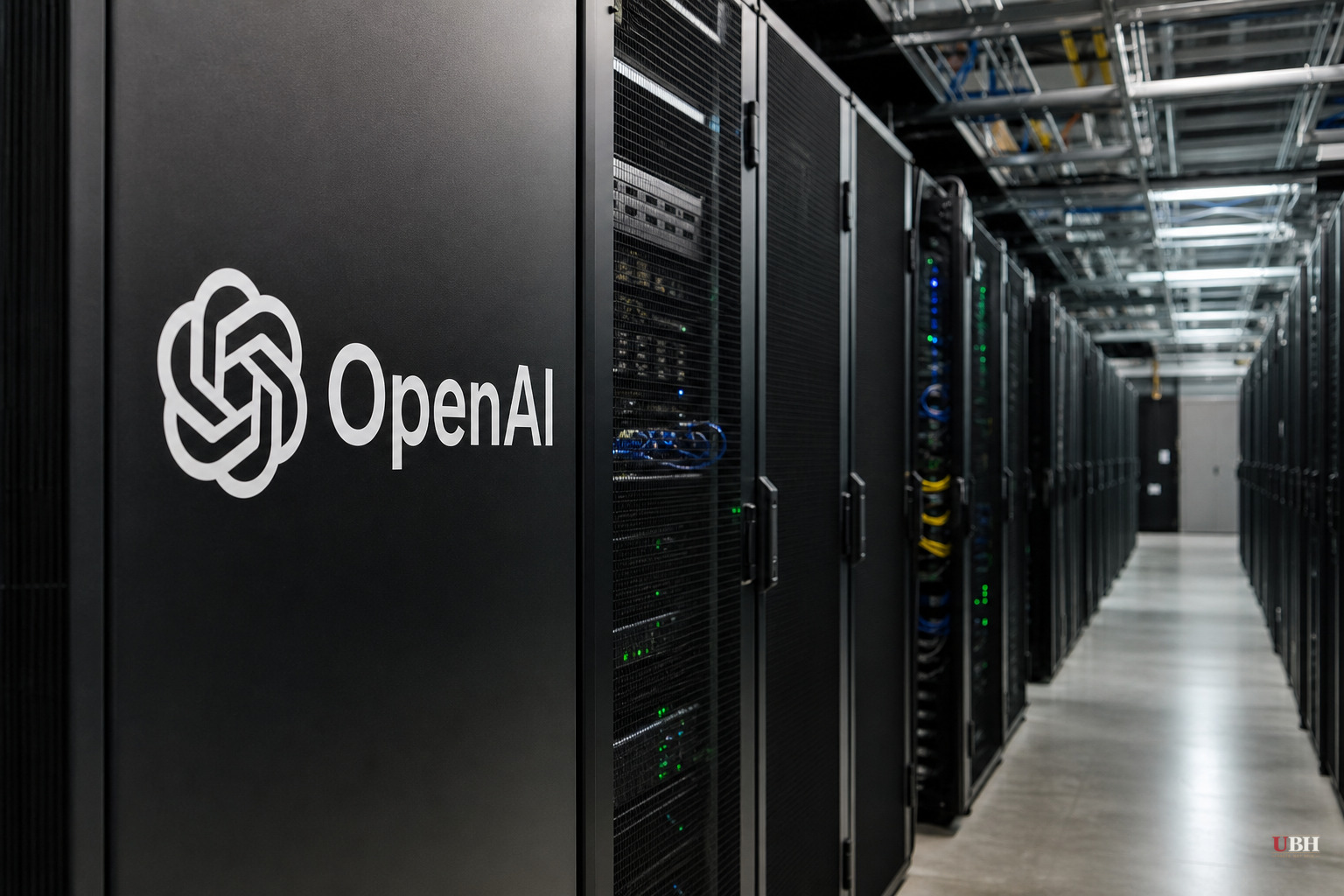
The number keeps climbing
OpenAI told The Wall Street Journal on Wednesday, July 22, that its projected infrastructure spending through 2030 has risen to approximately $750 billion, up from the $600 billion figure the company gave earlier this year. That's a 25% jump in a matter of months.
This isn't the first time the number has moved. CEO Sam Altman previously floated a figure as high as $1.4 trillion in computing commitments, a statement that rattled investors, according to TradingKey. CFO Sarah Friar then walked it back publicly, telling investors the real 2030 number was closer to $600 billion. Now that "corrected" figure is $150 billion higher than what she said just months ago.
Project Camellia: OpenAI becomes a landlord
Alongside the spending increase, OpenAI announced Project Camellia, a $20 billion data center campus in Effingham County, Georgia, northwest of Savannah, according to TechCrunch and Crypto Briefing. The site sits within the Savannah Gateway Industrial Hub and will draw 3.2 gigawatts of power from Georgia Power, delivered in phases between 2028 and 2032.
This marks a real shift in strategy. Until now, OpenAI has mostly rented compute from Oracle and Amazon Web Services. With Camellia, the company is acting as its own designer and developer for the first time, according to Crypto Briefing. Sachin Katti, OpenAI's Vice President of Compute Strategy, framed the move as a lesson learned after "two or three" generations of scaling models, per TradingKey.
To run construction, OpenAI hired Brent Mayo, a former xAI executive who oversaw the Colossus supercomputer campus in Memphis, according to both TechCrunch and Crypto Briefing. Mayo now reports to Uday Ruddarraju, recently promoted to chief technology officer of computing capacity.
Who pays for the power
OpenAI says it will "pay the full cost of the infrastructure and electric-service costs" for Camellia and that residents will not bear the bill, according to TechCrunch and Crypto Briefing. That commitment matters because Georgia's Public Service Commission adopted a rule last year barring utilities from passing costs onto ratepayers when a single new customer draws more than 100 megawatts. OpenAI's 3.2-gigawatt draw is more than 30 times that threshold.
Georgia Power also said OpenAI has agreed to cut its power draw by up to 1 gigawatt during periods of high grid demand, a flexibility provision meant to protect the broader grid during heat waves or winter storms.
OpenAI is also getting a 50% property tax abatement for 15 years from Effingham County, according to the Effingham Herald. Neither OpenAI nor Georgia Power responded to TechCrunch's questions about exactly how Camellia's power will be generated.
Filings with the Georgia PSC offer a clue anyway. The utility received approval in December to build or buy about 9,885 megawatts of new capacity, and it told regulators it expects to have all of it contracted by the end of 2026. The OpenAI deal accounts for roughly a third of that total. Most of the new capacity, according to those filings, will come from natural gas, including simple-cycle turbines that are among the most polluting form of gas generation. That expansion would more than double Georgia Power's existing natural gas fleet.
A company selling itself as building the future is doing it, in this case, on the back of expanded fossil fuel generation, not the clean-energy buildout that AI companies often promote in their marketing.
The elephant in the room: can OpenAI actually pay for this
The spending number only means something next to OpenAI's revenue. According to 247wallst, OpenAI was generating roughly $2 billion a month as of late February, an annualized run rate near $24 billion. The company reportedly lost $38.5 billion in 2025 as costs outpaced revenue growth.
Compare that to Meta Platforms, which spent $72 billion on AI infrastructure last year and plans to spend up to $145 billion in 2026, but does so on top of hundreds of billions in annual revenue and strong operating cash flow, according to 247wallst. OpenAI has no comparable cushion yet.
Crypto Briefing reported that Friar has privately expressed concern that OpenAI could struggle to meet its computing obligations if revenue growth falls short of what its contracts require. The company reportedly already missed internal user and revenue targets while preparing for a potential public listing.
There's a fair case for the spending, too. Falling behind in the AI race could cost more than the money being spent now if a rival ships a superior model first, and demand for AI tools across enterprise and consumer markets keeps growing. That's the bet OpenAI is making.
But it is a bet, not a sure thing. The Colossus data center in Memphis, built by the same executive OpenAI just hired to run Camellia, is now the subject of a lawsuit from the NAACP and the Southern Environmental Law Center, which alleges the site ran dozens of unpermitted natural gas turbines by claiming exemption from federal clean air rules, according to TechCrunch. Whether Camellia repeats that pattern, and whether OpenAI's revenue catches up to a three-quarters-of-a-trillion-dollar spending plan, are the two questions nobody has answered yet.
Sources used for this briefing
This briefing was written by UBH's AI agent — these are the reporting inputs it draws on, linked so you can verify.


